


Refine your search for walks in Ars
Ars walks


 The Sentier du Biau starting from Ars
 Visorando Member

 5.55 mi
 +23 ft
 -23 ft
 2h 35
 Easy
 Departure from Ars (Charente)
A pleasant walk starting from Ars-en-Saintonge, exploring a very natural area including the Bois de la Grande Prée and the Né. The route features some fine examples of built heritage, such as the school complex and the Bûcher d’Ars, the Château d’Ars at the start of the walk, and the Church of Saint-Maclou on the return journey.
Gimeux - Sentier du Fanaud
 Local authority
 6.44 mi
+377 ft
-374 ft
3h 15
Easy
Departure from Gimeux (Charente)
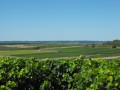
Gimeux was built on a hillside overlooking the valley and marshlands of the river Né and enjoys a flourishing farming activity: meadows and cereal fields in the valley, vineyards on the hills. Ancient burial sites and the outline of the old Roman road called ‘Chemin Boisné’ are revealing of the ancestral occupation of the land. The parish church dates back to the 12th century. Also marking the landscape are an old chapel as well as the remains of a windmill on the Fanaud hillside.
Merpins - Sentier François Ier
 5.68 mi
+62 ft
-62 ft
2h 40
Easy
Departure from Merpins (Charente)
Located at the confluence of the Né and Charente rivers, the Merpins commune has been permanently occupied by men from very early times: arrowheads, pottery shards, and later an imposing medieval fortress, an 11th century church and an abbey dating back to the 12th century are the living proof. These fertile lands are home to meadows, cereal fields and a Grande-Champagne listed vineyard.
Route du Chemin 101
 6.04 mi
+285 ft
-299 ft
3h 00
 Moderate
Departure from Genté (Charente)
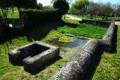
Built on the lower slopes of Grande Champagne, Genté offers its residents proximity to the town of Cognac, 8 km away, and the charms of rural life. Point 101 is an iconic location in the commune of Genté, where the orientation table is located. This site was once home to an old mill, some remains of which are still buried in the ground around the site. Point 101 is also the reference point for sea level.
Saint-Laurent-de-Cognac / Louzac-Saint-André - Sentier des Combes
 6.00 mi
+328 ft
-318 ft
3h 05
Easy
Departure from Saint-Laurent-de-Cognac (Charente)
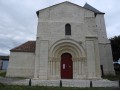
Bordered to the South by the Charente river, theSaint-Laurent area consists of a small town gathered around its church and its 11th century portal, several villages spread across the valleys and the hills as well as farms and secluded dwellings.
Hills and valleys in the Borderies
 4.53 mi
+315 ft
-312 ft
2h 20
Easy
Departure from Saint-Laurent-de-Cognac (Charente)
This route includes a tour of the Vallée de La Croix, part of the natural and historical heritage of the Borderies region, via the Chemin du Panteneau in the canton of Saint-Martin, whose right-of-way has marked one of the boundaries between the two municipalities of Saint-Laurent-de-Cognac and Louzac-Saint-André since 1824.
The Templars’ Route in Angles
 6.27 mi
+236 ft
-207 ft
3h 05
Easy
Departure from Salles-d'Angles (Charente)
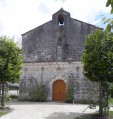
It was in December 1856 that Salles de Segonzac joined forces with the Commanderie d'Angles, a small village nestled in a bend of the River Le Né. Angles lived in harmony with the river, whilst Salles, resembling a large village, centred its life around wine-growing.
Route des Borderies in Louzac-Saint-André
9.12 mi
+541 ft
-564 ft
4h 40
Moderate
Departure from Louzac-Saint-André (Charente)
At the westernmost tip of Charente, Louzac-Saint-André, with its two villages and numerous hamlets, is a typical commune of the Borderies region in Saintonge.
These rural paths wind through alternating wooded areas and vineyards.
From valleys to hills, in addition to beautiful views of the Romanesque churches of Saint-Martin de Louzac and Saint-André, walkers will discover two remarkable natural landscapes, the Ri Bellot Valley and the Vallée de La Croix.
Exploring the Vallée de la Croix
 2.43 mi
+138 ft
-138 ft
1h 15
Easy
Departure from Louzac-Saint-André (Charente)
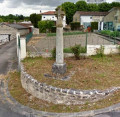
The municipality of Louzac-Saint-André is criss-crossed by around 40 km of country lanes, offering the chance to discover a wide variety of landscapes amidst vineyards and woodland. The peaceful Vallée de la Croix is a remarkable example of this, unanimously recognised as representative of the natural and historical heritage of the Borderies.
Hikers and walkers, set off to explore it or rediscover it for yourselves with the route suggested here, which is accessible to all.
Circuit des Trois Pierres
 5.91 mi
+125 ft
-125 ft
2h 50
Easy
Departure from Angeac-Champagne (Charente)
A lovely walk through the Charentais vineyards, passing beautiful buildings and around the village of Roissac.
Angeac- Champagne counts numerous prosperous-looking Charentais houses, witness to the wealth which lies in the local economy producing cognac, its principal occupation. The entrances to the estates are marked by a gate or porch way: there are at least 50. They are unique and typical of our local heritage. At Roissac village they embellish the main street.
"Step by Step" through the village centre of Saint-Fort-sur-le-Né
 2.62 mi
+98 ft
-72 ft
1h 15
Easy
Departure from Saint-Fort-sur-le-Né (Charente)
Situated at an altitude of 25 metres, the River Né and the Motte stream are the main watercourses flowing through the commune of Saint-Fort-sur-le-Né.
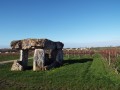
From certain vantage points, there are excellent views of the village, the dolmen, the vineyards, the Grande Champagne countryside and the other surrounding villages.
Each season offers a chance to discover its own unique charms.
Saint-Brice - Sentier de l'Abbaye
 6.63 mi
+243 ft
-240 ft
3h 15
Moderate
Departure from Saint-Brice (Charente)
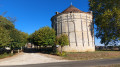
Thanks to the natural beauty of its location and the richness of its heritage, Saint-Brice is one of the most picturesque areas of Cognac region. At the heart of the Charente and Soloire rivers valley, man has erected many symbolic buildings: dolmens, churches, abbeys, castles and manors, all expertly crafted.
Circuit du Dolmen
 7.20 mi
+236 ft
-236 ft
3h 30
Moderate
Departure from Saint-Fort-sur-le-Né (Charente)
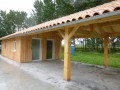
Situated at 25m altitude - the river Né and the Motte stream are the principal water courses which cross the locality.
In certain places there are excellent views towards and from the village, the Dolmen, of the vineyards, the landscape of the Grande Champagne and surrounding villages. In every season you can discover a certain charm and appeal in St. Fort.
Pas à Pas in the centre of Verrières
 0.77 mi
+56 ft
-56 ft
0h 25
Easy
Departure from Verrières (Charente) (Charente)
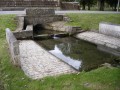
A parish until the Revolution (1789), Verrières became a commune under the Constitution of Year VIII, dated 28 Pluviose. At that time, Verrières fell under the jurisdiction of two neighbouring seigneuries: Juillac-le-Coq and Ambleville, both subject to the chapter of Angoulême Cathedral. Verrières formed part of the canton of Lignières until 16 Brumaire, Year VI, after which it was attached to Segonzac. The commune now has a population of 375 (857 in 1870).
The Bellevue route: between hillsides and valleys
4.17 mi
+138 ft
-141 ft
2h 00
Easy
Departure from Verrières (Charente) (Charente)
The commune is bordered to the south by the Né valley, towards which its land slopes gently. Vineyards, the main crop, cover more than two-thirds of the commune’s area and produce excellent, refined Grande Champagne brandies.
More walks in Ars
Select a point of interest below: