


Communauté Pays Basque

 Local authority
PRO  Premium user
Premium user Sign up:
Published route(s)
 Xoldoko Gaina from the Col d'Ibardin
 3.86 mi
 +892 ft
 -879 ft
 2h 35
2h 35
 Easy
Easy
 Departure from Urrugne (Pyrénées-Atlantiques)
Popular for its ventas and other Sunday shopping, the Col d'Ibardin is also the starting point for easy, scenic walks along the Atlantic coast. One of these involves a visit to Lake Xoldokogaina and is suitable for families. As most of the climb is concentrated at the beginning of the walk, it is advisable to take a leisurely pace to reach the highest venta, then the Manddale slopes. The view is already very wide and encourages contemplative breaks. As you round a grove of conifers, the entire Xoldokogaina massif comes into view, a complex of moors and shady valleys, a true paradise for pottoks! It's time for the long descent to the lake, where you can take a break in the shade of hundred-year-old oaks.
La Rhune from the town of Ascain
 8.33 mi
+2,930 ft
-2,930 ft
6h 25
8.33 mi
+2,930 ft
-2,930 ft
6h 25
 Difficult
Departure from Ascain (Pyrénées-Atlantiques)
Difficult
Departure from Ascain (Pyrénées-Atlantiques)
Whether you are a regular or occasional hiker, the hike to the summit of La Rhune is a must, as this peak is omnipresent in the Labourd landscape. A real challenge for some, a breath of fresh air for others, La Rhune is a magnet that attracts walkers and trail runners, climbing up all its slopes. The steep and rocky trails require suitable equipment, so sandals can stay in your beach bag and be used on the way back from your walk. If the sky is clear, the panorama offered by this summit, with its foundations in the ocean, is vast, stretching from the beaches of the Landes to the first peaks of the Pyrenees.
Bistaeder from Ainhoa
 5.41 mi
+1,362 ft
-1,368 ft
3h 40
5.41 mi
+1,362 ft
-1,368 ft
3h 40
 Moderate
Departure from Ainhoa (Pyrénées-Atlantiques)
Moderate
Departure from Ainhoa (Pyrénées-Atlantiques)
Ainhoa, ranked among the most beautiful villages in France, invites you to discover its gentle environment. The shimmering half-timbered houses in the village centre give way to peaceful countryside dotted with isolated farms. A steady but relatively short climb in the company of pottoks and flocks of sheep takes you up the hillsides and mountains. This is followed by a magnificent open balcony path, offering a vast panorama of Spain, the Nivelle valley, the Rhune and, further away, the coast. Three huge white crosses proudly dominating the village of Ainhoa and facing the pyramidal summit of Atxuria guide your steps towards Notre-Dame de l'Aubépine, a divine spot for a picnic. Here, splendid Basque steles add to the spiritual dimension of this unique viewpoint.
Le Baigura from the leisure centre
 5.80 mi
+2,001 ft
-2,005 ft
4h 25
Difficult
Departure from Mendionde (Pyrénées-Atlantiques)
5.80 mi
+2,001 ft
-2,005 ft
4h 25
Difficult
Departure from Mendionde (Pyrénées-Atlantiques)
Baigura is one of the iconic peaks of the Basque Country, particularly for its view, which can give you a crick in your neck on a clear day. The panoramic view is renowned, with few peaks missing from the picture and even the peaks of the Hautes-Pyrénées visible on a very clear day. Baigura is also an exemplary mountain in terms of its commitment to combining traditional pastoralism with the outdoor activities offered by the leisure centre. Everyone has a role to play in maintaining these exceptional landscapes and sustaining the economy of the valleys. Baigura also offers a concentration of ecosystems that are a delight to visit on this hike. From heathland with gorse and ferns to rocky, windswept ridges, through undergrowth and peat bogs, there are endless discoveries to be made and the horizon is constantly changing. A benchmark for circular sporty hikes.
Olhadübi via the Holzarte footbridge
 8.18 mi
+2,848 ft
-2,825 ft
6h 15
Difficult
Departure from Larrau (Pyrénées-Atlantiques)
8.18 mi
+2,848 ft
-2,825 ft
6h 15
Difficult
Departure from Larrau (Pyrénées-Atlantiques)
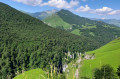
A beautiful circular for contemplating the world of Basque canyons. Carved out 80 million years ago by the Olhadübi torrent, the Holtzarte gorges, 100 to 300 metres deep, are among the most spectacular in the Basque Country. In fact, "Holtze arte" means "between walls" in Basque. A path, which is quite steep in places, leads to an impressive footbridge built in 1925 by Italians for forestry work. Crossing it is a thrilling experience and is not dangerous, but some people still close their eyes... An old track leads to the top of the canyon, from where you can climb a beautiful path to the pastoral world of Haut Souletin. The views of the Larrau mountains, including Pic d'Orhi, the first 2,000-metre peak from the Basque coast, are magnificent.
Mondarrain and Artzamendi from Itxassou
 15.05 mi
+4,229 ft
-4,255 ft
10h 35
15.05 mi
+4,229 ft
-4,255 ft
10h 35
 Very difficult
Departure from Itxassou (Pyrénées-Atlantiques)
Very difficult
Departure from Itxassou (Pyrénées-Atlantiques)
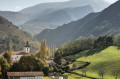
A beautiful route through hills and mountains, this trail is aimed at experienced hikers. The length of this hike allows you to enjoy two stunning views from the summits of Mondarrain and then Artzamendi. There is plenty more to discover, including the betizu, small wild cows of the Basque Country, as well as the pottok, manex and Blondes d’Aquitaine. In addition to these domestic animals, there is a wealth of local flora and fauna to discover along this route. The Esteben Borda restaurant, situated halfway along the route, offers a chance to stop for a bite to eat before tackling the second ascent of the day. After Artzamendi, the descent into a wild valley will delight hikers before the circular route finishes along the beautiful road leading to the Pas de Roland.
For the more athletic, this route is perfectly suited to trail running.
The sources of the Bidouze
 5.53 mi
+1,184 ft
-1,184 ft
3h 35
Moderate
Departure from Saint-Just-Ibarre (Pyrénées-Atlantiques)
5.53 mi
+1,184 ft
-1,184 ft
3h 35
Moderate
Departure from Saint-Just-Ibarre (Pyrénées-Atlantiques)
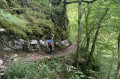
This peaceful route through the woods offers walkers the chance to discover a rich natural heritage. The flora and fauna along the route are particularly rich, with white-backed woodpeckers, Alpine longhorn beetles, beautiful specimens of beech trees and a wide variety of ferns. In addition to these natural curiosities, information panels on Basque mythology are dotted along the route. Finally, the arrival at the source of the Bidouze and its resurgence in a porch carved into the cliff will delight young and old alike.
Otsibarremeheka
 2.76 mi
+938 ft
-928 ft
2h 05
Moderate
Departure from Camou-Cihigue (Pyrénées-Atlantiques)
2.76 mi
+938 ft
-928 ft
2h 05
Moderate
Departure from Camou-Cihigue (Pyrénées-Atlantiques)
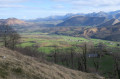
This walk via the Col d’Oxibar offers a particularly interesting feature: it opens up the Arbailles karst massif. The geology lends the landscape a distinctive character – at once mysterious and unique – with a cultural dimension rooted in protohistory.
After passing through a small wood, the first open slopes already offer a lovely view of the ‘Ibar Esküin’ valley, Alcay, Lacarry and the high mountain ranges of Soule and Béarn. Even at this stage, the nature of the ground gives an indication of this type of limestone terrain, leading to a beautiful promontory where several piles of stones are heaped up: ‘Maide Korralea’, a testament to Soule’s ancient history.
After the Oxibar Pass, on the descent, admire the old barn with its shingle roof, made of those old wooden tiles.
Othegane loop from Bunus
 5.37 mi
+1,198 ft
-1,217 ft
3h 30
Moderate
Departure from Bunus (Pyrénées-Atlantiques)
5.37 mi
+1,198 ft
-1,217 ft
3h 30
Moderate
Departure from Bunus (Pyrénées-Atlantiques)
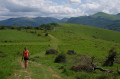
Starting from the pretty little village of Bunus, this hike off the beaten track allows you to discover a pastoral mountain offering an original panorama of the Larceveau valleys and the sources of the Bidouze. The village of Bunus has the particularity of being "cut" in two by the D918 road. The town hall is therefore quite far from the church district, the starting point of this route. Be sure to visit the church porch, where you can see three ancient tombs.
Erretzü from Tardets-Sorholus
 5.95 mi
+1,512 ft
-1,512 ft
4h 05
Moderate
Departure from Tardets-Sorholus (Pyrénées-Atlantiques)
5.95 mi
+1,512 ft
-1,512 ft
4h 05
Moderate
Departure from Tardets-Sorholus (Pyrénées-Atlantiques)
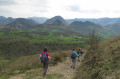
To the east of the Saison valley, stretching from Mauléon to Tardets, a range of hills faces the Arbailles massif to the west and the imposing wall of the Pyrenees mountain range, dominated by the Pic d’Anie to the south. The summit of Erretzü marks the furthest point of this range. This position affords it a breathtaking view of the mountains of Béarn and Haute-Soule. The route is very varied. It starts in the undergrowth alongside a lovely stream, then emerges into open ground through fern-filled glades dotted with pollarded oaks. Like the ferns that cover it, the summit changes colour with the seasons, eventually cloaking itself in a flamboyant red in autumn.
Kaskoborro from Idaux-Mendy
 5.69 mi
+577 ft
-571 ft
3h 05
Moderate
Departure from Idaux-Mendy (Pyrénées-Atlantiques)
5.69 mi
+577 ft
-571 ft
3h 05
Moderate
Departure from Idaux-Mendy (Pyrénées-Atlantiques)
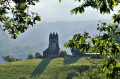
This beautiful circular loop in the foothills offers a wide variety of landscapes. Meadows with their traditional stone huts, woods and fern-filled glades dotted with pollarded oaks follow one another, not to mention the streams over which mills have been built. This allows one to better appreciate the riches of this multifaceted Basque agro-pastoral culture. There is no shortage of views: the nearby Arbailles karst massif, the flysch hills and the summit of La Madeleine, as well as the mountains of Haute-Soule.
The Customs Officers’ Path from Biriatou
 5.15 mi
+1,686 ft
-1,660 ft
3h 50
Moderate
Departure from Biriatou (Pyrénées-Atlantiques)
5.15 mi
+1,686 ft
-1,660 ft
3h 50
Moderate
Departure from Biriatou (Pyrénées-Atlantiques)
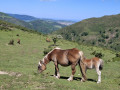
The border winds peacefully along the waters of the River Bidasoa, then rises abruptly up the ridge of the Pyrenees, towards the Col d’Ibardin and on to the Rhune massif. Numbered boundary markers were erected in the mountains to demarcate this administrative line, and patrols of vigilant customs officers had to be deployed to curb the night-time smuggling and trafficking of goods in days gone by. This walk partly follows in the footsteps of these border guards; you will notice that the job required a certain level of physical fitness at the time, as the climb to border marker No. 3 is quite challenging, though fortunately shaded by a beautiful oak grove. In these forgotten corners of the Basque mountains, provided you are not put off by steep slopes, the circular route becomes a splendid ascent towards the first Pyrenean peaks.
Axuria from the Sare Caves
 4.35 mi
+2,024 ft
-2,024 ft
3h 45
Moderate
Departure from Sare (Pyrénées-Atlantiques)
4.35 mi
+2,024 ft
-2,024 ft
3h 45
Moderate
Departure from Sare (Pyrénées-Atlantiques)
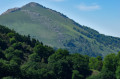
Starting from the caves of Sare (which are well worth a visit), the climb to this proud summit offers a magnificent panorama. The climb up the French side, which is sometimes steep, quickly takes you close to the summit ridge, which you follow to reach the top of Atxuria. The route continues opposite the village of Zugarramurdi, the village of witches, before plunging down the Spanish side. A wild crossing precedes a steeper descent back to the French side, passing at the foot of cliffs made up of countless brown-red ledges: overhanging, they serve as a refuge and nesting place for colonies of griffon vultures that fly over this idyllic pastoral landscape. As you approach the forest, the hundred-year-old beech trees and the refreshing company of streams give this gentle valley an enchanting air.
The Ibanteli from the Xabalo area
 6.14 mi
+1,932 ft
-1,926 ft
4h 30
Moderate
Departure from Sare (Pyrénées-Atlantiques)
6.14 mi
+1,932 ft
-1,926 ft
4h 30
Moderate
Departure from Sare (Pyrénées-Atlantiques)
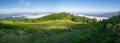
Starting from refreshing streams, a warm-up walk through chestnut and oak woods gradually reveals the other side of the Rhune, towering above the foggy plains iridescent with the first rays of the sun. After following a small canal, the route climbs into the open, widening the view of the hillsides. The slope becomes steeper along the edge of the forest, then along the border, before levelling out onto a wide, beautiful lawn. It is then time to climb the last slopes leading to the summit of Ibanteli. This summit offers a breathtaking 360° panorama of the Basque countryside, the ocean, the Rhune, the Col d'Ibardin, the Peñas de Hayas and, to the east, the Pyrenees and Atxuria. In this direction, you can also see the Lizarrieta border pass, which may be waiting for you for a refreshing break or a typical, hearty lunch..
Around Sare
 5.71 mi
+1,378 ft
-1,371 ft
3h 50
Moderate
Departure from Sare (Pyrénées-Atlantiques)
5.71 mi
+1,378 ft
-1,371 ft
3h 50
Moderate
Departure from Sare (Pyrénées-Atlantiques)
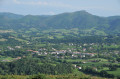
With the beautiful village of Sare as its starting point, this hike showcases the built heritage, old stones, history and landscapes in a very varied loop where there is no room for monotony. From a sporting point of view, the climbs and descents follow one another without transition, never very long, but admittedly with a few steep sections that are sometimes quite tough. It takes a little effort to complete this varied circuit between the town hall square and the heights of the Col de Saint-Ignace. But above all, there are discoveries to be made along the way. Walking along the cobblestones of the old galtzada (medieval road) is a poignant introduction to the area's heritage, followed further on by an old wash house, the remains of Napoleonic redoubts and traditional houses and barns.
Larraldota from Arancou
 5.47 mi
+748 ft
-774 ft
3h 10
Easy
Departure from Arancou (Pyrénées-Atlantiques)
5.47 mi
+748 ft
-774 ft
3h 10
Easy
Departure from Arancou (Pyrénées-Atlantiques)
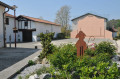
On a sunny plateau overlooking the Bidouze river, Arancou is a village with white walls and a remarkable architectural and human heritage. A historic stop on one of the hiking trails to Santiago de Compostela, the Via Turonensis, Arancou built its reputation around a hospital-priory that welcomed pilgrims from the 13thcentury onwards. There are also a few mansions, once dedicated to hospitality, whose architectural details can still be appreciated. In the village, the Church of Notre-Dame is also worth a visit for its style, which combines a long Romanesque plan with Gothic vaults and capitals. Along the trails, the surrounding hills promise fresh air in the forest, where you can see beautiful hundred-year-old oak trees, while the Bidouze valley offers peace and quiet and cool riverbanks.
Bizkarra (Baigura) from Hélette
 6.89 mi
+2,113 ft
-2,093 ft
5h 00
Difficult
Departure from Hélette (Pyrénées-Atlantiques)
6.89 mi
+2,113 ft
-2,093 ft
5h 00
Difficult
Departure from Hélette (Pyrénées-Atlantiques)
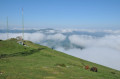
There are several routes to the summit of Baigura, one of the Basque Country's most iconic peaks, renowned for its exceptional views. Starting from the village of Hélette, the climb is very varied. From the last houses to the nearby groves, it feels like you're setting off on a short walk to get some fresh air among the ferns. Then, as the morning light begins to gild the slopes of Erregelu and Ursuia, you find yourself drawn into a more ambitious hike, the view of the surrounding valleys becoming more beautiful as you gain height. Following a mountain path close to the ridges, the promontories follow one after the other and the summit of Erregelu, which seemed so far away, is now within reach. From its paragliding launch site, Baigura is already close by, and all that remains is to enjoy the panoramic view.
The Beltxu Peak
 10.66 mi
+3,097 ft
-3,100 ft
7h 35
Difficult
Departure from Saint-Just-Ibarre (Pyrénées-Atlantiques)
10.66 mi
+3,097 ft
-3,100 ft
7h 35
Difficult
Departure from Saint-Just-Ibarre (Pyrénées-Atlantiques)
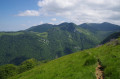
Located between the provinces of Basse-Navarre and Soule, the secret Arbailles massif offers many attractions for curious hikers. This limestone massif is renowned for its karstic relief, which is ideal for caving. Located in the northern part of the massif, the Beltxu route offers beautiful views and a challenging and varied hike. The view stretches far into the distance and is well worth the extra effort.
The Saint-Antoine Chapel from Musculdy
 7.19 mi
+1,670 ft
-1,680 ft
4h 45
Moderate
Departure from Musculdy (Pyrénées-Atlantiques)
7.19 mi
+1,670 ft
-1,680 ft
4h 45
Moderate
Departure from Musculdy (Pyrénées-Atlantiques)
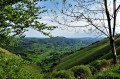
This circular route allows you to discover a farming world that is still very much alive. The farms scattered across the valley floor are still in operation, with their numerous meadows. You can gain a better understanding of this multifaceted agro-pastoral culture as you cross the forests and then the pastures of the mid-mountains. The Saint-Antoine chapel overlooks the Col d'Osquich, a popular spot for wood pigeon hunting in autumn. From the summit, there is a breathtaking view of the Soule Valley, the Haute-Soule mountains, the Arbailles karst massif and Basse-Navarre.