A visit to Saint-Gall Cemetery

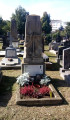
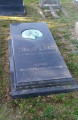
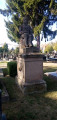
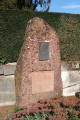
A short urban walk to visit one of Strasbourg’s oldest cemeteries, which is pleasantly open and tree-lined. It is the final resting place of several prominent figures from the worlds of science – particularly chemistry – as well as music and poetry. Political figures are also buried here, including former mayors of Strasbourg and Members of Parliament for the Bas-Rhin, most of whom lived through the changes in sovereignty that Alsace experienced between 1870 and 1945.

Details

n°109410404
Creation:
Last update:
Last review:
–
  • Walking
    Activity: Walking
  • ↔
    Distance: 1.11 mi
  • ◔
    Average duration: 0h 30 
  • ▲
    Difficulty: Easy

  • ⚐
    Back to start: Yes
  • ↗
    Ascent: + 13 ft
  • ↘
    Descent: - 13 ft

  • ▲
    Highest point: 482 ft
  • ▼
    Lowest point: 469 ft
  • ⚐ Country: France
  • ⚐ City: Strasbourg (67000|67200|67100)
  • ⚑
    Start/End: N 48.580631° / E 7.722164°
  • ❏
    IGN map(s): Ref. 3816OT
  • Hour-by-hour weather

Photos

Description of the walk

Start from the Parc des Romaines tram stop (line F), on the platform heading towards Place d’Islande (if arriving from the opposite direction, cross the tracks at the designated crossing).

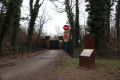
(S/E) Follow Boulevard de Koenigshoffe to the right, moving away from the motorway bridge (heading west). Take the first left, towards the Saint-Gall Cemetery. Cross a car park then turn right to reach the cemetery entrance.

The route within the cemetery is a guide only and there are various alternative routes. At intervals, posts indicate the section numbers and small markers indicate the row numbers. In the description below, the names appearing on the graves may be highlighted for three different reasons:
1) Graves of notable figures, in which case a lower-case letter in brackets refers to a short entry in the ‘Places to see’ section, where the names are listed in the order in which they appear on the route.
2) Particularly original monuments.
3) Useful landmarks within the cemetery.

(1) Enter the cemetery and turn immediately to the right. At the junction where sections 8 and 13 meet, turn right. After the third row, take the grassy path on the left. Further on, turn left between the Friderich and Froehlich graves. Enter section 2 and proceed a further two rows.

Then turn left and you will find, on the right, the grave of Marie-Joseph Erb (a), adorned with his medallion. Further on, on the right behind the first row, lies the grave of Léonie Kastner-Boursault (b) and her son Frédéric Kastner (c). At the junction that appears shortly afterwards, turn right. Opposite the Fromm grave, follow a wide path to the right. On the left, at the foot of two shrubs and surrounded by a chain, lies the Gruber family plot, including David (d).

(2) At the T-junction, turn left and note the columbarium on the right. Walk past a large crucifix and continue straight ahead into Section 11. At the foot of a fir tree, turn left at the corner of the Chapelle grave. At the junction, with Charles Frey’s grave (e) opposite, turn right into another path.

At the next junction, with the grave of Jean Freysz (f) opposite, turn right and enter Section 1. On the left is the grave of Émile-David Bronnert (g). At the end of the path, turn left. Then turn left at the foot of a fir tree, between two graves marked by two simple wooden crosses. Note General Farny’s grave (h) on the left.

At the T-junction, turn right to find, in the second row, the Boehm family grave featuring a mourning woman, including Maurice (i). Retrace your steps and walk along the path on the right beyond the metal fence. Note, on the right-hand side, another mourning woman adorning the Freysz family grave.

Then turn left between the Mennrath and Stemmer graves. Walk past a yew tree. At the T-junction, turn right at the corner of the Goltz grave. At the next T-junction, turn left and walk alongside a hedge on your right.

(3) At the junction, turn right, cross a tarmac path and enter section 9a. Shortly afterwards, turn right between a grave overgrown with vegetation and the Faudel grave. Enter section 8a. Opposite the Kopp grave, turn left, leaving the Vix grave on your right. Note, on the right in the second row, the medallion adorning Ehrenfried Stoeber’s grave (j).

Just past the Meyer grave, which consists only of a cross protected by two wooden panels, turn left. Pass a grave overgrown with vegetation on the right, then turn right at the corner of the Chalot grave. At the foot of the post marking section 9a, turn right.

At the junction, note the grave of Frédéric Musculus (k) in the second row, opposite on the right, and turn left. Go down a flight of steps and continue straight ahead. At the end of the path, turn left. At the corner of the second row, turn left to see the Merlin family grave, whose headstone is adorned with a map of Martinique, suggesting the family’s origins. Retrace your steps and take the main path to the left. Shortly afterwards, climb the first flight of steps on the left.

(4) At the top, turn immediately right: the second grave on the left, whose poudingue headstone bears a medallion, is that of Jacques Peirotes (l).

Continue along the handrail on your right. At the end of the path, turn left, ignore a flight of steps leading down to the right and walk alongside a wire fence on your right. At the end of the fence, turn right and enter section 5a. On the left, in the second row, note the grave of Guillaume Gunzert (m).

Turn right at the corner by the Kruss grave. Follow row 5, keeping a column on your left. At the end, turn left and walk alongside a wire fence on your right. At the foot of a fir tree, head up a paved path to the left.

At the boundary between sections 2a and 3a, continue straight ahead. Note, on the left in the fourth row, the grave adorned with a vase belonging to Madeleine Horst (n). Just before a tarmac path and the cemetery entrance, turn left and walk alongside a hedge on your right. Pass the Gillet grave and proceed one more row.

(5) Then turn left. The third grave, adorned with a medallion, is that of Franz Stockhausen (o). At the corner of the Malher-Schaer grave, turn sharply right. Then turn left at the corner of the Eyermann-Heneres grave. After the Balla grave, turn right to reach the foot of Jean-Georges Arnold’s grave (p), easily recognisable by the statue of a seated man above it.

Then turn left, leaving the Kipper grave on your left. On the right, the gravestone of Ernst Laas (q) is adorned with a medallion. At the end of the path, turn right twice to follow a wide avenue. On the left, you will find the Ungerer family grave, including Théodore (r) and his son Tomi (s).

Turn left at the corner of the Ungerer grave. Note, on the right, the medallion adorning the grave of the twin brothers, Albert (t) and Adolphe (u) Matthis. Then turn right. At the junction, turn right again. At the next junction, follow a wide path to the left. Shortly afterwards, turn right into section 7a. On the left, set back several rows, you’ll see the grave of Johan Jacob Jung (v), adorned with an anchor.

At the junction, turn right. At the next junction, turn left onto a wide path. You’ll come out onto a tarmac path; follow it to the right until you reach the cemetery exit.

(1) Walk a short way, then head left. Join Boulevard de Koenigshoffe and follow it to the right to quickly reach the Parc des Romains tram stop (S/E).

Waypoints

  1. S/E : mi 0 - alt. 482 ft - Parc des Romains tram stop
  2. 1 : mi 0.19 - alt. 479 ft - Entrance to Saint-Gall Cemetery
  3. 2 : mi 0.33 - alt. 479 ft - T-junction
  4. 3 : mi 0.52 - alt. 479 ft - Crossroads
  5. 4 : mi 0.64 - alt. 472 ft - Top of a flight of stairs
  6. 5 : mi 0.78 - alt. 479 ft - Turn left
  7. S/E : mi 1.11 - alt. 482 ft - Parc des Romains tram stop

Notes

A good pair of trainers is all you need for this short urban walk.

Inside the cemetery, there are drinking fountains at various points and toilets on the right just after the entrance. There are bars and restaurants in the surrounding neighbourhood.

As there is no map showing the location of the graves, please follow the description carefully. Allow around two hours for your visit to the cemetery.

Opening hours for Saint-Gall Cemetery:
- 3 November to 28 February: 07.30–17.00.
- From 1 March to 2 November: 7.00 am–7.00 pm.

Please remember that a cemetery is a place of contemplation and that discreet and respectful behaviour is required.

Walk undertaken by the author on 15 October 2026.

Worth a visit

Some facts about the history of Saint-Gall Cemetery:
In use since the first quarter of the 16th century, Saint-Gall Cemetery is one of the oldest cemeteries in Strasbourg. Covering an area of 2.5 hectares, it is situated in the Koenigshoffen district, to the west of the city, on the opposite side of the A35 motorway from the railway station.

Graves of notable figures (non-exhaustive list):
a – Marie-Joseph Erb (1858–1944) Composer and organist. In 1884, he became organist at Saint-Jean Church in Strasbourg and, in 1910, a professor at the Strasbourg Conservatoire.
b – Léonie Kastner-Boursault (1820–1888) A close friend of Henry Dunant, the founder of the International Red Cross (who had her grave restored in 1997).
c – Frédéric Kastner (1852–1882) Physicist and musician. He invented the pyrophone, an organ-like instrument whose glass pipes are set vibrating by hydrogen flames.
d - David Gruber (1825–1880) An industrialist, chemist and trained pharmacist. He experimented with new brewing and malting techniques. In 1885, he founded a brewery in the Koenigshoffen district of Strasbourg, not far from Saint-Gall Cemetery; the brewery closed in 1965.
e - Charles Frey (1888–1955) Politician, Member of Parliament for the Bas-Rhin from November 1919 to May 1936 and Mayor of Strasbourg from May 1935 to June 1940, then from November 1944 to October 1955 (he was therefore responsible for managing the evacuation of the city and, four years later, its reconstruction).
f – Jean Freysz (1844–1880) Born into a family of farmers, he transformed his small-scale brewery on the Grand Rue, right in the city centre, into an industrial-scale operation by relocating it to the Koenigshoffen district. He died young (aged 36); his business was taken over and expanded by his wife, Caroline, and later passed on to his son, Jules.
g – Émile-David Bronnert (1868–1928) Chemist, industrialist and politician.
h - Charles-Auguste Farny (1838–1924) Trained at the École spéciale militaire and then at the École de cavalerie in 1861, he took part in the Mexican campaign from 1862 to 1867. He was wounded in December 1870 during the Franco-Prussian War.
i - Maurice Boehm (1914–1945) Died for France very shortly after the armistice of May 1945.
j – Ehrenfried Stoeber (1779–1835) A poet who wrote in German and Alsatian, whilst remaining deeply attached to France; a champion of Alsatian traditions.
k - Frédéric Musculus (1829–1888) A chemist by training, he demonstrated that fermentation could be caused by a ‘soluble agent’ independent of a living organism, which constituted the first experimental proof of the existence of what is now known as an enzyme.
l – Jacques Peirotes (1869–1935) A politician, he was mayor of Strasbourg from 1919 to 1929 and Member of Parliament for the Bas-Rhin from 1924 to 1932.
m – Guillaume Gunzert (1834–1911) Lawyer and politician.
n - Madeleine Horst (1892–1987) Translator from German into French, awarded a prize by the Académie Française in 1978; she was editor-in-chief of the *Cahiers Albert Schweitzer* from 1980 to 1987.
o – Franz Stockhausen (1839–1926) Pianist, choirmaster and conductor.
p - Jean-Georges Arnold (1780–1929) Lawyer, poet and playwright.
q – Ernst Laas (1837–1885) German philosopher, associated with the so-called positivist school of thought. From 1971 until his death, he was a professor at the University of Strasbourg.
r - Théodore Ungerer (1894–1935) Clockmaker and historian. He was responsible for the maintenance of one of the astronomical clocks at Strasbourg Cathedral.
s - Tomi Ungerer (1931–2019) Born Jean-Thomas, he was an artist, illustrator and writer. A traveller, he lived in Nova Scotia and, above all, in Ireland, in County Cork. He is known for his posters protesting against the Vietnam War and racial segregation in the United States. Traumatised by the consequences of the annexation of Alsace in June 1940, whilst he was still at school, he was a staunch advocate of Franco-German friendship and the preservation of bilingualism in Alsace.
t – Albert Matthis (1874–1930) A poet who wrote in the Alsatian language, particularly the Strasbourg dialect.
u - Adolphe Matthis (1874–1944) A poet who wrote in the Alsatian language, specifically the Strasbourg dialect.
v - Johan Jacob Jung (1796–1838) A barge master known for having established, in 1836, the first river service between Strasbourg and Paris.

Main sources: Alsace-Histoire, Strasbourg City Council, Wikipedia and Cimetières de France et d’ailleurs (it is unclear which source copied from which).

Other walks in the area

For more walks, use our search engine .

The GPS track and description are the property of this route's author. Please do not copy them without permission.