


Refine your search for walks in Trévou-Tréguignec
Trévou-Tréguignec walks


 The coast between Trestel and Trélévern
 Visorando Member
 6.66 mi
 +554 ft
 -554 ft
 3h 35
3h 35
 Moderate
 Departure from Trévou-Tréguignec (Côtes-d'Armor)
Three circular routes to suit everyone's needs, but all of them allow you to discover the Trégorrois region and the coast.
Land and sea around Trévou-Tréguignec
 4.81 mi
+217 ft
-220 ft
2h 25
4.81 mi
+217 ft
-220 ft
2h 25
 Easy
Departure from Trévou-Tréguignec (Côtes-d'Armor)
Easy
Departure from Trévou-Tréguignec (Côtes-d'Armor)
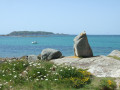
After passing through the Trestel Marshes nature reserve and the woodland overlooking it to the west, this route follows sections of the GR®34 via the small ports of Kériec and Le Goff. A lovely finish at Trestel’s fine-sand beach. Panoramic views of Île Tomé and the bird sanctuary of the Archipelago of the Seven Islands.
Trestel and Port-Blanc
 7.11 mi
+305 ft
-299 ft
3h 30
Moderate
Departure from Trévou-Tréguignec (Côtes-d'Armor)
7.11 mi
+305 ft
-299 ft
3h 30
Moderate
Departure from Trévou-Tréguignec (Côtes-d'Armor)
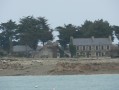
This hike in Trégor is not particularly difficult. After following the coast along the customs officers' path and catching a glimpse of Île des Femmes and Île Saint-Gildas, you will discover Port Blanc before heading inland to explore the Trestel marshes.
From Port L'Epine to the Vallée des Moulins via Trestel
 7.17 mi
+446 ft
-427 ft
3h 40
Moderate
Departure from Trélévern (Côtes-d'Armor)
7.17 mi
+446 ft
-427 ft
3h 40
Moderate
Departure from Trélévern (Côtes-d'Armor)
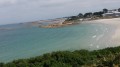
This walk in the Trégorrois region will take you first to Palud beach (Port l'Epine), then to the woods of Trévou-Tréguirec, before visiting the hinterland of Trélévern with its streams and lakes, and finally to the Vallée des Moulins along the Ruisseau de Dourdu. Finally, the coastal path runs along the cove of Perros, with Perros-Guirec filling the horizon to the west.
Port Blanc le Royau loop
 4.71 mi
+69 ft
-66 ft
2h 15
Easy
Departure from Penvénan (Côtes-d'Armor)
4.71 mi
+69 ft
-66 ft
2h 15
Easy
Departure from Penvénan (Côtes-d'Armor)
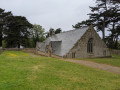
Between the communes of Penvénan and Trévou Tréguignec, the circuit takes you from Port Blanc to Plage du Royau, where you'll discover a beautiful coastline and local history.
The Dourdu Valley and Perros Cove
9.60 mi
+417 ft
-423 ft
4h 45
Moderate
Departure from Louannec (Côtes-d'Armor)
Hike in the Louannec countryside, among cows and coconut fields, then along the coastal path and beach.
Coastal route in Louannec
4.43 mi
+177 ft
-190 ft
2h 10
Easy
Departure from Louannec (Côtes-d'Armor)
A short hike to enjoy with the family. The sea and countryside are on the agenda.
South of Perros-Guirec, between Saint-Quay-Perros and Pleumeur-Bodou
7.38 mi
+558 ft
-561 ft
3h 55
Moderate
Departure from Saint-Quay-Perros (Côtes-d'Armor)
A charming exploration of the Perros hinterland, featuring the Kernivinen Chapel, its sunken paths through which small streams flow, and the granite boulders scattered amongst private plots – all traces of a thousand-year-old past. This route, which starts in Saint-Quay-Perros, takes visitors to the commune of Pleumeur-Bodou and continues on to Perros-Guirec, passing through the Kergadic Business Park.
Between Saint-Quay-Perros and Louannec
5.05 mi
+341 ft
-341 ft
2h 35
Easy
Departure from Saint-Quay-Perros (Côtes-d'Armor)
The hinterland of Perros-Guirec, with, at the end of the route, the footpath running alongside the Étang du Lenn.
The Buguélès foreshore
 6.77 mi
+210 ft
-203 ft
3h 20
Moderate
Departure from Plougrescant (Côtes-d'Armor)
6.77 mi
+210 ft
-203 ft
3h 20
Moderate
Departure from Plougrescant (Côtes-d'Armor)
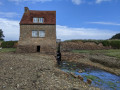
The Buguéles foreshore is a labyrinth covering more than 2,000 hectares, submerged at high tide but accessible at low tide. A maze of rocks, centred around six main islands – some of which are inhabited – criss-crossed by more or less defined paths.A real treat for exploring, for the views, and for taking photos.The circular walk returns via sunken paths beneath the trees.At high tide: do not venture onto the foreshore.
Between pink rocks and green valleys, around Perros-Guirec
 10.66 mi
+489 ft
-482 ft
5h 20
Moderate
Departure from Perros-Guirec (Côtes-d'Armor)
10.66 mi
+489 ft
-482 ft
5h 20
Moderate
Departure from Perros-Guirec (Côtes-d'Armor)
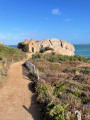
While the GR®34 or "Sentier des Douaniers" is one of the best-known walks in the region, impressive with its piles of pink granite, some of which reach 20 metres in height, the Vallée des Traouïéros is more secret but remains a magical world with the Maison des Korrigans, the Auge du Lépreux, the Trou de l'Enfer and its caves. The route proposed here takes you "from pink to green" as close to nature as possible, with a touch of grey from the slate roofs of Breton houses. This is definitely a hike that will show you all the colours of the rainbow!
The City of Hydrangeas and the Customs Officers' Path
 7.65 mi
+407 ft
-400 ft
3h 50
Moderate
Departure from Perros-Guirec (Côtes-d'Armor)
7.65 mi
+407 ft
-400 ft
3h 50
Moderate
Departure from Perros-Guirec (Côtes-d'Armor)
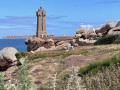
Start with an urban walk to discover La Clarté and part of Perros-Guirec, then continue along the Pink Granite Coast via the Chemin des Douaniers and finish at Ploumanac'h, voted "France's favourite village" in 2015.
The moors of Ploumanac’h
 4.86 mi
+249 ft
-253 ft
2h 25
Easy
Departure from Perros-Guirec (Côtes-d'Armor)
4.86 mi
+249 ft
-253 ft
2h 25
Easy
Departure from Perros-Guirec (Côtes-d'Armor)
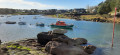
Ploumanac’h, “France’s favourite village in 2015”, is a small tourist port linked to Perros-Guirec.It is the town of pink granite, as walkers can discover in the sculpture park (currently being refurbished in 2016). The coastal path (GR®®34), the Tertre de la Clarté, the small sandy beaches of La Bastille and Saint-Guirec with its oratory and chapel, and finally the chaotic piles of granite are the main attractions.
La Roche-Derrien and the Hortence Garden
7.58 mi
+469 ft
-472 ft
3h 55
Moderate
Departure from Langoat (Côtes-d'Armor)
This walk begins and ends on the banks of the ponds at La Roche-Derrien (Crec’h an Goué). The route first takes us to St Anne’s Chapel, which is part of Kermézen Castle. We then cross the Hortence Garden (10ha), where a Dutch couple grow hydrangeas to export to the land of tulips. We finish by admiring the view of Le Jaudy from a promontory, the Oppidum de La Roche, with the Calvaire Chapel.
Pointe du Château in Plougrescant
 6.41 mi
+141 ft
-135 ft
3h 05
Moderate
Departure from Plougrescant (Côtes-d'Armor)
6.41 mi
+141 ft
-135 ft
3h 05
Moderate
Departure from Plougrescant (Côtes-d'Armor)
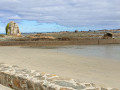
This hike offers stunning views of the rocks sculpted by the sea over the centuries.
You can imagine Napoleon, Mayan masks, dolphins... You'll shiver at the edge of the Castel Meur chasm.
Let yourself be carried away by these sublime landscapes.
A stroll through the heritage of Rospez
 5.54 mi
+102 ft
-102 ft
2h 40
Easy
Departure from Rospez (Côtes-d'Armor)
5.54 mi
+102 ft
-102 ft
2h 40
Easy
Departure from Rospez (Côtes-d'Armor)
This walk through the heritage of Rospez is offered by the "heritage" group of the "Ro'Spered" association.
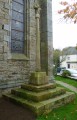
The remarkable sites linked together are very diverse: parish church, chapels, fountain, crosses or calvaries, flax scutching machine, Bronze Age tumulus, restored wash house... crossroads of three Roman roads...
A hike through the Rospez countryside, discovering the remains of a past dating back nearly three millennia...
The old railway line from Lannion to Perros-Guirec
 7.64 mi
+312 ft
-374 ft
3h 45
Moderate
Departure from Lannion (Côtes-d'Armor)
7.64 mi
+312 ft
-374 ft
3h 45
Moderate
Departure from Lannion (Côtes-d'Armor)
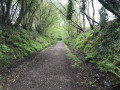
The walk follows part of the first railway network in the Côtes-du-Nord (as it was known at the time), linking Lannion to Perros-Guirec via Petit Camp.
Exploring the Léguer south of Lannion
7.27 mi
+420 ft
-440 ft
3h 45
Moderate
Departure from Lannion (Côtes-d'Armor)
Whilst the level of the Léguer, as it flows through Lannion, is influenced by the tides, further upstream, thanks to several retaining walls, the flow is much more steady. Moreover, the entire area is protected as it serves as a water catchment area for the region.
This route therefore offers an exploration of this coastal river, upstream of Lannion, with a return journey through the surrounding hills.
From Buhulien, the banks of the Léguer between Lannion and Kerfons
7.98 mi
+801 ft
-814 ft
4h 20
Moderate
Departure from Lannion (Côtes-d'Armor)
Walking around the Coat Azur forest means discovering all these hamlets which, in the Middle Ages, lived off the coastal river – hence the many castles that line its banks: Coatfrec, Tonquédec, Kergrist
Today, the largest of these continue to grow, bringing together the homes of people who work in Lannion.
From the Léguer to the heights of Servel in Lannion
 4.60 mi
+279 ft
-282 ft
2h 20
Easy
Departure from Lannion (Côtes-d'Armor)
4.60 mi
+279 ft
-282 ft
2h 20
Easy
Departure from Lannion (Côtes-d'Armor)
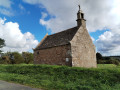
First, a long walk along the Léguer on the towpath, then you’ll reach the heights of Servel via a steep path. After walking along a quiet country lane, offering views of the valley and the town of Lannion, take a path down through the woodland to rejoin the towpath.
Along the Léguer towpath
 7.84 mi
+449 ft
-449 ft
4h 00
Moderate
Departure from Lannion (Côtes-d'Armor)
7.84 mi
+449 ft
-449 ft
4h 00
Moderate
Departure from Lannion (Côtes-d'Armor)
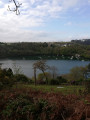
At high tide, the Léguer reaches its maximum level. The landscape is then truly beautiful, provided the sun is shining. The green of the trees is reflected among the boats on the blue water.
At low tide, the landscape is different and the bottom of the Léguer, which is sometimes muddy, gives this coastal river a different appearance.
The Léguer and its streams
7.98 mi
+719 ft
-712 ft
4h 20
Moderate
Departure from Lannion (Côtes-d'Armor)
Downstream from Lannion, the Léguer is fed by several streams: the Porz al Lan, the Kerlouzouen and the Pontol. After following the Léguer, we invite you to explore these streams, which are part of the charm of this region. All that remains is to let your imagination take you back in time to when the various mills along the banks were still in operation, washing flax and hemp and, in some cases, grinding wheat.