


Refine your search for walks in Saint-Hippolyte (Doubs)
Saint-Hippolyte (Doubs) walks


 Les Roches du Château
 Visorando Member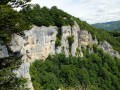
 9.65 mi
 +1,762 ft
 -1,768 ft
 6h 00
6h 00
 Moderate
 Departure from Saint-Hippolyte (Doubs) (Doubs)
From the heart of Saint-Hyppolyte, nestled in the Revirot valley (where the Doubs and Dessoubre rivers meet), along its narrow streets lined with medieval houses, you will climb boldly towards the Chamesol plateau, a balcony overlooking the valley, to reach the viewpoint on the rocks and the vast cave where our ancestors built a castle that was unfortunately destroyed. Through beautiful forests and secret clearings, you will return via Soulce and its salt well, the Ursulines farm at the foot of the rocks and the tufa cave.
Route de découverte de Saint-Hippolyte
1.28 mi
+66 ft
-72 ft
0h 40
 Easy
Departure from Saint-Hippolyte (Doubs) (Doubs)
Easy
Departure from Saint-Hippolyte (Doubs) (Doubs)
Saint-Hippolyte is located at the confluence of the Doubs and Dessoubre rivers in Franche-Comté. It is a small, picturesque tourist village at the gateway to the Pays Horloger (Watchmaking Country). The setting is enchanting: surrounded by the Jura mountains, the Dessoubre to the west and the Doubs to the north. The narrow streets are picturesque and the buildings are examples of the architecture of the Pays Horloger. It is of course possible to combine this short route with another discovery in the region.
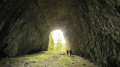
Château de la Roche
 6.59 mi
+1,598 ft
-1,572 ft
4h 25
Moderate
Departure from Saint-Hippolyte (Doubs) (Doubs)
6.59 mi
+1,598 ft
-1,572 ft
4h 25
Moderate
Departure from Saint-Hippolyte (Doubs) (Doubs)
The route offers views of the Doubs Valley and ends with a descent to Saint-Hippolyte from La Chapelle du Mont, passing close to the site of the Château de la Roche.
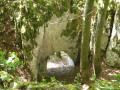
The Bisontin Cave
 4.10 mi
+889 ft
-906 ft
2h 40
Moderate
Departure from Chamesol (Doubs)
4.10 mi
+889 ft
-906 ft
2h 40
Moderate
Departure from Chamesol (Doubs)
A short walk, suitable for families although the elevation gain may be daunting for very young children (at least 6 years old), best enjoyed on sunny days as the route is very shaded.
Make sure you wear sturdy shoes as the route is also very stony
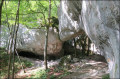
The Arch Trail
 4.70 mi
+863 ft
-860 ft
2h 55
Moderate
Departure from Liebvillers (Doubs)
4.70 mi
+863 ft
-860 ft
2h 55
Moderate
Departure from Liebvillers (Doubs)
Geological and scenic hike offering numerous views of the Doubs valley and amazing natural sites to discover!
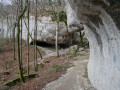
Montécheroux, Grotte du Bisontin, Les Essarts Diot
 6.09 mi
+794 ft
-807 ft
3h 30
6.09 mi
+794 ft
-807 ft
3h 30
 Difficult
Departure from Montécheroux (Doubs)
Difficult
Departure from Montécheroux (Doubs)
Walk offering multiple views of Saint-Hippolyte, exploring the Grotte du Bisontin, the Liebvillers Spring teeming with trout, and the Essarts Diot with another lovely viewpoint.
Please note: parts of this route follow a ridge line, so you need to be careful!
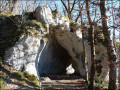
The Yésotte Cave, the Bénéton Cross, the Pierre qui vire
 3.87 mi
+840 ft
-853 ft
2h 30
Moderate
Departure from Fleurey (Doubs)
3.87 mi
+840 ft
-853 ft
2h 30
Moderate
Departure from Fleurey (Doubs)
A ridge walk in the combe, with several geological features to discover and a wide view over the town of Saint-Hippolyte and the Doubs valley.
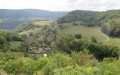
The Châtillon loop, starting from Liebvillers
 3.35 mi
+525 ft
-525 ft
2h 00
Easy
Departure from Liebvillers (Doubs)
3.35 mi
+525 ft
-525 ft
2h 00
Easy
Departure from Liebvillers (Doubs)
A short, peaceful and quiet walk, towards the heights of Liebvillers and from one viewpoint to another.
The route follows the village’s old paths and a pleasant ridge trail.
Well-marked paths but not signposted.
Caution is advised along the ridges and when approaching the promontories at the viewpoints.
Montaigu viewpoint and viewpoint overlooking Saint-Hippolyte
11.39 mi
+1,998 ft
-1,969 ft
7h 00
Difficult
Departure from Bief (Doubs)
From leat, along the Doubs, climb up the valley via the Côte du Savu, passing near Chatillon-sous-Maîche and by the fountain and statue of Saint-Léger, dating from 1721, to the 360° viewpoint at Montaigu overlooking, on one side, the Terres de Chaux and the Crêtes du Lomont all the way to the Pays de Montbéliard, with the Vosges in the background; on the other side, the Jura Plateaus and, in particular, the Chasseral; and, in the foreground, Mont Miroir. The return route takes you through Valoreille and the Combe d'Amotte, to the Pain de Sucre overlooking the Doubs valley and the viewpoint overlooking Saint-Hippolyte, at the confluence of the Dessoubre and the Doubs, via the GRP®, returning to leat via the Grand Recet.
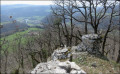
Mont Écheroux
 5.29 mi
+633 ft
-633 ft
3h 00
Easy
Departure from Montécheroux (Doubs)
5.29 mi
+633 ft
-633 ft
3h 00
Easy
Departure from Montécheroux (Doubs)
Easy hike through pastures and undergrowth to the highest point that gave the village its name.
Wide views of the French-Swiss Jura mountain range, the site of Clémont and the Doubs valley.
Pass by the small monument to the Lomont maquis.
The Clémont cliff and Belle Roche
 4.13 mi
+213 ft
-217 ft
2h 05
Easy
Departure from Montécheroux (Doubs)
4.13 mi
+213 ft
-217 ft
2h 05
Easy
Departure from Montécheroux (Doubs)
Easy walk along the Clémont cliff.
Viewpoints over Motte de Clémont and Liebvillers.
Access to a small, unusual cave.
Le Lomont via Brisepoutot
 7.31 mi
+1,053 ft
-1,037 ft
4h 15
Moderate
Departure from Montécheroux (Doubs)
7.31 mi
+1,053 ft
-1,037 ft
4h 15
Moderate
Departure from Montécheroux (Doubs)
At the start of the walk, there is a south-facing view of the Haut-Doubs mountains. Then, superb views of the town of Pont-de-Roide from the Haut des Roches, followed by views of the Montbéliard region, with the Belfort Gap and the Vosges as a backdrop.
La Corne au Loup
 9.52 mi
+1,677 ft
-1,660 ft
5h 50
Moderate
Departure from Valoreille (Doubs)
9.52 mi
+1,677 ft
-1,660 ft
5h 50
Moderate
Departure from Valoreille (Doubs)
From Valoreille, a superb balcony overlooking the Dessoubre valley, you will descend towards the river through peaceful pastures with unobstructed views of the neighbouring mountains. Then, from the typical village of Vauclusotte and its covered wash house fountain, you will climb through beautiful forests to the Montaigu viewpoint, the Lomont wind turbines, the Montbéliard region and the Ballon d'Alsace, before finally cooling off at the Saint-Ligier fountain, dating from 1721 and topped by its bishop.
The Belvédère du Bourbet and the Waroly Waterfall
 7.18 mi
+1,388 ft
-1,401 ft
4h 30
Moderate
Departure from Mancenans-Lizerne (Doubs)
7.18 mi
+1,388 ft
-1,401 ft
4h 30
Moderate
Departure from Mancenans-Lizerne (Doubs)
A picnic area with tables overlooks the Dessoubre valley at an altitude of nearly 750 metres. Old farms dating back to the 1960s cling to the mountainside. A wild valley where, perhaps, our Comtois Gauls performed their druidic rituals in sacred clearings. A natural rock known as the Devil's Castle overlooks the Waroly waterfall. Finally, caves carved out over centuries.
From Fort des Roches to Pont-de-Roide
 1.54 mi
+249 ft
-249 ft
0h 55
Easy
Departure from Pont-de-Roide (Doubs)
1.54 mi
+249 ft
-249 ft
0h 55
Easy
Departure from Pont-de-Roide (Doubs)
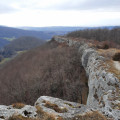
A lovely circular walk along the cliffs overlooking the Doubs valley. Breathtaking views and distant panoramas (you can see the Ballon d'Alsace 50 km to the north).
At the fort, the League for the Protection of Birds organises an annual monitoring of migratory birds.
This walk is best enjoyed in good weather for the exceptional views and the feeling of being in another world, far from the valley below.
Mont-Miroir, Roche de Ruan, Faux Verger, starting from Maîche
11.86 mi
+1,834 ft
-1,821 ft
7h 05
Difficult
Departure from Maîche (Doubs)
From the centre of Maîche, head up via the Étang de la Goule to Mont Miroir and its ski lift, then continue to the Roche de Ruan viewpoint. Descend towards the town, then climb back up the hill to the Saint-Michel Chapel overlooking Maîche. Then head downhill, passing through the Château du Désert park, before following the Faux Verger circular route, and returning via La Lizerne and the Château de Mérode. This pleasant circular route offers numerous viewpoints, including the one at Faux Verger, which provides a truly 360° view of the surrounding landscape, from the Vosges to the Swiss Jura, and even as far as the Bernese Alps, weather permitting.
Rocher du Bourbet, Waroly caves and waterfalls from Maîche
10.97 mi
+1,555 ft
-1,529 ft
6h 25
Moderate
Departure from Maîche (Doubs)
Starting from Maîche, pass through Les Bréseux to see, in particular, its Comtois-style church with magnificent modern stained glass windows, then on to Rochet du Bourbet, a viewpoint over the Dessoubre valley and picnic area. Return via the QuatreGrottes de Waroly, the Waroly waterfalls and the hamlet of La Lizerne. Several interesting viewpoints: Rochet du Bourbet, on the way down to the Château de l'Ermitage, then on the way back up to the hamlet of La Lizerne, among others.
Mont Miroir
 4.93 mi
+853 ft
-863 ft
3h 00
Easy
Departure from Maîche (Doubs)
4.93 mi
+853 ft
-863 ft
3h 00
Easy
Departure from Maîche (Doubs)
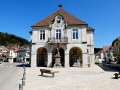
From Montalembert Castle, built by the Guyot de Malseigne family from 1574 onwards, you will climb to various viewpoints: the Notre-Dame des Anges Chapel at the top of the beautiful Saint-Simon hill; then the Roche de Ruan via paths lined with majestic fir trees, forming a guard of honour; the pastures of Mont Miroir and its concert of cowbells with its view of Lomont and the Saint-Hyppolite valley; and finally, the Mont Joie viewpoint overlooking the city and Saint-Pierre Church.
The Réclère Caves
 8.60 mi
+1,772 ft
-1,781 ft
5h 30
Moderate
Departure from Montjoie-le-Château (Doubs)
8.60 mi
+1,772 ft
-1,781 ft
5h 30
Moderate
Departure from Montjoie-le-Château (Doubs)
From the castle ruins, you will climb up to the ledges where, like tightrope walkers from one border marker to the next, you will walk along the ridge line, neither in France nor in Switzerland. You will reach the Réclère Caves, considered the most beautiful in the world by the first explorers in 1886. From Journey to the Centre of the Earth by Jules Verne to Conan Doyle's The Lost World, you will squeeze between dinosaur feet. The return journey, via the old farmhouse at Montavon, will be less adventurous.
Pont de Roide
 5.45 mi
+1,362 ft
-1,335 ft
3h 40
Moderate
Departure from Pont-de-Roide (Doubs)
5.45 mi
+1,362 ft
-1,335 ft
3h 40
Moderate
Departure from Pont-de-Roide (Doubs)
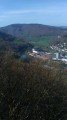
Hike accessible to all.
Can be done in all seasons with superb views.
Route de découverte de Maîche
4.21 mi
+272 ft
-285 ft
2h 10
Easy
Departure from Maîche (Doubs)
This short circular route allows you to visit the small town of Maîche, located in the Pays Horloger (Watchmaking Country). This short walk allows you to see much of the town's heritage, such as the Church of Saint-Pierre, the Château du Désert and its park, and the Chapelle des Anges. The route also passes in front of the châteaux of Montalembert and Mérode, which are private properties. Finally, the hike ends with a botanical trail that winds its way through the Côteau Saint-Michel.
Dessoubre Valley in Orgeans
 3.30 mi
+509 ft
-512 ft
2h 00
Easy
Departure from Orgeans-Blanchefontaine (Doubs)
3.30 mi
+509 ft
-512 ft
2h 00
Easy
Departure from Orgeans-Blanchefontaine (Doubs)
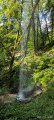
A short hike suitable for families. After a period of rain, there are beautiful small waterfalls, but some sections of the stream must be forded.
Beautiful view of the Hermitage as well.
In hot and humid weather, watch out for ticks.
Pont de Roide - St-Hippolyte
 10.14 mi
+1,722 ft
-1,647 ft
6h 10
Moderate
Departure from Pont-de-Roide (Doubs)
10.14 mi
+1,722 ft
-1,647 ft
6h 10
Moderate
Departure from Pont-de-Roide (Doubs)
This hike is the second stage of the Grande Traversée du Jura. Although a little longer and more difficult than the first, it is one of the easiest stages of this crossing. Starting from Pont-de-Roide, the hike begins with an ascent to the Tour Carrée, passing by the Fort des Roches, which offers a superb view of the region. The hike then alternates between meadows and wooded areas, touching on the theme of the Second World War, notably with the Passage de la Douleur. The descent to Saint-Hippolyte is pleasant, with stops at Chamesol and the Chapelle Notre-Dame du Mont. Of course, once you arrive, don't hesitate to take a longer break in the beautiful village of Saint-Hippolyte.
The Tante Airie cave and the Blamont fountains
 3.31 mi
+525 ft
-545 ft
2h 00
Easy
Departure from Blamont (Doubs)
3.31 mi
+525 ft
-545 ft
2h 00
Easy
Departure from Blamont (Doubs)
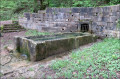
A walk along the water, springs and fountains in the valleys surrounding the promontory of the ancient castle of Blamont. Discover the cave of Tante Airie, the legendary Mother Christmas of the Pays de Montbéliard.
The Réclère Caves (Swiss Jura)
 9.52 mi
+1,476 ft
-1,470 ft
5h 40
Moderate
Departure from Damvant (Canton of Jura)
9.52 mi
+1,476 ft
-1,470 ft
5h 40
Moderate
Departure from Damvant (Canton of Jura)
Circular hike (figure of 8) with a shared section to the Réclère caves.
A circular route through the Val d’Ajoie and the Faux d’Enson, starting from Damvant
10.40 mi
+1,598 ft
-1,614 ft
6h 10
Moderate
Departure from Damvant (Canton of Jura)
Starting from the centre of Damvant, this figure-of-eight route follows the French-Swiss border, running alongside the Prehistoric Park and the Reclère Caves. The route passes through the charming village of Roche d’Or before climbing up to La Faux d’Enson and its panoramic tower. Return via the ridge forming the border before passing through the two Swiss farms at La Vaux and Montavon and returning via the entrance to the Reclère Prehistoric Park and Caves. In fine weather, there are stunning views as far as the Bernese Alps from the Faux d’Enson observation tower, as well as across the Doubs valley on the French side whilst following the border on the return journey.
The banks of the Doubs, Les Chapelles and the Corniche de Goumois viewpoint
 13.42 mi
+2,320 ft
-2,320 ft
8h 10
Difficult
Departure from Damprichard (Doubs)
13.42 mi
+2,320 ft
-2,320 ft
8h 10
Difficult
Departure from Damprichard (Doubs)
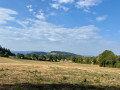
Set off to explore these magnificent trails, which are very pleasant along the River Doubs. The Leat d’Étoz and its Notre-Dame-des-Ermites Chapel, steeped in history and legend. Magnificent wooden sculptures in Urtière and its Saint-Roch Chapel. A walk through woodland, forest and meadows.
Along the Dessoubre
 8.70 mi
+1,467 ft
-1,467 ft
5h 15
Moderate
Departure from Mont-de-Vougney (Doubs)
8.70 mi
+1,467 ft
-1,467 ft
5h 15
Moderate
Departure from Mont-de-Vougney (Doubs)
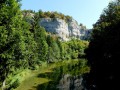
From the charming old church of Mont-de-Vougney, head down towards the Dessoubre, not forgetting to pay your respects to the old Saint-Claude in his stone niche. Once an industrial hub, today it has regained a wild and authentic freshness. As you follow the river, you will discover its cliffs, waterfalls and the Combe Foulot cirque. Then climb back up to the plateau through sunny pastures overlooking the valley.
Bourguignon
 5.39 mi
+479 ft
-489 ft
2h 55
Easy
Departure from Bourguignon (Doubs)
5.39 mi
+479 ft
-489 ft
2h 55
Easy
Departure from Bourguignon (Doubs)
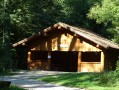
A sandpit, ponds, viewpoint over Bourguignon and the new power station.
Damprichard on the banks of the Doubs
 8.85 mi
+1,949 ft
-1,952 ft
5h 45
Moderate
Departure from Damprichard (Doubs)
8.85 mi
+1,949 ft
-1,952 ft
5h 45
Moderate
Departure from Damprichard (Doubs)
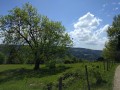
Views of the Chassera and the wind turbines in Switzerland, with the landscapes of the Haut Doubs.
Walk starting from the Resistance Monument in Écot
4.88 mi
+643 ft
-643 ft
2h 50
Easy
Departure from Écot (Doubs)
A short walk of almost 8 km starting from the Resistance Monument in Écot. We begin by following a narrow path through the woods, then a wider path downhill. A very short stretch on the road, then back into the woods via a much more secluded path: be careful, it climbs a bit!
The source of the Doue
 10.60 mi
+1,460 ft
-1,434 ft
6h 10
Moderate
Departure from Glay (Doubs)
10.60 mi
+1,460 ft
-1,434 ft
6h 10
Moderate
Departure from Glay (Doubs)
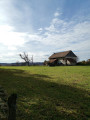
A peaceful, shaded walk with two routes of varying lengths and elevation gains available around Glay and Dannemarie.
Les Sommêtres via La Goule
 9.04 mi
+2,254 ft
-2,267 ft
6h 05
Moderate
Departure from Le Noirmont (Canton of Jura)
9.04 mi
+2,254 ft
-2,267 ft
6h 05
Moderate
Departure from Le Noirmont (Canton of Jura)
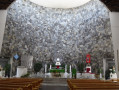
This is a challenging walk, best done in dry weather, with a steady climb followed by a fairly technical descent through undergrowth with roots and stones.
Nature lovers will be delighted by the Doubs valley and its banks, the views from the Roches des Sommêtres and the architecture of the churches and houses in the village of Le Noirmont.
More walks in Saint-Hippolyte (Doubs)
Select a point of interest below: