Country:

 City:
City:


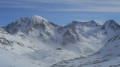

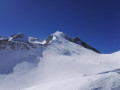
Park at the Plateau des Pountas car park (1,459m), very close to the Pont d’Espagne. This is right in the heart of the Pyrenees National Park, so cars have not been allowed to go any higher since the late 1990s.
Depending on the time of year, the car park may or may not be subject to a charge. Check with the Cauterets Tourist Office.
Depending on the snow depth, put on your snowshoes here or further up.
This hike is also suitable for ski touring.
(S/E) The hike begins after passing under the Pountas cable car building.
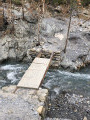
Take the path to the right of the road and follow the signs for the footbridge trail. At the main footbridge spanning the Gave de Gaube, admire the magnificent stone “Pont d’Espagne”, which also crosses the same river.
The path then runs along the rock face for a few dozen metres to reach the open area in front of the guesthouse. This is where the path joins theGR®51coming from the Lutour Waterfall and Cauterets.
Then cross the Pont d’Espagne and take the road leading back down to the car park.
Alternative route: do not take the footbridge path; instead, continue along the winding tarmac road after the cable car building.
(1) On the right, you will soon come across signposts indicating Lac de Gaube, accompanied by the traditional red and whiteGR® markings.
TheGR®10then climbs through the pine and fir forest on the right bank of the Gave, with a 200m ascent, and crosses several streams that flow into the Gave.
The path is wide and well-graveled. You’ll reach a meadow area at 1,660m.
(2) Continue along theGR®10whilst catching a glimpse of the small Lac des Huats below on the right.
Shortly before reaching Lac de Gaube, the path climbs briefly again.
About an hour after setting off, you’ll emerge from the woods and reach the lake’s shores at 1,730m.
(3) Walk around the lake’s left bank to reach its southern end, following the GR®. Cross snow-covered scree slopes and surface snowfields flowing down into the lake.
Caution: In one or two places (depending on the season), proper snow couloirs descending from the Counillères ridges down very steep slopes mean you must descend to the lake to avoid navigating through treacherous ice blocks.
Follow the Gave des Oulettes de Gaube, passing the Esplumouse and Darré Splumouse waterfalls to reach the Petites Oulettes, a long valley with a gentle gradient leading to the Refuge des Oulettes de Gaube.
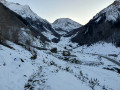
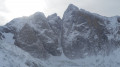
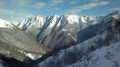
In the background, the Vignemale Massif offers a dazzling spectacle of its north face, with remarkable slopes that have delighted mountaineers since the late 19th century. Everything here is majestic!
(4) At Les Petites Oulettes, at around 2,050m, at a footbridge, take the winter snowshoe trail on the left. Leave theGR®10. Follow roughly the blue dotted line on the map (Nordic route) which runs more or less alongside the river on the right bank. As the route is quite popular in winter, it is rare not to find some tracks ahead of you.
Reach the Refuge des Oulettes de Gaube (2,151m).
(5) Take a short break here, having a coffee with the warden or wardens. Take the opportunity to ask about the latest groups of snowshoers or skiers who have set off towards the Hourquette d’Ossoue.
From the refuge, the route leaves theGR®10(too many hairpin bends and surface snowdrifts via the Lacs d’Arraillé route) to head due south into the Oulettes, at the foot of the Grand Vignemale.
NB: At this stage, there is no ‘standard route’. The destination is the Hourquette d’Ossoue, which only comes into view halfway from the refuge. The route suggested here does indeed lead to the destination! It is one option among many. Snowshoe hikers should follow their mountain instincts to climb the sometimes very steep slopes, whilst ensuring their own safety and that of their group. In bad weather, follow the GPS track closely to avoid unnecessary elevation gain (as unexpected depressions can sometimes lie hidden behind ridges that appear close to the destination). From 2,300m, this route involves a steep ascent to reach a fairly long north-west/south-east-facing ledge, then follows a short ridge, descends into a small valley, and finally climbs again up a very steep slope towards the Hourquette.
On the final ascent, make sure to stay on the right-hand side of the climb, to the south of the Hourquette.
Reach the Hourquette, marked by a large cairn indicating the exact route ofthe GR®10, to the left as you ascend, completely opposite to where this trail ends.
(6) Continue the route towards the refuge, keeping to the right, below the Petit Vignemale ridge, before heading down into the valley to reach the Refuge Baysselance (2,651m).
(7) A night at the Baysselance Refuge is the icing on the cake of this exceptional route!
The next day, begin the return journey, which follows roughly the same route except:
(6) At the Hourquette, head for the cairn and follow the slope.
Via gentle descents towards the south-west, rejoin the previous day’s route much further down and continue past it.
On the descent, keep well to the left, skirting the foot of the Petit Vignemale Glacier (at the edge of snow slides and rockfalls, if any). Don’t hesitate to sledge on your backside on the steep sections where possible!
Then descend properly into Les Oulettes, before rejoining the route taken on the way up.
NB: this route, which is further south than the ascent, seemed easier to us to descend than retracing the outward route. It could probably have been taken on the way up.
The rest of the route is the same all the way to the car park (S/E).


 Visorando Member
 Moderate
 Difficult
 Easy
Easy