


Refine your search for walks in Quinssaines
Quinssaines walks


 Passing by Paulo's
 Association / Club / Walk leader
 5.24 mi
 +538 ft
 -561 ft
 2h 55
2h 55
 Moderate
 Departure from Quinssaines (Allier)
This short hike will take you from the Quinssaines plateau to the village of Font Claude. Magnificent views of the towns of Montluçon, Huriel and Domérat. On the way back to the starting point, you will pass one of the last working vineyards in the region at Peuroir.
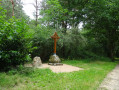
The Croix des Oyardoux
 6.22 mi
+466 ft
-453 ft
3h 15
Moderate
Departure from Prémilhat (Allier)
6.22 mi
+466 ft
-453 ft
3h 15
Moderate
Departure from Prémilhat (Allier)
This walk, starting from Prémilhat church, is particularly well suited to Nordic walking, thanks to the quality of the paths. Along the way, you’ll come across the Croix des Oyardoux, restored in 2013 by Robert Perrot, which marks the junction of three former dioceses: Quinssaines, Teillet and Prémilhat.
From the Roman bridge at Courtioux to the wind turbines at Savernat
6.31 mi
+449 ft
-453 ft
3h 15
Moderate
Departure from Huriel (Allier)
A hike along the paths, but also through the history of human achievements. From the Roman bridge at Courtioux to the wind turbines at Savernat, you will travel through nine centuries. You can also admire two sunken lanes characteristic of the Bourbonnais bocage. If you are observant, you will see the tracks of our ancestors' iron-wheeled carts and wagons engraved in the granite of the lane leading down from La Chaux. Another return to our heritage.
The Saint-Martinien region
 6.23 mi
+351 ft
-335 ft
3h 10
6.23 mi
+351 ft
-335 ft
3h 10
 Easy
Departure from Huriel (Allier)
Easy
Departure from Huriel (Allier)
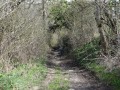
A bucolic walk: little streams, sunken paths, meadows and copses, typical of the Bourbonnais countryside
This route is suitable for mountain biking, but features a very technical descent from the (11).
From La Bartillatte to the church at Quinsaines
 7.58 mi
+440 ft
-427 ft
3h 50
Moderate
Departure from Huriel (Allier)
7.58 mi
+440 ft
-427 ft
3h 50
Moderate
Departure from Huriel (Allier)
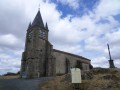
A hike over hill and dale that takes you from the Bartillatte valley and its famous Roman bridge to the distinctive church of Quinssaines, perched on its rock.
This route is suitable for mountain bikes.
It can easily be shortened (see map and practical information).
The wine-growing villages of the Huriel region
5.59 mi
+509 ft
-509 ft
3h 00
Easy
Departure from Huriel (Allier)
A nostalgic walk: you’ll explore a whole chapter of local history, with old vineyards and wine-growing villages dotted along the route.
Suitable for mountain biking, with a very technical section between (2) and (3).
The sheep of Bramefaim
7.08 mi
+410 ft
-413 ft
3h 35
Moderate
Departure from Quinssaines (Allier)
A walk perfectly suited to Nordic walking, along the beautiful paths of the Coursages communal lands. Certain landscapes—vast pastures bordered by fir trees, a shepherd, his sheep and his dogs (yes, really)—inevitably bring to mind a painting from the Barbizon School.
Along the Bartillatte
4.20 mi
+210 ft
-184 ft
2h 05
Easy
Departure from Saint-Martinien (Allier)
This is a lovely, short and easy walk that will delight all lovers of unspoilt landscapes. In the heart of the Bourbonnais countryside, you will enjoy the small shaded paths winding along the streams.
The Ricros tour
6.88 mi
+285 ft
-276 ft
3h 25
Moderate
Departure from Domérat (Allier)
This route is particularly well suited to Nordic walking. The asphalt sections are kept to a minimum and the quality of the surface on the tracks allows for movements that make the exercise very interesting. In addition, this hike is suitable in all seasons. The route is of course also suitable for classic hiking.
From Bois de la Brosse to Bois de Languistre
 Visorando Member
 4.84 mi
+200 ft
-207 ft
2h 25
Easy
Departure from Lavault-Sainte-Anne (Allier)
4.84 mi
+200 ft
-207 ft
2h 25
Easy
Departure from Lavault-Sainte-Anne (Allier)
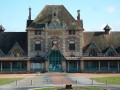
Near Montluçon, this walk will allow you to discover one of the heritage sites of Lavault-Sainte-Anne: close to the route lies a former hospital (La Charité), which was bequeathed by Viscount Pailloux to the town at the start of the 20th century (for further information, see the town hall’s website).This walk is easy to follow as there is very little elevation gain, and it can be enjoyed in any season.
Huriel - Préveranges
19.28 mi
+1,060 ft
-712 ft
9h 45
 Very difficult
Departure from Huriel (Allier)
Very difficult
Departure from Huriel (Allier)
In the footsteps of the Master Bell Ringers, stage7.
In the Footsteps of the Master Bell-Ringers: The Bourbonnais Circular Bocage Loop
45.39 mi
+2,887 ft
-2,904 ft
3 days
Very difficult
Departure from Huriel (Allier)
This circular route takes you along the Allier section of the ‘Sentier d’Itinérance: Sur les Pas des Maîtres Sonneurs’ between Berry and Bourbonnaiscovering a distance of 73 km; it can be completed in three or four days.
As this is a circular route, you can start from any town, depending on the availability of your chosen accommodation and your mode of transport to get to Huriel from Montluçon (via public transport:the Montluçon–Limoges train, with connections from Lyon, Clermont-Ferrand or Paris).
Huriel - Préveranges
19.24 mi
+1,073 ft
-725 ft
9h 45
Very difficult
Departure from Huriel (Allier)
Hiking route: ‘In the footsteps of the master bell-ringers between Berry and Bourbonnais’. A circular variation of the Bocage Bourbonnais route.Route linking Huriel to Préveranges
 Huriel - Préveranges
26.87 mi
+1,690 ft
-1,322 ft
4 hrs
Moderate
Departure from Huriel (Allier)
Second stage of the GRAVEL or mountain bike route based on the walking trail “In the Land of George Sand: In the Footsteps of the Master Bell Ringers between Berry and Bourbonnais”.
Connection from Montluçon station to Huriel
17.25 mi
+988 ft
-614 ft
8h 45
 Difficult
Departure from Montluçon (Allier)
Difficult
Departure from Montluçon (Allier)
Access to the Sentier des Maîtres Sonneurs from Montluçon SNCF train station: this walking route connects Montluçon train station to Huriel via an additional stage to reach the Sentier des Maîtres Sonneurs. This route corresponds to thefirst stage of the GR®100, which connects Montluçon to Poitiers.
De croix en châteaux, sur les pas des Templiers
13.16 mi
+430 ft
-423 ft
6h 25
Difficult
Departure from Lamaids (Allier)
En partant de l'église templière de Lamaids, vous randonnerez entre Combraille bourbonnaise et Combraille creusoise. Le circuit est jalonné de châteaux, (le Fressineau, Bellefaye), de croix, de chapelles et d'églises , rappelant l'emprise des moines soldats, dans le pays.
 Around Lignerolles in the Allier
 16.50 mi
+830 ft
-833 ft
2 hrs
Moderate
Departure from Lignerolles (Allier)
16.50 mi
+830 ft
-833 ft
2 hrs
Moderate
Departure from Lignerolles (Allier)
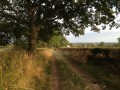
Here are a few trails for mountain biking or walking starting from Lignerolles.
The Cher Valley north of Montluçon
 2.45 mi
+30 ft
-30 ft
1h 10
Easy
Departure from Désertines (Allier)
2.45 mi
+30 ft
-30 ft
1h 10
Easy
Departure from Désertines (Allier)
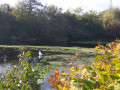
Just a stone’s throw from Montluçon, this walk will allow you to explore the Cher valley with its many ponds (former sand pits) and to stroll along the riverbanks.
On the heights of Désertines
 2.21 mi
+358 ft
-364 ft
1h 20
Easy
Departure from Désertines (Allier)
2.21 mi
+358 ft
-364 ft
1h 20
Easy
Departure from Désertines (Allier)
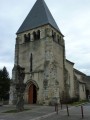
A walk through the hills above the Montluçon basin to admire the view. Along the way, you’ll pass through the Biache district and see the oldest houses in the village.
Les Chataîgniers
 4.72 mi
+709 ft
-682 ft
2h 45
Easy
Departure from Saint-Genest (Allier)
4.72 mi
+709 ft
-682 ft
2h 45
Easy
Departure from Saint-Genest (Allier)
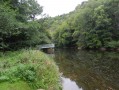
A lovely little hike with beautiful views of the Cher, starting from Saint-Genest south of Montluçon.
The confluence of the Cher and the Tardes near Évaux-les-Bains
 2.82 mi
+413 ft
-427 ft
1h 40
Easy
Departure from Évaux-les-Bains (Creuse)
2.82 mi
+413 ft
-427 ft
1h 40
Easy
Departure from Évaux-les-Bains (Creuse)
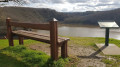
A walk to discover the Cher and La Tarde rivers.
Suitable for families on foot or by mountain bike, and some points can even be reached directly by car.
Ponds and cauldrons in Saint-Genest
 6.77 mi
+771 ft
-771 ft
3h 45
Moderate
Departure from Saint-Genest (Allier)
6.77 mi
+771 ft
-771 ft
3h 45
Moderate
Departure from Saint-Genest (Allier)
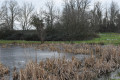
This hike has few tarmac roads and takes you through the bocage landscape of the Combraille Bourbonnaise, dotted with ponds and passing close to old charcoal kilns, the only remains of a camp for Spanish refugees arrested during the Second World War.