


Refine your search for walks in Place de la Concorde
Place de la Concorde walks


 The main monuments of Paris along the Seine
 Visorando Member
 5.12 mi
 +26 ft
 -30 ft
 2h 25
2h 25
 Easy
Easy
 Departure from Paris
This urban but relatively open route allows you to discover the main monuments of Paris on foot. You will see the Eiffel Tower, the Louvre and Notre-Dame Cathedral, among others. The start and finish points are accessible by underground.
Tours and detours in the Champs-Elysées and Tuileries gardens
 3.27 mi
+26 ft
-16 ft
1h 30
Easy
Departure from Paris
3.27 mi
+26 ft
-16 ft
1h 30
Easy
Departure from Paris
This walk allows you to stroll through the gardens that have been laid out in the heart of Paris and enjoy a relative calm that is hard to imagine so close to busy thoroughfares. Along the way, you will discover views of the Champs-Élysées and the Pont Alexandre III, some of Paris's most famous monuments and museums, and a rich and diverse collection of statues.
Women's march of 5 October 1789: from Paris City Hall to Sèvres
 8.88 mi
+89 ft
-82 ft
4h 10
8.88 mi
+89 ft
-82 ft
4h 10
 Moderate
Departure from Paris
Moderate
Departure from Paris
The first section of this women's march of 5 October 1789 follows fairly closely what we know today about the route taken at the time. Starting from the centre of Paris, we follow the course of the Seine and then cross the districts of Auteuil and Billancourt. We cross the Ile Seguin, where the Vieux Pont de Sèvres bridge used to be, and end up in Sèvres, where the 1789 procession made a stop. All along the way, there is a rich heritage to discover.
Symbols of Franco-American relations in Paris
 7.00 mi
+108 ft
-49 ft
3h 20
Moderate
Departure from Paris
7.00 mi
+108 ft
-49 ft
3h 20
Moderate
Departure from Paris
A walk through Paris taking in the iconic sites associated with Americans in Paris, whilst also passing by some of the city’s famous landmarks.
The route can be followed in either direction.
In the footsteps of the French Revolution
 21.14 mi
+1,020 ft
-712 ft
4 days
Moderate
Departure from Paris
21.14 mi
+1,020 ft
-712 ft
4 days
Moderate
Departure from Paris
Here are four hikes that take in iconic locations from the French Revolution. One of them takes place in Versailles, where it all began in May 1789. Another takes place in Paris, which was the scene of many events, including the storming of the Bastille on 14 July 1789. The other two connect Paris to Versailles, attempting to reproduce the women's march of 5 October 1789.
Walks near Place de la Concorde
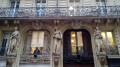
The Opera, Parc Monceau and the Chaillot district
 5.15 mi
+105 ft
-36 ft
2h 30
Easy
Departure from Paris
5.15 mi
+105 ft
-36 ft
2h 30
Easy
Departure from Paris
A journey through Haussmannian Paris, discovering the architecture of the second half of the 19th century, with a detour to Parc Monceau and a few sites celebrating Franco-American friendship.
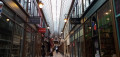
The covered passages of the Montmartre and Saint-Martin suburbs
 3.94 mi
+66 ft
-33 ft
1h 50
Easy
Departure from Paris
3.94 mi
+66 ft
-33 ft
1h 50
Easy
Departure from Paris
Between grand boulevards and covered passages, a walk through a lively neighbourhood of the capital.
A walk to avoid on Sundays and public holidays when the covered passages may be closed.
The bestiary of Chaussée d'Antin and the Palais Royal
 4.06 mi
+10 ft
-13 ft
1h 50
Easy
Departure from Paris
4.06 mi
+10 ft
-13 ft
1h 50
Easy
Departure from Paris
From Place de l'Opéra to Les Halles, via the Church of Notre-Dame de Lorette and the Palais Royal Gardens, this urban trail explores the1st,2nd and9th arrondissements of Paris in search of animal representations.
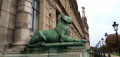
The Bestiary of the Louvre, the Tuileries and the Orsay
 5.05 mi
+26 ft
-26 ft
2h 20
Easy
Departure from Paris
5.05 mi
+26 ft
-26 ft
2h 20
Easy
Departure from Paris
This urban route focuses on the heart of Paris, in a neighbourhood rich in world-famous museums, exploring depictions of animals. In the Tuileries Garden, these are particularly numerous and offer a conflicting view of the animal world, undoubtedly that of their time.
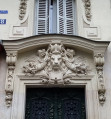
The bestiary of Paris
 146.53 mi
+2,999 ft
-2,625 ft
33 days
Easy
Departure from Paris
146.53 mi
+2,999 ft
-2,625 ft
33 days
Easy
Departure from Paris
This guide brings together around thirty urban routes that allow you to discover representations of animals in the capital: sculptures, building decorations, murals, etc.
Sundials and astronomical curiosities in Paris
8.94 mi
+144 ft
-23 ft
4h 15
Moderate
Departure from Paris
A long urban trail on the theme of sundials and sites related to astronomy scattered throughout Paris: the Paris meridian, observatories, gnomons, etc. Best done on a sunny day so you can read the time along the way! The sundials are often high up, sometimes hidden by trees that have grown... you may have to search hard to find them.
In the footsteps of Georges Brassens: Madeleine, Louvre and Cherche-Midi
 5.11 mi
+82 ft
-23 ft
2h 25
Easy
Departure from Paris
5.11 mi
+82 ft
-23 ft
2h 25
Easy
Departure from Paris
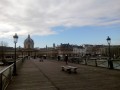
Crossing the Seine on the famous Pont des Arts, this third section takes us from the right bank to the left bank, which Brassens had a marked preference for. It is also an opportunity to visit some of the highlights of Parisian heritage: Place Beauvau and the Elysée Palace, Place Vendôme, the Louvre Museum (with its glass pyramid), the Institut de France, etc.
The Faubourg Saint-Honoré Bestiary
 4.08 mi
+30 ft
-23 ft
1h 55
Easy
Departure from Paris
4.08 mi
+30 ft
-23 ft
1h 55
Easy
Departure from Paris
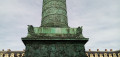
From Place de l’Alma to Place de l’Opéra, a walk through Paris’s 8th and 1st arrondissements to discover numerous depictions of animals. Place Vendôme, with its characteristic early 18th-century architecture and its richly decorated central column, is the highlight of this urban walk.
Discovery tour of Haussmann's Paris
 Association / Club / Walk leader
 2.15 mi
+13 ft
-46 ft
1h 00
Easy
Departure from Paris
2.15 mi
+13 ft
-46 ft
1h 00
Easy
Departure from Paris
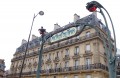
Baron Haussmann transformed Paris between 1852 and 1870. The 9th arrondissement of Paris is at the heart of this transformation: the new thoroughfares, grand boulevards and square-shaped junctions showcase buildings suited to life under the Second Empire: department stores, the Opéra, theatres, music halls, churches, press offices, banks, covered arcades, Morris columns, kiosks, etc. This tour will introduce you to the remnants of that era and how they have adapted to modern-day Paris.
Green spaces in Paris’s 6th arrondissement
 5.04 mi
+171 ft
-200 ft
2h 30
Easy
Departure from Paris
5.04 mi
+171 ft
-200 ft
2h 30
Easy
Departure from Paris
The sixth arrondissement of Paris is emblematic of Parisian elegance. A chic neighbourhood with legendary cafés, it has historical links to writers, philosophers and artists. It is as renowned for its intellectual heritage as it is for its architectural heritage, with its museums, art galleries and prestigious cultural institutions.
It boasts a dozen public squares and municipal gardens, including the famous Jardin du Luxembourg, which is managed by the state and will not be discussed here.