


Refine your search for walks in Opglabbeek
Opglabbeek walks


 The sand dunes of the Oudsberg
 Visorando Member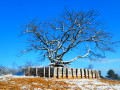
 11.43 mi
 +161 ft
 -141 ft
 5h 25
5h 25
 Moderate
 Departure from Opglabbeek (Province de Limbourg)
The Limburg Campine region is home to many gems, including several nature reserves with magnificent sand dunes. This walk crosses the Oudsberg nature reserve on the last authorised paths, offering alternating landscapes of heathland and pine or deciduous forests (beech, birch, etc.). Although the entire route is relatively flat, the nature reserve, at the geographical centre of the route, is quite hilly for the region.Of course, the sand under the snow is only visible in certain places. However, without the snow, the sand is clearly visible in the heart of the Oudsberg nature reserve. Most of the route is wooded, but the landscape is a little more rural at the eastern and northern ends.
Hike without description to be followed with the Visorando app.
A walk around the Terhills slag heaps
 7.65 mi
+472 ft
-469 ft
3h 55
Moderate
Departure from Dilsen-Stokkem (Province de Limbourg)
7.65 mi
+472 ft
-469 ft
3h 55
Moderate
Departure from Dilsen-Stokkem (Province de Limbourg)
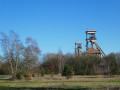
Terhills is, above all, the former site of the Eisden coal mine, with its four slag heaps – three of which are open to the public – its two headframes over the old shafts, and the large management and engineers’ building, which has been magnificently restored and converted into a luxury hotel.Terhills is also the site of a former gravel quarry. It has now become a vast natural area open to the public, with several signposted walking routes starting from the main entrance to the Haute-Campine National Park, situated next to the hotel.There is also a holiday village, the Terhills Resort, situated on the north-western shore of the lake, as well as a water sports centre, the Terhills Cablepark, located on the north-eastern shore of the lake.
The Wijers ponds
 9.09 mi
+36 ft
-36 ft
4h 15
9.09 mi
+36 ft
-36 ft
4h 15
 Easy
Departure from Zonhoven (Province de Limbourg)
Easy
Departure from Zonhoven (Province de Limbourg)
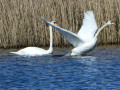
This region, with its 1,001 ponds and numerous nature reserves, is full of beautiful trails for hikers. Here is one that takes you between the main Wijers ponds and the Albert Canal, which connects the Meuse and Scheldt rivers between Liège and the port of Antwerp.The ponds and the surrounding aquatic and rural landscapes are absolutely magnificent in good weather.
The land of 1001 ponds between Hasselt and the Demer valley
10.68 mi
+66 ft
-75 ft
5h 00
Moderate
Departure from Hasselt (Province de Limbourg)
Between Hasselt and the Demer valley lies a world of water and mist, shaped by floods and time. Herkenrode Abbey, founded in the 12th century, marks the starting point: a Cistercian centre, it recalls the ancient link between spirituality and nature.In Stokrooie, the landscape becomes wetter before reaching the Albert Canal, dug in the 20th century, a marriage between industry and ecology.The Wijvenheide nature reserve reveals its peaceful ponds, where herons, kingfishers and ospreys thrive. The Kleine Vijver, Witven and Grote Platwijer are home to a rich variety of flora and fauna, between reed beds and floodplains.The Zonderikbeek and Vrankenschans meander through peat bogs and fields, witnesses to a time when the Demer shaped local life.The walk ends at the Bosvijver and the Vossen Kuil, where the silence of the water mingles with the breath of the wind.
Cross-border Trappist route in Hamont-Achel
11.59 mi
+39 ft
-39 ft
5h 20
Moderate
Departure from Hamont-Achel (Province de Limbourg)
Pine, oak (local and American species) and birch forests, moors, crops, pastures, ponds... this is the natural scenery that awaits you on this hike.
Historical and cross-border route from Kanne
 8.64 mi
+860 ft
-866 ft
4h 45
Moderate
Departure from Riemst (Province de Limbourg)
8.64 mi
+860 ft
-866 ft
4h 45
Moderate
Departure from Riemst (Province de Limbourg)
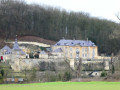
This walk explores some of the region's gems. The route passes successively by a mill on the Geer (Jeker in Dutch) with a wooden paddle wheel that is still fully functional, Neercanne Castle, the Cannerbos, a magnificent tree-lined avenue in the Milleniumbos, a few vineyards, the old Nekum mill (no longer with a wheel), the Maastricht Fort plateau with some beautiful views of the city, Huis de Torentjes, a curious cave/chapel dedicated to Our Lady of Lourdes, the Zonneberg, the Slavantebos, the panoramic site of the former ENCI quarry, the Villa Castrum (admire the tuffeau stone used in its renovation) and, finally, the strange and extremely rare feature of the Geer, which passes under the Albert Canal via a siphon. All in all, this route offers a multitude of historical and educational points of interest for young and old alike.
From the Albert Canal to Montagne Saint-Pierre
8.80 mi
+659 ft
-650 ft
4h 35
Moderate
Departure from Riemst (Province de Limbourg)
A fairly varied walk around the Albert Canal and part of Montagne Saint-Pierre, including a short detour into Dutch territory. The route passes by Neercanne Castle, where the Maastricht Treaty was signed on 9 December 1991.
A challenging visit to Montagne Saint-Pierre
4.84 mi
+348 ft
-364 ft
2h 30
Moderate
Departure from Visé (Province de Liège)
This is on the marked route "Lanaye (I2-4 Blue): Beyond the Banks - Montagne Saint-Pierre", but starting from the Quai de Caster car park instead of the church in Lanaye. Follow the blue diamond markings.
Montagne Saint-Pierre: the essentials!
 4.57 mi
+354 ft
-338 ft
2h 25
Easy
Departure from Visé (Province de Liège)
4.57 mi
+354 ft
-338 ft
2h 25
Easy
Departure from Visé (Province de Liège)
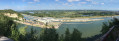
An unusual walk starting from the small village of Lanaye, traversing the Montagne Saint-Pierre nature reserve from the Albert Canal, before reaching the Geer valley via the Fort d'Eben-Emael. The route also offers stunning views of the Lanaye locks and the Meuse valley across the border.
Route de Lanaye via Montagne Saint-Pierre
 9.45 mi
+512 ft
-522 ft
4h 45
Moderate
Departure from Visé (Province de Liège)
9.45 mi
+512 ft
-522 ft
4h 45
Moderate
Departure from Visé (Province de Liège)
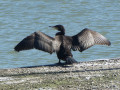
This hike, on the borders of Wallonia, Flanders and the Netherlands, crosses the Montagne Saint-Pierre on either side of the Albert Canal, ending at the Lanaye lock, which allows barges to reach the Meuse in the direction of Maastricht.Before that, the route follows small paths along the Geer. There are several beautiful views of the Meuse valley, the locks and the nearby hills.
Grand Tour of Wonck
 7.24 mi
+489 ft
-505 ft
3h 45
Moderate
Departure from Bassenge (Province de Liège)
7.24 mi
+489 ft
-505 ft
3h 45
Moderate
Departure from Bassenge (Province de Liège)
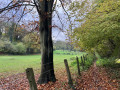
A pleasant walk from one side of the Geer valley to the other, around the village of Wonck, between Eben-Emael and Bassenge. The route alternates between meadows, fields and tree-lined paths, whilst offering some interesting views. Don’t miss a visit to the Eben-Ezer Tower and its flint museum!
Montagne Saint-Pierre from Eben
 6.50 mi
+571 ft
-591 ft
3h 30
Moderate
Departure from Bassenge (Province de Liège)
6.50 mi
+571 ft
-591 ft
3h 30
Moderate
Departure from Bassenge (Province de Liège)
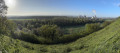
A somewhat challenging hike starting from the Moulin du Broukay and the Tour d’Eben-Ezer in Eben, on the northern slope of the Geer valley, leading to the Montagne Saint-Pierre Nature Reserve, on the other side of the stream. The reserve offers some fine views of the Meuse valley and the Albert Canal.
In the heart of Limburg's fruit-growing region since Kozen
10.29 mi
+102 ft
-102 ft
4h 50
Moderate
Departure from Nieuwerkerken (Province de Limbourg)
The Sint-Truiden region is renowned for its cherry (to a lesser extent), apple and pear orchards. The walk offers the chance to see them up close (very close). We particularly recommend it during the flowering season, usually in April.
Route des Châteaux à Tongeren
 8.40 mi
+272 ft
-279 ft
4h 05
Moderate
Departure from Tongeren (Province de Limbourg)
8.40 mi
+272 ft
-279 ft
4h 05
Moderate
Departure from Tongeren (Province de Limbourg)
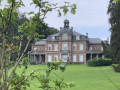
A pleasant walk in the north-western part of the town of Tongeren, following old tree-lined railway tracks, crossing the Herkwinning Nature Reserve and taking in a few castles and fortified farms in a varied environment of copses, low-stem orchards, meadows and fields.
Route proposed by the walking club "Les Pantouflards de Wihogne" (FFBMP, LG041).
Circular route around Sint Geertruid
 12.54 mi
+512 ft
-512 ft
6h 15
12.54 mi
+512 ft
-512 ft
6h 15
 Difficult
Departure from Belgium
Difficult
Departure from Belgium
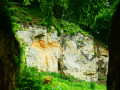
The Dutch province of Zuid-Limburg is ideal for hiking, offering an abundance of countryside and forests to explore in a wonderfully bucolic setting, and probably the highest elevation gain in the Netherlands, as the highest point is situated at the BE-DE-NL tripoint south of Vaals.That said, this region bordering Belgian Limburg is also fruit-growing, albeit to a lesser extent, but you can still see a few orchards (cherry, apple and pear trees).And then, from time to time, an old marl quarry (limestone, tuffeau, etc.) appears, or, as is the case near the route of this walk, a prehistoric flint extraction site!
Historic centre of Tongeren and Kevie Nature Reserve
 7.73 mi
+66 ft
-69 ft
3h 35
Moderate
Departure from Tongeren (Province de Limbourg)
7.73 mi
+66 ft
-69 ft
3h 35
Moderate
Departure from Tongeren (Province de Limbourg)
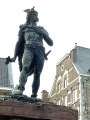
A pleasant and varied walk, combining culture and exercise, in and around Tongeren, Belgium’s oldest town. It takes you through the historic districts (the Beguinage, the ramparts, the basilica, etc.) as well as the adjoining nature reserve. The Geer (Jeker in Dutch), its branches and tributaries are a defining feature of the region.
Borgloon and its Transparent Chapel
3.43 mi
+174 ft
-167 ft
1h 45
Easy
Departure from Borgloon (Province de Limbourg)
A short, peaceful walk in Borgloon, through the countryside and past fruit orchards. The walk follows land consolidation and country lanes used by a few farm vehicles and cyclists, with a brief detour past the Transparent Chapel and the Roman Villa landmark.
The Geer Valley starting from Glons
 7.78 mi
+246 ft
-233 ft
3h 50
Moderate
Departure from Bassenge (Province de Liège)
7.78 mi
+246 ft
-233 ft
3h 50
Moderate
Departure from Bassenge (Province de Liège)
A refreshing country walk along the slopes and plateau of the Geer valley, featuring sunken lanes and paths running alongside the stream.
Walk organised by the walking club "Les Pantouflards de Wihogne" (FFBMP, LG041).
A short trip into the Netherlands near Mesch
3.03 mi
+148 ft
-148 ft
1h 30
Easy
Departure from Voeren (Province de Limbourg)
A short walk through the woods near Mesch, in the Netherlands, along the border with Mouland (Moelingen)
This is a family-friendly walk (suitable for even very young children) with the option of stopping for a bite to eat at the customs post between Mouland and Mesch or in the village centre.
Fouron-le-Comte and the Altenbroek reserve from Gravenvoeren
 7.45 mi
+732 ft
-741 ft
4h 05
Moderate
Departure from Voeren (Province de Limbourg)
7.45 mi
+732 ft
-741 ft
4h 05
Moderate
Departure from Voeren (Province de Limbourg)
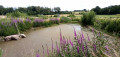
A magnificent walk starting from the village of Fouron-le-Comte ('s-Gravenvoeren in Dutch), somewhat hilly, passing through the Altenbroek woodland reserve and venturing partially beyond the Belgian-Dutch border.
Through the orchards around Hoepertingen
 11.38 mi
+266 ft
-246 ft
5h 30
Moderate
Departure from Sint-Truiden (Province de Limbourg)
11.38 mi
+266 ft
-246 ft
5h 30
Moderate
Departure from Sint-Truiden (Province de Limbourg)
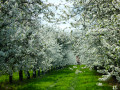
Pear, apple and cherry trees, a few vines and strawberry plants ensure the richness and reputation for fruit-growing of this part of the Limburg Hesbaye. Orchards galore to admire in spring during the blossom and later in the season for their fruit production.
Tongrian Hesbaye: Lauw – Hestappe
 7.82 mi
+200 ft
-190 ft
3h 45
Moderate
Departure from Tongeren (Province de Limbourg)
7.82 mi
+200 ft
-190 ft
3h 45
Moderate
Departure from Tongeren (Province de Limbourg)
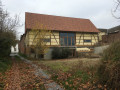
A refreshing country walk in Tongrian Hesbaye, taking us from the small village of Rutten to Lauw, following the River Geer and returning via Herstappe, a Walloon enclave in the heart of Flemish Limburg.
Walk organised by the walking club ‘Les Pantouflards de Wihogne’ (FFBMP, LG041)
From castles to orchards in Sint-Pieters-Heurne
 10.32 mi
+374 ft
-354 ft
5h 05
Moderate
Departure from Heers (Province de Limbourg)
10.32 mi
+374 ft
-354 ft
5h 05
Moderate
Departure from Heers (Province de Limbourg)
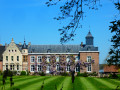
Starting from Sint-Pieters-Heurne, the walk takes you through the rather hilly countryside of Limburg Hesbaye, passing by a castle here, a chapel there, a limestone cave, an orchard, or a large square-shaped Hesbaye farmhouse.Although the region is criss-crossed by land consolidation tracks and concrete cycle paths, traffic is usually limited to a few farm vehicles, bicycles and occasionally a group or two of Vespa enthusiasts.That said, the route also follows numerous country lanes and forest tracks where you mainly come across only walkers or joggers.The numerous orchards (pear and apple trees) add a pleasant touch to the route when in bloom.
Circular through the Limburg orchards starting from Helshoven
 8.11 mi
+213 ft
-220 ft
3h 55
Moderate
Departure from Borgloon (Province de Limbourg)
8.11 mi
+213 ft
-220 ft
3h 55
Moderate
Departure from Borgloon (Province de Limbourg)
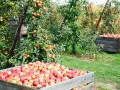
Pear, apple and cherry trees, as well as vines, strawberry plants and currant bushes, ensure the wealth and reputation of this part of Limburg's Hesbaye region for its fruit production. There are orchards galore to admire in spring when they are in bloom and later in the season when they are producing fruit.
Starting from Sippenaeken and following the Geul, a tributary of the Gueule
7.04 mi
+909 ft
-922 ft
4h 00
Moderate
Departure from Plombières (Province de Liège)
A few kilometres from the tri-border point (Belgium, Germany and the Netherlands), the walk winds its way through wooded countryside, streams and sunken lanes. It benefits from a microclimate that shields the area from the north winds. Old farms and mills will delight you as you explore.