


Refine your search for walks in Mornas
Mornas walks


 Above Mornas via the fortress and the Crestaïre
 Visorando Member
 5.02 mi
 +984 ft
 -965 ft
 3h 10
3h 10
 Moderate
 Departure from Mornas (Vaucluse)
Who hasn't admired the fortress of Mornas while driving along the A7 motorway?
Now is your chance to climb up a very accessible path and admire the landscape of the Rhône Valley from a cliff over 100 metres high, then continue on a circular route between heath and pine forests. This is a variation on a route offered on site, which avoids returning via a fairly busy tarmac road between buildings and houses.
The Mornas Fortress
 4.16 mi
+630 ft
-604 ft
2h 30
4.16 mi
+630 ft
-604 ft
2h 30
 Easy
Departure from Mornas (Vaucluse)
Easy
Departure from Mornas (Vaucluse)
An easy climb to the fortress along gently sloping paths. Explore the ridge path of the Uchaux massif.
Le Montmout from Mornas
4.04 mi
+686 ft
-676 ft
2h 25
Easy
Departure from Mornas (Vaucluse)
Enjoy the beautiful crossing around the Grande Combe ravine and, once you reach the highest point of Montmount, you can admire the beautiful panorama.
Around the Fortress of Mornas
 3.98 mi
+512 ft
-515 ft
2h 15
Easy
Departure from Mornas (Vaucluse)
3.98 mi
+512 ft
-515 ft
2h 15
Easy
Departure from Mornas (Vaucluse)
The first part of the hike is through the woods, followed by a ridge trail offering superb views of the Rhône valley. At the end of the trail, you will arrive above the fortress.
The sand caves of Piolenc
 2.56 mi
+292 ft
-292 ft
1h 25
Easy
Departure from Piolenc (Vaucluse)
2.56 mi
+292 ft
-292 ft
1h 25
Easy
Departure from Piolenc (Vaucluse)
A pleasant short walk through landscapes of ochre-coloured canyons filled with pine trees and surprising sand caves to round off the route. The start of the route is marked in yellow. The final section follows a tarmac road and runs alongside an avenue to return to the car park. ‘Former mines’ warning signs are placed along the route for your safety and to ensure you remain vigilant.
Between the forests and vineyards above Mondragon and Mornas
9.99 mi
+781 ft
-764 ft
5h 15
Moderate
Departure from Mondragon (Vaucluse)
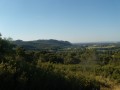
Sometimes in the woods, sometimes in the vineyards, this walk takes you through the countryside of the Rhone Valley and Mont Ventoux.
Around Mondragon
 6.14 mi
+518 ft
-499 ft
3h 15
Easy
Departure from Mondragon (Vaucluse)
6.14 mi
+518 ft
-499 ft
3h 15
Easy
Departure from Mondragon (Vaucluse)
A short family walk through heath, vineyards and woodland.Not particularly difficult, but not suitable for pushchairs.
Discover the sand quarries in Piolenc and the Uchaux massif
 7.05 mi
+666 ft
-640 ft
3h 50
Moderate
Departure from Piolenc (Vaucluse)
7.05 mi
+666 ft
-640 ft
3h 50
Moderate
Departure from Piolenc (Vaucluse)
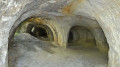
The old quarries are not open to visitors for safety reasons: in this area, do not stray from the paths as there are large holes in the ground. The Massif d'Uchaux offers spectacular views, particularly of Mont Ventoux and the Dentelles de Montmirail.
On the heights of Mondragon
5.19 mi
+594 ft
-577 ft
2h 55
Moderate
Departure from Mondragon (Vaucluse)
A walk without too many difficulties and numerous headlands along the route.
From Piolenc to the fortress of Mornas
 8.83 mi
+938 ft
-915 ft
4h 55
Moderate
Departure from Piolenc (Vaucluse)
8.83 mi
+938 ft
-915 ft
4h 55
Moderate
Departure from Piolenc (Vaucluse)
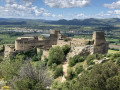
Before reaching the plateau overlooking the Rhône valley, offering superb views to the south and north, this route takes you through old sand quarry galleries and part of a surprising drystone shelter trail. At the western end of the plateau stands the fortress of Mornas, which you can see from above but which can be reached by taking a short detour.The only difficulty of this route is its length, as it mainly follows wide forest tracks lined with majestic pine trees.
Discover the heritage of Uchaux
4.99 mi
+377 ft
-387 ft
2h 35
Easy
Departure from Uchaux (Vaucluse)
About ten kilometres north of Orange, in the Haut Vaucluse, the hills of Uchaux conceal a little-known heritage: a chapel and 13th-century "castellas" surrounded by forests and vineyards offering quality wines await you.
Dent de Marcoule and Château de Gicon
 9.37 mi
+1,381 ft
-1,368 ft
5h 30
9.37 mi
+1,381 ft
-1,368 ft
5h 30
 Difficult
Departure from Chusclan (Gard)
Difficult
Departure from Chusclan (Gard)
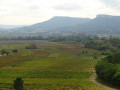
Starting from Chusclan, this is a hike over different types of terrain (tarmacked paths between vineyards, DFCI trails, single-track paths, etc.). Viewpoints over the Rhone Valley and Mont Ventoux. Visit to the medieval site of Gicon.
The old sand quarries of Bollène
 3.52 mi
+285 ft
-305 ft
1h 50
Easy
Departure from Bollène (Vaucluse)
3.52 mi
+285 ft
-305 ft
1h 50
Easy
Departure from Bollène (Vaucluse)
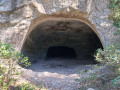
This is a short, easy route that can be enjoyed by families with young children. Almost the entire route is shaded. These old quarries were dug into the hillside to extract sand. They were then used by the Germans during the Second World War to store ammunition. Then, in the 1970s, they were converted into mushroom farms. They are now disused. It should be noted that the first quarries were open-pit. Their locations are marked by the presence of several lakes.
Derboux Castle and Saint-Pierre Chapel
 6.68 mi
+715 ft
-715 ft
3h 40
Moderate
Departure from Bollène (Vaucluse)
6.68 mi
+715 ft
-715 ft
3h 40
Moderate
Departure from Bollène (Vaucluse)
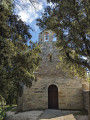
Circular route starting from the Roquette car park, Route d’Uchaux (D12). The route is easy, following well-marked paths; part of it follows the GRP® trail markings of the Massif d'Uchaux. The walk circles Derboux, passing by the ruins of its castle with a fine view to the north and towards Suze Castle, before continuing on to Saint-Pierre Chapel.
In the Uchaux Massif, through the old sand quarries and lakes
 5.97 mi
+636 ft
-630 ft
3h 20
Easy
Departure from Bollène (Vaucluse)
5.97 mi
+636 ft
-630 ft
3h 20
Easy
Departure from Bollène (Vaucluse)
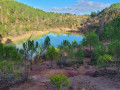
An easy route, mostly in the shade, through the forest of the Massif d'Uchaux. The path along DFCI tracks and trails will take you to a former site where raw materials for the manufacture of refractory products were extracted. In the 19th and 20th centuries, the presence of exceptional clay made Bollène a renowned industrial centre. The remains of a system of railways and inclined planes, as well as the buildings of a former factory, are still visible. The excavation of the hill for sand extraction has left galleries that are still open, and lakes now fill the former clay quarries.
Orange and Its History
 2.40 mi
+197 ft
-197 ft
1h 15
Easy
Departure from Orange (Vaucluse)
2.40 mi
+197 ft
-197 ft
1h 15
Easy
Departure from Orange (Vaucluse)
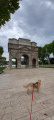
Discovering the Roman city of Orange and its heritage with the very famous Antique Theatre (Théâtre Antique), which annually hosts the Chorégies d’Orange festival.
The Bois de la Montagne
 8.61 mi
+938 ft
-945 ft
4h 45
Moderate
Departure from Sérignan-du-Comtat (Vaucluse)
8.61 mi
+938 ft
-945 ft
4h 45
Moderate
Departure from Sérignan-du-Comtat (Vaucluse)
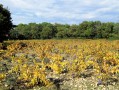
Walk in the woods of the Montagne between Sérignan du Comtat and Uchaux.
La Cabre d'Or from Orsan
 4.13 mi
+761 ft
-745 ft
2h 35
Moderate
Departure from Orsan (Gard)
4.13 mi
+761 ft
-745 ft
2h 35
Moderate
Departure from Orsan (Gard)
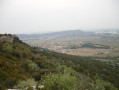
This is a short, easy hike that is very varied and informative, allowing you to visit the pretty village of Orsan, the hillsides of the Lacau plateau, explore the ancient town of Camp de César, enjoy a magnificent view of the Rhône valley, and above all, pass through the narrow Passage du Loup, where the famous golden goat is said to have once left a little of its blood and golden fleece on the rock walls.
The Chapel of Saint-Pierre de Castres in Bagnols-sur-Cèze
 4.11 mi
+449 ft
-463 ft
2h 15
Moderate
Departure from Bagnols-sur-Cèze (Gard)
4.11 mi
+449 ft
-463 ft
2h 15
Moderate
Departure from Bagnols-sur-Cèze (Gard)
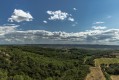
A pleasant short walk with a slight incline. The Saint-Pierre Chapel is still in good condition but closed. Beautiful views of the valley.
Lacau Plateau, starting from Bagnols-sur-Cèze
 6.82 mi
+561 ft
-545 ft
3h 35
Moderate
Departure from Bagnols-sur-Cèze (Gard)
6.82 mi
+561 ft
-545 ft
3h 35
Moderate
Departure from Bagnols-sur-Cèze (Gard)
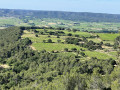
A very pleasant walk through the vineyards and across rocky terrain where holm oaks abound.
The Chapel of Tresques and the Château de Boussargues
 12.64 mi
+1,047 ft
-1,050 ft
6h 45
Moderate
Departure from Bagnols-sur-Cèze (Gard)
12.64 mi
+1,047 ft
-1,050 ft
6h 45
Moderate
Departure from Bagnols-sur-Cèze (Gard)
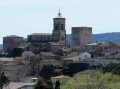
This hike, which is a little long but not particularly difficult, in the hills above Bagnols-sur-Cèze will take you along some of the paths to Santiago de Compostela (marked with shells). You will pass by the Saint-Martin de Jussan Chapel in Tresques and the Templar Chapel on the Boussargues estate.
The terrain is varied: tracks, woodland paths and small roads.
Combe d'Enfer - Combe de Roubaud
 4.34 mi
+689 ft
-663 ft
2h 35
Moderate
Departure from Laudun-l'Ardoise (Gard)
4.34 mi
+689 ft
-663 ft
2h 35
Moderate
Departure from Laudun-l'Ardoise (Gard)
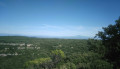
Route on the Plateau de Lacau and in the two valleys that surround it: the Combe d'Enfer, very wild and mysterious, and the Combe Roubaud, less steep but just as lush.
Caesar's Camp
 2.63 mi
+381 ft
-354 ft
1h 30
Easy
Departure from Laudun-l'Ardoise (Gard)
2.63 mi
+381 ft
-354 ft
1h 30
Easy
Departure from Laudun-l'Ardoise (Gard)
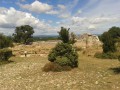
A family walk around the Oppidum of Caesar Camp in Laudun.
Lacau Plateau and Caesar's Camp
 7.12 mi
+873 ft
-853 ft
4h 00
Moderate
Departure from Laudun-l'Ardoise (Gard)
7.12 mi
+873 ft
-853 ft
4h 00
Moderate
Departure from Laudun-l'Ardoise (Gard)
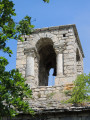
A very beautiful, mostly flat trail through holm oak trees, alternating between shaded passages and panoramic views of the surrounding plains and hills. A visit to Caesar's Camp will add a touch of history to the end of the trail.
More walks in Mornas
Select a point of interest below: