Country:

 City:
City:


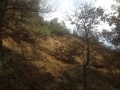
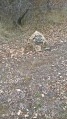
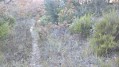
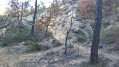
Parking is available on the edge of the D42, on the left after the tunnel that passes under the railway line, or further on at a picnic area with permanent tables on the right-hand side of the road.
(S/E) With your back to the tunnel, walk forward to find a path that cuts across the field on your left and joins a path at the foot of the hill.
Follow this path to the left, which runs along the hill on the right and then further along the railway line for a few metres on the left-hand side.
(1)Second tunnel under the railway line on the left. When you reach this high tunnel on the left, turn right to follow the path and go around the field.
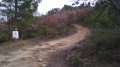
(2) At the end of the field, the path descends slightly into a dry stream bed. A stone on your right indicates the stream bed to follow.
Further along the path, you will come to a fork. Continue straight ahead. At the next fork, choose either path: both lead to the same point.
The path becomes sandy, so be careful as it can crumble underfoot in some places.
Further up, a passage is visible in a low stone wall, but it is easier to pass on the right by stepping over the fallen tree trunk. The path reappears on the small plateau and you follow it to the point where it turns very discreetly to the left into the branches, crossing a small dry bed, then climbs again.
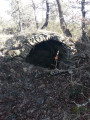
(3) It leads to a track which is the starting point of the botanical trail. Turn sharply left to follow it. After a short but fairly steep climb, you will see a charcoal kiln before the path turns into a narrow trail and enters a small wood.
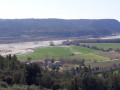
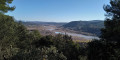
After the woods, the trail runs through bushy shrubs and offers a lovely view of the Cante-Perdrix gorge and the Durance river.
The trail leads to a wider track. Take it to the left.
(4) Enter the vegetation on the left and descend to a track between the hill and the vineyards.
(5) Follow this track to the left, passing the stone that marked the start of the dry riverbed.
(2) Continue along this track to return to your car (S/E).


 Visorando Member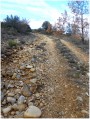
 Moderate
 Difficult