


Refine your search for walks in Le Conquet
Le Conquet walks


 From Pointe de Kermorvan to Illien
 Visorando Member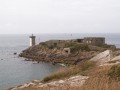
 7.13 mi
 +404 ft
 -394 ft
 3h 40
3h 40
 Moderate
 Departure from Le Conquet (Finistère)
Discover Anse des Blancs Sablons: from the fortified peninsula of Kermorvan to the small anchorage of Illien, along the dune massif owned by the Conservatoire du Littoral.
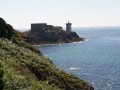
Kermorvan peninsula circular
 3.34 mi
+135 ft
-161 ft
1h 40
3.34 mi
+135 ft
-161 ft
1h 40
 Easy
Departure from Le Conquet (Finistère)
Easy
Departure from Le Conquet (Finistère)
Facing the Ponant Islands, which include Ouessant and Molène, the Pointe de Kermorvan offers a panoramic view of the coastline from the Pointe Saint-Mathieu in the south to the Pointes d'Ilien and du Corsen in the North. At its tip, the lighthouse marks the entrance to the Port du Conquet. The peninsula still preserves vestiges of Vauban's fortifications, as well as numerous defensive remains of the Atlantic Wall.
Circular Le Conquet Trébabu, between land and sea
9.79 mi
+640 ft
-627 ft
5h 05
Moderate
Departure from Le Conquet (Finistère)
This route will take you through the rolling countryside of Trébabu, rich in history with its manor houses and chapel. You will then reach Ilien Beach and return to Le Conquet by following the large Blancs Sablons Beach and then going around the Kermorvan peninsula and its lighthouse. You will finish by walking along the Ria du Conquet, a natural area rich in biodiversity and popular with birdwatchers.
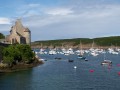
La Pointe des Renards and Le Conquet via Lochrist
 6.27 mi
+331 ft
-335 ft
3h 10
Moderate
Departure from Le Conquet (Finistère)
6.27 mi
+331 ft
-335 ft
3h 10
Moderate
Departure from Le Conquet (Finistère)
Starting from the small village of Lochrist, whose chapel was the parish church of Le Conquet until 1856, take the coastal path that will lead you to the port of Le Conquet, passing several small beaches along the way. After walking along part of the ria, return to your starting point via a small country road, keeping the sea in sight at all times.
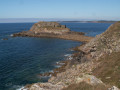
Around Le Conquet, the port at the end of the world
 11.48 mi
+410 ft
-407 ft
5h 40
Moderate
Departure from Le Conquet (Finistère)
11.48 mi
+410 ft
-407 ft
5h 40
Moderate
Departure from Le Conquet (Finistère)
This route combines several walks already featured on Visorando. It takes you through the Ria du Conquet, its fishing port and jetty for the Ponant Islands, as well as the Pointe de Kermorvan, a peninsula that has been fortified since prehistoric times.The walk continues along the beautiful Blancs Sablons Beach before returning through the countryside and the small, history-steeped village of Trébabu.
Discover a rich religious heritage: four churches and chapels.
Ria du Conquet
 3.23 mi
+98 ft
-98 ft
1h 35
Easy
Departure from Le Conquet (Finistère)
3.23 mi
+98 ft
-98 ft
1h 35
Easy
Departure from Le Conquet (Finistère)
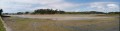
Discover the bottom of the Ria du Conquet by crossing the footbridge, a landscape that changes with the tide.A glimpse into industrial history: the old iodine factory dating from 1830.
Route via the Notre-Dame-du-Val Chapel in Trébabu
 5.65 mi
+348 ft
-348 ft
2h 55
Easy
Departure from Trébabu (Finistère)
5.65 mi
+348 ft
-348 ft
2h 55
Easy
Departure from Trébabu (Finistère)
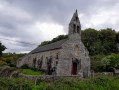
From the pretty, flower-filled village of Trébabu, the route takes us to theGR®34, which runs alongside part of the vast Plage des Blancs Sablons. The return journey, via small country lanes and sunken paths, will take us past the old Kerléo Mill and the Notre-Dame-du-Val Chapel (Itron-Varia-an-Traon).
The Lighthouse Trail around Le Conquet
 13.15 mi
+597 ft
-617 ft
6h 35
13.15 mi
+597 ft
-617 ft
6h 35
 Difficult
Departure from Plougonvelin (Finistère)
Difficult
Departure from Plougonvelin (Finistère)
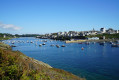
This lovely, varied route, combining land and sea, will take you along the coast from Pointe Saint-Mathieu to Plage des Blancs-Sablons, north of Le Conquet, and on to Pointe de Kermorvan. You’ll see the lighthouses at Kermorvan and Pointe Saint-Mathieu by the sea, and the Lochrist lighthouse further inland.
From Pointe Saint-Mathieu to Fort Bertheaume
 9.54 mi
+692 ft
-682 ft
5h 00
Moderate
Departure from Plougonvelin (Finistère)
9.54 mi
+692 ft
-682 ft
5h 00
Moderate
Departure from Plougonvelin (Finistère)
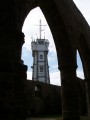
Circuit from Pointe Saint-Mathieu to Bertheaume via the path to discover the entrance to the Rade de Brest.
The return journey is a little way back from the coastal path
Pointe du Corsen circuit
 7.58 mi
+522 ft
-512 ft
3h 55
Moderate
Departure from Ploumoguer (Finistère)
7.58 mi
+522 ft
-512 ft
3h 55
Moderate
Departure from Ploumoguer (Finistère)
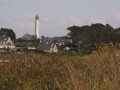
Coastal path passing through Pointe du Corsen (the westernmost point of mainland France), where the theoretical boundary between the English Channel and the Atlantic Ocean is located. This is also where the CROSS is located, which is responsible for monitoring the Ouessant Rail and coordinating sea rescue operations for the Breton coast.
Around Pointe de Corsen
5.47 mi
+308 ft
-292 ft
2h 45
Easy
Departure from Plouarzel (Finistère)
This walk takes us to Pointe de Corsen, the westernmost point of mainland France, allowing us to explore the coastal path and the countryside between Trézien and Porsmoguer.
Via the coastal path and the countryside around Trégana
 5.25 mi
+449 ft
-436 ft
2h 50
Moderate
Departure from Locmaria-Plouzané (Finistère)
5.25 mi
+449 ft
-436 ft
2h 50
Moderate
Departure from Locmaria-Plouzané (Finistère)
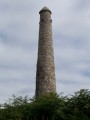
After skirting the quiet beaches of Porsmilin, Portez and Trégana, the coastal path climbs higher and overlooks the rocky coast, at times from a height of 60 metres, offering beautiful views over Bertheaume Bay and the headlands of Camaret on the Crozon Peninsula. The return journey along small roads and sunken lanes winds through the hinterland, passing close to two lighthouses that remained in service until 1970 after 100 years of operation.
Around Trez Hir, seaside resort
 5.90 mi
+407 ft
-394 ft
3h 05
Easy
Departure from Locmaria-Plouzané (Finistère)
5.90 mi
+407 ft
-394 ft
3h 05
Easy
Departure from Locmaria-Plouzané (Finistère)
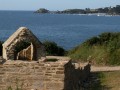
After running alongside Sainte-Anne Beach, watched over by the statue of the saint, the coastal path leads to the seaside resort of Trez Hir and continues towards Fort de Bertheaume. The return journey, via small streets and paths, allows you to discover the rest of the countryside, which is gradually being swallowed up by urban development. The route ends with a visit to the small village of Cosquer, where old farmhouses have been beautifully restored.
Trézien loop via Porztevinie, Île de Seigle and the Route de Kervilon
 3.12 mi
+161 ft
-151 ft
1h 35
Easy
Departure from Plouarzel (Finistère)
3.12 mi
+161 ft
-151 ft
1h 35
Easy
Departure from Plouarzel (Finistère)
This circuit takes you on a loop from the village of Trézien, with beautiful views of the Iroise Sea and Ouessant. You will pass through the village, the lighthouse and the Porztevinié campsite (where drinks are available in summer) before ending up at the Presqu'Île de Seigle or Ségal, then heading back up the Kervilon road and turning towards the village of Trézien. This circuit is a loop that can be started anywhere, but is best done in a clockwise direction.
Circular route from Porz Tévigné to Kervilon
2.27 mi
+157 ft
-157 ft
1h 10
Easy
Departure from Plouarzel (Finistère)
This is a countryside walk with sea views that takes you through a beautiful part of Plouarzel, the Iroise Sea and the Ouessant archipelago, with views of Lampaul and the Four lighthouse at Porspoder. A real feast for the eyes on a fine day.
From Plouarzel Town Hall to Porscuidic
2.94 mi
+16 ft
-217 ft
1h 20
Moderate
Departure from Plouarzel (Finistère)
A walk from the village of Plouarzel to the Porscuidic campsite, avoiding traffic as much as possible via a track barely passable by cars between Toul-An-Dour and Kervilon and a cycle path for at least 80% of the route. I did it to go and get some bread at Maison Kérénneur.
Loop between the Lannic neighbourhood and the village of Lampaul-Plouarzel
 2.88 mi
+105 ft
-105 ft
1h 25
Easy
Departure from Plouarzel (Finistère)
2.88 mi
+105 ft
-105 ft
1h 25
Easy
Departure from Plouarzel (Finistère)
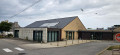
Take a short walk between the Lannic car park in Plouarzel and the village of Lampaul-Plouarzel, along the coast and then inland. This walk allows you to see the entire coast, from Le Rumeur to Porspaul, before heading back up to the town centre via the main road. The return journey is via a small road in the hinterland. This loop is also pleasant in the opposite direction, with the return journey facing the Iroise Sea and the Ouessant archipelago.
Lamber countryside via the Kerloas Menhir and the Kéramézec viewpoint
 6.28 mi
+417 ft
-433 ft
3h 15
Easy
Departure from Ploumoguer (Finistère)
6.28 mi
+417 ft
-433 ft
3h 15
Easy
Departure from Ploumoguer (Finistère)
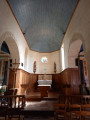
Starting from the small village of Lamber, this countryside route takes you along narrow country lanes, farm tracks and sunken paths.The route takes you past the imposing Kerloas menhir, the tallest in Brittany, and the Kéramézec viewpoint, the highest point in the Iroise region. From the top of this beautifully landscaped viewpoint, the view stretches from the Crozon Peninsula to the Abers region, taking in the islands of Molène and Ouessant.
Coastal and countryside path from Porspaul
 4.18 mi
+200 ft
-180 ft
2h 05
Easy
Departure from Lampaul-Plouarzel (Finistère)
4.18 mi
+200 ft
-180 ft
2h 05
Easy
Departure from Lampaul-Plouarzel (Finistère)
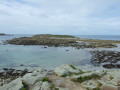
Circular route, the first part of which follows theGR®34coastal path, offering fine views of Île Ségal (accessible at low tide) and the rocky coast of the Iroise Sea.
The second part of the route crosses the hinterland with its granite houses.
A short final stop at the Chapelle Saint-Égarec.
Lampaul-Plouarzel - Aber Ildut Sud circular loop
 5.81 mi
+144 ft
-141 ft
2h 50
Easy
Departure from Lampaul-Plouarzel (Finistère)
5.81 mi
+144 ft
-141 ft
2h 50
Easy
Departure from Lampaul-Plouarzel (Finistère)
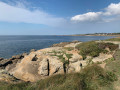
A very beautiful walk between land and sea south of Aber Ildut. Without any particular difficulty, you can plan a break on a white sandy beach and swim in turquoise water (not always warm!). Information panels at the mouth of Aber Ildut provide an insight into navigation and trade in the 17th and 18th centuries.
More walks in Le Conquet
Select a point of interest below: