Refine your search for walks in La Ferté-Saint-Cyr
La Ferté-Saint-Cyr walks


 Passing through Le Rhuys
 Visorando Member
 9.91 mi
 +98 ft
 -98 ft
 4h 40
4h 40
 Moderate
 Departure from La Ferté-Saint-Cyr (Loir-et-Cher)
During this walk, you will see numerous ponds that are bird sanctuaries (herons, ducks, etc.), the Veillas stream and its fords, the typical brick castle of Les Rhuys, and perhaps large wild animals in this region of Sologne, which is rich in game.
Circular route through the heart of Sologne via the GRP® trail from castle to castle...
 19.00 mi
+197 ft
-197 ft
8h 55
Moderate
Departure from La Ferté-Saint-Cyr (Loir-et-Cher)
19.00 mi
+197 ft
-197 ft
8h 55
Moderate
Departure from La Ferté-Saint-Cyr (Loir-et-Cher)
On foot or by mountain bike, this is a mainly woodland route, dotted with numerous ponds. Ideal for nature lovers seeking peace and quiet, offering total immersion in the heart of the “Sologne des étangs”.
Between forests and ponds around La Ferté-Saint-Cyr
 8.62 mi
+98 ft
-98 ft
4h 05
Moderate
Departure from La Ferté-Saint-Cyr (Loir-et-Cher)
8.62 mi
+98 ft
-98 ft
4h 05
Moderate
Departure from La Ferté-Saint-Cyr (Loir-et-Cher)
Forests and ponds stretch out around La Ferté-Saint-Cyr, a typical village in the wooded and game-rich Sologne region, which has preserved its vast network of communal paths.
Circular Bruyères via the Moulin Lauray Ford, La Ferté-Saint-Cyr
 10.88 mi
+135 ft
-108 ft
5h 05
Moderate
Departure from La Ferté-Saint-Cyr (Loir-et-Cher)
10.88 mi
+135 ft
-108 ft
5h 05
Moderate
Departure from La Ferté-Saint-Cyr (Loir-et-Cher)
La Ferté-Saint-Cyr has preserved its many communal paths, all of which are marked and mostly protected from motorised vehicles.
This circular route takes you along a variety of paths, skirting meadows, woods and ponds, before entering the heart of the forest, an ideal place for wildlife watching.
The unique feature of this circular route is that it crosses the Cosson river twice, first via a narrow bridge and then via the Gué du Moulin Lauray ford; as you can imagine, you will need to take off your shoes.
Passing through La Motte Longuet
 8.38 mi
+52 ft
-52 ft
3h 55
Moderate
Departure from La Ferté-Saint-Cyr (Loir-et-Cher)
8.38 mi
+52 ft
-52 ft
3h 55
Moderate
Departure from La Ferté-Saint-Cyr (Loir-et-Cher)
A route mainly through woodland, dotted with numerous ponds. Ideal for nature lovers seeking peace and quiet. An alternative route allows you to shorten the distance considerably.
Circular route in Sologne around La Ferté-Saint-Cyr
 8.84 mi
+66 ft
-66 ft
4h 05
Moderate
Departure from La Ferté-Saint-Cyr (Loir-et-Cher)
8.84 mi
+66 ft
-66 ft
4h 05
Moderate
Departure from La Ferté-Saint-Cyr (Loir-et-Cher)
A route that runs mainly through woodland. The dense or sparse vegetation, consisting mainly of deciduous trees, along with streams and ponds, provides ideal habitats for birds and large wild animals.
The Sologne region of forests and ponds around Crouy-sur-Cosson
 6.12 mi
+72 ft
-72 ft
2h 55
6.12 mi
+72 ft
-72 ft
2h 55
 Easy
Departure from Crouy-sur-Cosson (Loir-et-Cher)
Easy
Departure from Crouy-sur-Cosson (Loir-et-Cher)
Like many villages in the Sologne region, Crouy-sur-Cosson combines forest landscapes, ponds and architectural heritage. The first part of the walk takes place on wide paths on the edge or in the heart of the forest; the second part is more varied, dotted with ponds, the Cosson river, grassy paths and hamlets.
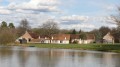
Towards Le Mesnil: farmhouses and châteaux in the Sologne region
 6.48 mi
+72 ft
-72 ft
3h 05
Easy
Departure from Dhuizon (Loir-et-Cher)
6.48 mi
+72 ft
-72 ft
3h 05
Easy
Departure from Dhuizon (Loir-et-Cher)
The highlight of this walk is the magnificent Château du Mesnil, an exceptional site thanks to the beauty of its buildings, which watch over the Muids forest in the heart of the Sologne region. The path crosses a wide variety of landscapes: plains, oak and pine forests, and birch forests. The hike ends in the territory of a commune that no longer exists: La Motte Bonneville.
Villeny - Château de la Motte Longuet circular loop
 13.84 mi
+141 ft
-141 ft
6h 30
Moderate
Departure from Villeny (Loir-et-Cher)
13.84 mi
+141 ft
-141 ft
6h 30
Moderate
Departure from Villeny (Loir-et-Cher)
This very pleasant circular loop follows wide paths through varied landscapes; plains, ponds and forests add to its charm.
Walk in Villeny via La Grille
 7.00 mi
+131 ft
-135 ft
3h 20
Moderate
Departure from Villeny (Loir-et-Cher)
7.00 mi
+131 ft
-135 ft
3h 20
Moderate
Departure from Villeny (Loir-et-Cher)
A beautiful walk that begins on wide, well-maintained paths and then enters the heart of the Sologne region via wilder, less frequented paths.
Around Mont Collier
 4.90 mi
+66 ft
-66 ft
2h 20
Easy
Departure from Villeny (Loir-et-Cher)
4.90 mi
+66 ft
-66 ft
2h 20
Easy
Departure from Villeny (Loir-et-Cher)
A variety of gently rolling Sologne landscapes. Time seems to have no hold over the bourgeois residence of Mont Collier, facing its pond.
 A royal day out in Chambord
17.79 mi
+141 ft
-141 ft
3 hrs
Easy
Departure from Chambord (Loir-et-Cher) (Loir-et-Cher)
A lovely walk through the Chambord and Boulogne forests in the heart of Sologne.
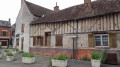
The Sologne forest from Ligny-le-Ribault via La Bretèche and La Couvrée
 6.53 mi
+62 ft
-62 ft
3h 05
Easy
Departure from Ligny-le-Ribault (Loiret)
6.53 mi
+62 ft
-62 ft
3h 05
Easy
Departure from Ligny-le-Ribault (Loiret)
Once you leave the pretty village of Ligny-le-Ribault, the route follows shaded forest paths in the heart of the game-rich Sologne region, offering an opportunity to observe the flora and fauna characteristic of this environment.
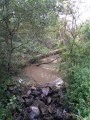
The Sologne region around Ligny-le-Ribault
 9.11 mi
+39 ft
-43 ft
4h 15
Moderate
Departure from Ligny-le-Ribault (Loiret)
9.11 mi
+39 ft
-43 ft
4h 15
Moderate
Departure from Ligny-le-Ribault (Loiret)
The commune of Ligny-le-Ribault, which has preserved many communal paths, offers this magnificent hike in the Sologne region of ponds, home to deer, roe deer and wild boar.
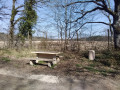
From Marolle-en-Sologne to La Giraudière
 9.18 mi
+98 ft
-98 ft
4h 20
Moderate
Departure from La Marolle-en-Sologne (Loir-et-Cher)
9.18 mi
+98 ft
-98 ft
4h 20
Moderate
Departure from La Marolle-en-Sologne (Loir-et-Cher)
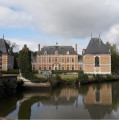
La Marolle-en-Sologne, a Sologne village with its landscapes of forests, ponds and châteaux, combines historical heritage and game-rich lands. The route passes by the 18th-century Château de la Giraudière and the village of Villeny with its brick and timber houses. The return journey is via theGR® de Pays de Sologne.
From La Marolle-en-Sologne to Villebourgeon
 10.29 mi
+98 ft
-98 ft
4h 50
Moderate
Departure from La Marolle-en-Sologne (Loir-et-Cher)
10.29 mi
+98 ft
-98 ft
4h 50
Moderate
Departure from La Marolle-en-Sologne (Loir-et-Cher)
A pleasant walk to discover the typical landscapes of Sologne, with woods, meadows, ponds and châteaux, including the 17th-century Château de Villebourgeon.
A path, a school: Les Lavoirs
 6.06 mi
+49 ft
-66 ft
2h 50
Easy
Departure from Avaray (Loir-et-Cher)
6.06 mi
+49 ft
-66 ft
2h 50
Easy
Departure from Avaray (Loir-et-Cher)
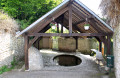
Walking and hiking trails winding along the hillside above the Loire floodplain between Lestiou and Avaray. An excuse to discover two pretty little villages on the Loire, it also offers the surprise of six wash houses in just five kilometres. Very discreetly located, you have to take the time to look for them: the walk then becomes a treasure hunt with well-hidden treasures. The commune of Lestiou has two, while Avaray has four, including one oval wash house.
The Montperché Pond from Neuvy
 6.39 mi
+151 ft
-151 ft
3h 05
Easy
Departure from Neuvy (Loir-et-Cher) (Loir-et-Cher)
6.39 mi
+151 ft
-151 ft
3h 05
Easy
Departure from Neuvy (Loir-et-Cher) (Loir-et-Cher)
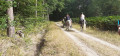
Neuvy, at the gates of the Domaine de Chambord, lies in the heart of the Boulogne Forest.
This is a great walk for families to observe the large animals of the forest and the many birds on the Étang de Montperché lake.