


Refine your search for walks in Église Saint-Gilles (Étampes)
Église Saint-Gilles (Étampes) walks


 Medieval walk in Étampes
 Visorando Member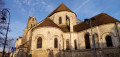
 2.96 mi
 +72 ft
 -52 ft
 1h 25
1h 25
 Easy
Easy
 Departure from Étampes (Essonne)
A former fortified royal town, Étampes boasts a superb heritage that this short urban walk invites you to discover, notably featuring four magnificent Gothic churches, including the Church of Saint-Martin with its bell tower leaning like the Leaning Tower of Pisa.
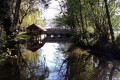
Following the River Juine and its tributaries
 152.32 mi
+5,879 ft
-6,490 ft
20 days
152.32 mi
+5,879 ft
-6,490 ft
20 days
 Moderate
Departure from Angerville (Essonne) (Essonne)
Moderate
Departure from Angerville (Essonne) (Essonne)
The River Juine rises on the Beauce plateau, flows through the town of Étampes and joins the River Essonne further on. This series of walks follows the course of this river. Several of the stages are linear routes running from station to station, whilst others are circular loops on the hillsides flanking the river.
Walks near Église Saint-Gilles (Étampes)
The heights and rivers of Étampes
 5.00 mi
+236 ft
-266 ft
2h 30
Easy
Departure from Étampes (Essonne)
5.00 mi
+236 ft
-266 ft
2h 30
Easy
Departure from Étampes (Essonne)
This walk from station to station allows you to discover the heights of Étampes, with a beautiful view of the town, and to hike in the pleasant setting of the Louette and Chalouette valleys.
You can continue this hike by returning to the starting station (an additional 1.8 km) and take the opportunity to visit this small town, which is well worth a visit.
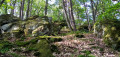
From Étampes to Étréchy through fields, woods and rocks
 7.68 mi
+397 ft
-456 ft
3h 55
Moderate
Departure from Étampes (Essonne)
7.68 mi
+397 ft
-456 ft
3h 55
Moderate
Departure from Étampes (Essonne)
A hike that takes place on the slopes of the left bank of the Juine and on the plateau between the fields. The path through the Étréchy forest, between the boulders, is very pleasant.
From Étréchy to Lardy via the Juine Valley
 6.83 mi
+174 ft
-164 ft
3h 15
Moderate
Departure from Étréchy (Essonne) (Essonne)
6.83 mi
+174 ft
-164 ft
3h 15
Moderate
Departure from Étréchy (Essonne) (Essonne)
This walk, which takes place mainly on tarmac roads, forms a transitional stage in this journey along the Juine. Passing through a few pretty villages, two old mills, a beautiful church and a geological curiosity add to the charm of this route.
From Étréchy to Saint-Chéron, from the Juine to the Orge through the Hurepoix
 15.96 mi
+955 ft
-971 ft
8h 10
15.96 mi
+955 ft
-971 ft
8h 10
 Difficult
Departure from Étréchy (Essonne) (Essonne)
Difficult
Departure from Étréchy (Essonne) (Essonne)
Thirty-first stage of the Grand Tour of Île-de-France via the GR®11, linking Étréchy in the Juine Valley to Saint-Chéron in the Orge Valley, via the Renarde Valley. It winds its way through the Hurepoix and the southern edge of the Beauce, offering varied landscapes, from plateaus to valleys and fields to forests. It is notable for its numerous ascents and descents between plateaus and valleys.
From Étréchy to Lardy via the hillsides on the left bank
 10.69 mi
+433 ft
-384 ft
5h 20
Moderate
Departure from Étréchy (Essonne) (Essonne)
10.69 mi
+433 ft
-384 ft
5h 20
Moderate
Departure from Étréchy (Essonne) (Essonne)
This walk from station to station leaves the Juine valley and climbs higher. After leaving the small town of Étréchy, the first part of the walk takes place mainly amongst cultivated fields. From the village of Mauchamps, the route becomes more varied and runs partly through woodland. There are several beautiful churches to see in Étréchy, Mauchamps and Torfou, not to mention the superb church of Saint-Sulpice-de-Favières, for which a detour is suggested.
From Étréchy to Dourdan through the fields and woods of Hurepoix
 14.03 mi
+801 ft
-682 ft
7h 10
Difficult
Departure from Étréchy (Essonne) (Essonne)
14.03 mi
+801 ft
-682 ft
7h 10
Difficult
Departure from Étréchy (Essonne) (Essonne)
A hilly route from station to station, mainly through farmland for the first two-thirds, then through more wooded areas. Beautiful churches and rural heritage can be found in the villages along the way. In Dourdan, the walk along the Orge river, the 12th-13th century church and the fortified castle provide a superb finishing touch.
From Guillerval to Étampes via the Étang de Chalou-Moulineux
 11.08 mi
+203 ft
-427 ft
5h 15
Moderate
Departure from Guillerval (Essonne)
11.08 mi
+203 ft
-427 ft
5h 15
Moderate
Departure from Guillerval (Essonne)
A walk from station to station that alternates between paths through fields, along the edge of woods and through the woods themselves. For a while, the route runs alongside two rivers, the Louette and the Chalouette, a sub-tributary and a tributary of the Juine respectively. At the end of the route, the Church of Saint-Martin d’Étampes and its leaning bell tower add a superb touch of heritage.
From Lardy to Ballancourt via the Marais d’Itteville
 8.92 mi
+33 ft
-135 ft
4h 10
Moderate
Departure from Lardy (Essonne)
8.92 mi
+33 ft
-135 ft
4h 10
Moderate
Departure from Lardy (Essonne)
The final stretch follows the River Juine to its confluence with the River Essonne, which is, however, not accessible. The route alternates between built-up areas and paths through fields and woods. The Marais d’Itteville, with its ponds, reed beds and birdwatching hides, is the highlight of this walk.
From Lardy to Dourdan
20.31 mi
+1,322 ft
-1,260 ft
10h 30
 Very difficult
Departure from Lardy (Essonne)
Very difficult
Departure from Lardy (Essonne)
This stage of the GR®1 is one of the most difficult on this GR®. It is 32 km long and has an elevation gain of over 400 m. It is also one of the most beautiful. Starting from Lardy, this hike takes you past magnificent monuments such as the Church of Saint-Sulpice, the Church of Saint-Yon, the Church of Sermaise and the Château de Dourdan. There are other monuments to visit in this town. Most of the route is in the countryside, with several ascents and descents into the valleys. The route passes through numerous villages of varying sizes.
Following the Orge from Saint-Chéron to Arpajon
 8.22 mi
+128 ft
-138 ft
3h 55
Moderate
Departure from Saint-Chéron (Essonne) (Essonne)
8.22 mi
+128 ft
-138 ft
3h 55
Moderate
Departure from Saint-Chéron (Essonne) (Essonne)
A walk from station to station in the Orge Valley, exploring two large ponds home to numerous birds. A picturesque route in the first half, which then sees the proportion of urban sections increase. Heritage sites along the way: a well-restored old mill, a few churches, a small menhir, a wash house...