


Refine your search for walks in Place du Trocadéro
Place du Trocadéro walks


 Art Nouveau and Art Deco architecture in the 16th arrondissement
 Visorando Member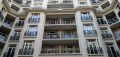
 5.12 mi
 +210 ft
 -148 ft
 2h 30
2h 30
 Easy
Easy
 Departure from Paris
A route in the city to discover the iconic architectural inventiveness of two successive artistic movements: Art Nouveau, from the late 19th to the early 20th century, and Art Deco, between the two world wars.
The Petite Ceinture in the 16th arrondissement and the Serres d'Auteuil
 3.28 mi
+26 ft
-69 ft
1h 30
Easy
Departure from Paris
3.28 mi
+26 ft
-69 ft
1h 30
Easy
Departure from Paris
An eclectic journey through Paris's 16th arrondissement. After an initially urban start, the route takes you along the Sentier Nature trail, on the embankment of the former Petite Ceinture railway line. The walk ends with a stroll through the Square des Poètes and a visit to the Serres d'Auteuil, which will delight amateur botanists.
The Trocadéro esplanade and gardens, the Champs de Mars and the Invalides
 4.49 mi
+36 ft
-115 ft
2h 05
Easy
Departure from Paris
4.49 mi
+36 ft
-115 ft
2h 05
Easy
Departure from Paris
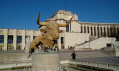
A route that takes you to some of Paris's famous monuments on both banks of the Seine. You will pass through numerous gardens, some well-known and popular, others more secluded and offering a welcome respite from the hustle and bustle.
Women's march of 5 October 1789: from Paris City Hall to Sèvres
 8.88 mi
+89 ft
-82 ft
4h 10
8.88 mi
+89 ft
-82 ft
4h 10
 Moderate
Departure from Paris
Moderate
Departure from Paris
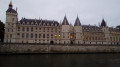
The first section of this women's march of 5 October 1789 follows fairly closely what we know today about the route taken at the time. Starting from the centre of Paris, we follow the course of the Seine and then cross the districts of Auteuil and Billancourt. We cross the Ile Seguin, where the Vieux Pont de Sèvres bridge used to be, and end up in Sèvres, where the 1789 procession made a stop. All along the way, there is a rich heritage to discover.
The Opera, Parc Monceau and the Chaillot district
 5.15 mi
+105 ft
-36 ft
2h 30
Easy
Departure from Paris
5.15 mi
+105 ft
-36 ft
2h 30
Easy
Departure from Paris
A journey through Haussmannian Paris, discovering the architecture of the second half of the 19th century, with a detour to Parc Monceau and a few sites celebrating Franco-American friendship.
Un tour dans Paris depuis le Trocadéro
 Association / Club / Walk leader
 8.19 mi
+98 ft
-115 ft
3h 50
Moderate
Departure from Paris
8.19 mi
+98 ft
-115 ft
3h 50
Moderate
Departure from Paris
Ce parcours vous amènera du Trocadero à Notre-Dame avec un retour par le Louvre et les Champs-Élysées. Vous pouvez le faire à la journée
The Petite Ceinture in Paris
 36.37 mi
+863 ft
-863 ft
10 days
Easy
Departure from Paris
36.37 mi
+863 ft
-863 ft
10 days
Easy
Departure from Paris
A tour of Paris following the route of the former Petite Ceinture railway line! A highly varied itinerary, reflecting the diversity of the arrondissements it passes through, which focuses on the converted sections of the old railway line, squares and gardens, and the narrow streets and passageways away from traffic.
A route through the heart of Paris
 22.13 mi
+312 ft
-312 ft
5 days
Easy
Departure from Paris
22.13 mi
+312 ft
-312 ft
5 days
Easy
Departure from Paris
This route, comprising just five stages, all accessible by public transport, offers an exploration of the capital’s city centre and a journey back in time to the city’s Gallo-Roman foundations.
The Bestiary of Passy and Dauphine
 3.60 mi
+16 ft
-66 ft
1h 40
Easy
Departure from Paris
3.60 mi
+16 ft
-66 ft
1h 40
Easy
Departure from Paris
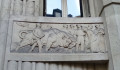
An urban walk that winds its way through the northern half of the 16th arrondissement, in search of numerous depictions of animals. It also offers an opportunity to pay tribute to Victor Hugo, with a stop at the place where he lived, on the avenue that bore his name during his lifetime.
The bestiary of the Trocadéro, the Gros Caillou and Chaillot
 4.26 mi
+121 ft
-148 ft
2h 05
Easy
Departure from Paris
4.26 mi
+121 ft
-148 ft
2h 05
Easy
Departure from Paris
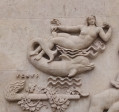
From the Trocadéro to the Étoile, on either side of the Seine, through the 16th, 7th and 8th arrondissements of Paris, discovering depictions of animals. The Arc de Triomphe at the Étoile alone features a great many of them!
The Bestiary of Auteuil and Passy
 5.00 mi
+105 ft
-30 ft
2h 25
Easy
Departure from Paris
5.00 mi
+105 ft
-30 ft
2h 25
Easy
Departure from Paris
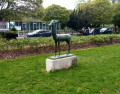
From the Porte de Saint-Cloud to the Place du Trocadéro, from one work by the sculptor Paul Landowski to another, an urban walk exploring depictions of animals in Paris’s 16th arrondissement and several beautiful Art Nouveau and Art Deco buildings.
The wildlife of Ranelagh and La Muette
 4.05 mi
+115 ft
-23 ft
2h 00
Easy
Departure from Paris
4.05 mi
+115 ft
-23 ft
2h 00
Easy
Departure from Paris
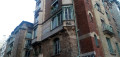
This urban route crosses the 16th arrondissement of Paris, from south to north and then from west to east, to discover animal representations and a certain architectural diversity specific to this arrondissement.
The bestiary of Paris
 146.53 mi
+2,999 ft
-2,625 ft
33 days
Easy
Departure from Paris
146.53 mi
+2,999 ft
-2,625 ft
33 days
Easy
Departure from Paris
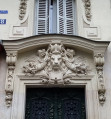
This guide brings together around thirty urban routes that allow you to discover representations of animals in the capital: sculptures, building decorations, murals, etc.
A stroll through Paris’s cemeteries
 17.55 mi
+505 ft
-420 ft
14 days
Easy
Departure from Paris
17.55 mi
+505 ft
-420 ft
14 days
Easy
Departure from Paris
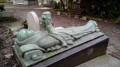
This section brings together a selection of relatively short routes that allow you to visit the 14 public cemeteries located within the city limits of Paris, one of which actually falls under the jurisdiction of the neighbouring municipality of Charenton-le-Pont. Varying in size, they are the final resting places of a varying number of notable figures. You will also find a wide variety of monument styles, depending on the simplicity or fame of those buried there and the financial means of their families.
A stroll around Passy Cemetery
 0.88 mi
+26 ft
-26 ft
0h 25
Easy
Departure from Paris
0.88 mi
+26 ft
-26 ft
0h 25
Easy
Departure from Paris
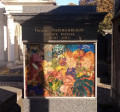
Passy Cemetery is one of the largest cemeteries within the city limits of Paris. It is the final resting place of many notable figures, including musicians and aviation pioneers. This route takes you on a stroll through this place of contemplation, where you can discover around sixty of these notable figures.
In the footsteps of the French Revolution
 21.14 mi
+1,020 ft
-712 ft
4 days
Moderate
Departure from Paris
21.14 mi
+1,020 ft
-712 ft
4 days
Moderate
Departure from Paris
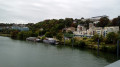
Here are four hikes that take in iconic locations from the French Revolution. One of them takes place in Versailles, where it all began in May 1789. Another takes place in Paris, which was the scene of many events, including the storming of the Bastille on 14 July 1789. The other two connect Paris to Versailles, attempting to reproduce the women's march of 5 October 1789.