


Refine your search for walks in Conilhac-Corbières
Conilhac-Corbières walks


 The Obieu Valley from Conhilac-Corbières
 Visorando Member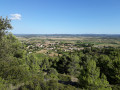
 2.20 mi
 +351 ft
 -348 ft
 1h 20
1h 20
 Easy
Easy
 Departure from Conilhac-Corbières (Aude)
If you have an hour or two to spare in Conhilac-Corbières – at the end of the day, for example – this quick walk offers a lovely view over the Obieu valley, which is in fact the route from Toulouse to the Mediterranean for the motorway, the train and so on, with the Pyrenees in the background. The walk takes you past a field of wind turbines, giving you the chance to see for yourself the impact of this type of development.
Circular route from the watchtower via Moux
7.58 mi
+2,064 ft
-2,083 ft
5h 15
 Moderate
Departure from Moux (Aude)
Moderate
Departure from Moux (Aude)
A challenging hike, with no major difficulties, apart from the total lack of signposting or, frequently, numerous signs that contradict this route. The route follows deeply rutted paths, with loose gravel underfoot. The start crosses a pine forest devastated by fire, but after that it’s pure joy through dense vegetation, consisting of pines, holm oaks, boxwoods, junipers, kade trees, and the full range of Mediterranean plants – a feast of scents. Avoid doing this in summer or after a storm.
La Montagne D'Alaric - Roc De L'Aigle
 10.28 mi
+2,264 ft
-2,267 ft
6h 40
Moderate
Departure from Moux (Aude)
10.28 mi
+2,264 ft
-2,267 ft
6h 40
Moderate
Departure from Moux (Aude)
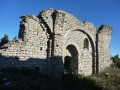
At the gates of Carcassonne, the Montagne d'Alaric offers a superb viewpoint over the Pyrenees and the Aude plain. The ruins of the priories of Saint-Pierre d'Alaric and Saint-Michel de Nahuze, as well as those of the Métairie de Vidal, encourage us to reflect on the history of this mountain and the life that must have once animated it. Finally, the return journey through the vineyards of the Corbières region is an invitation to end this day's walk with a well-deserved wine tasting.
La Bade Pine Forest and Sainte-Cécile Chapel in Tourouzelle
 7.39 mi
+443 ft
-423 ft
3h 45
Moderate
Departure from Tourouzelle (Aude)
7.39 mi
+443 ft
-423 ft
3h 45
Moderate
Departure from Tourouzelle (Aude)
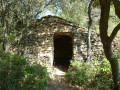
A walk through vineyards, heath and fragrant pine trees, allowing you to discover numerous drystone shelters and old sheepfolds built of dry stone, bearing witness to the activities of the villagers of yesteryear on the hillsides. At the end of the route, the Chapel of Sainte-Cécile, set in a very pretty spot, offers a pleasant place to rest.
Stroll around the spillway at La Redorte
2.30 mi
+43 ft
-43 ft
1h 05
Easy
Departure from La Redorte (Aude)
This very short walk for the whole family takes in a boat harbour, a spillway, a canal bridge, a boatman's stop, an aqueduct, a beautiful dairy farm and a small lake where you can fish for trout. A wealth of discoveries!
Montpenery and La Roche Trouée
 3.57 mi
+367 ft
-361 ft
2h 00
Easy
Departure from Boutenac (Aude)
3.57 mi
+367 ft
-361 ft
2h 00
Easy
Departure from Boutenac (Aude)
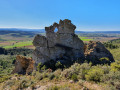
A lovely walk with the scent of the heath in the air. The walk starts at the recently rebuilt Boutenac washhouse, takes you past the church – which has also been renovated – and the remains of the tower. After a visit to the old village, head towards Mount Penery to enjoy a 360° view very close to the Roche Trouée, but be careful not to take any unnecessary risks: if you ask locals for directions, say ‘le Trou de la Lunette’.
Roque Sestière and Saint-Siméon from Boutenac
 5.17 mi
+669 ft
-666 ft
3h 00
Easy
Departure from Boutenac (Aude)
5.17 mi
+669 ft
-666 ft
3h 00
Easy
Departure from Boutenac (Aude)
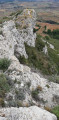
This sunny and windy trip will take you to the heart of the Boutenac National Forest, better known for its wine than for its hikes. In a setting that smells of pine and rosemary, discover the cave and the Chapel of Saint-Siméon, with a fresco depicting its history, its life and its work. Then head to the rocky barrier of Roque Sestière, the highest point of the Boutenac massif, a landmark for birds of prey and an area where the Cers wind has left no chance for vegetation.
The two locks at Puichéric
4.17 mi
+26 ft
-26 ft
1h 55
Easy
Departure from Puichéric (Aude)
More of a stroll than a hike, this outing is ideal for families looking to get some fresh air.
Although the banks of the canal have lost some of their charm (many plane trees have been lost), there are still two locks to discover, including the Aiguille lock with its unusual sculptor.
Alaric between valleys, ridges and splendid views
 11.00 mi
+2,543 ft
-2,572 ft
7h 15
Moderate
Departure from Douzens (Aude)
11.00 mi
+2,543 ft
-2,572 ft
7h 15
Moderate
Departure from Douzens (Aude)
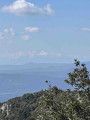
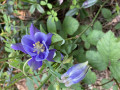
A beautiful circular route around Alaric, along ridges and valleys from north to south, offering views of the Montagne Noire, the Aude valley from Carcassonne to Lezignan, and the Corbières Massif with the Pyrenees in the background, surrounded by vegetation including thyme, rosemary, boxwood, pine and lavender. Very quiet paths.
Alaric loop via Combe du Gravier
 5.23 mi
+1,539 ft
-1,539 ft
3h 45
Moderate
Departure from Douzens (Aude)
5.23 mi
+1,539 ft
-1,539 ft
3h 45
Moderate
Departure from Douzens (Aude)
This is a great walk in the heart of the Alaric massif, where you can explore deep valleys and forests of holm oaks and Austrian black pines. Legend has it that the Visigoth king Alaric, passing through the region, gave the mountain its name, and some say that his treasure is hidden here.
A trip to the summit offers views of the entire Aude plain, the Corbières, the Eastern Pyrenees and the Mediterranean Sea if the weather is clear enough.
The Cirque de Viviès via the Plat de l'Aven
 8.22 mi
+814 ft
-807 ft
4h 30
Moderate
Departure from Thézan-des-Corbières (Aude)
8.22 mi
+814 ft
-807 ft
4h 30
Moderate
Departure from Thézan-des-Corbières (Aude)
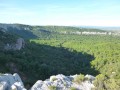
Starting from Thézan-des-Corbières, this hike through pine trees and heathland leads to the natural amphitheatre of the Cirque de Viviès, a geological curiosity of the Corbières. After a somewhat challenging descent to the wild valley floor, the landscape opens up and vineyards appear everywhere. At the end of the route, the magnificent Château de Caraguilhes wine estate is a tempting invitation to end the day on a delicious note.
La Mota Doça in Oupia
 Tourist office5.29 mi
+846 ft
-833 ft
3h 10
Moderate
Departure from Oupia (Hérault)
Tourist office5.29 mi
+846 ft
-833 ft
3h 10
Moderate
Departure from Oupia (Hérault)
[PLEASE NOTE: due to the fire in July 2026 in the Oupia area, the walking route is closed until further notice]
This beautiful walk combines nature, history and modern technology. Enjoy the exceptional panoramic views over the wine-growing plain.Ideal for nature lovers and those looking to get away from it all for a few hours in peaceful surroundings.
The Répudre Canal Bridge at the start of Paraza
 8.08 mi
+472 ft
-489 ft
4h 10
Moderate
Departure from Paraza (Aude)
8.08 mi
+472 ft
-489 ft
4h 10
Moderate
Departure from Paraza (Aude)
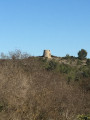
The Pont-Canal du Répudre bridge is the highlight of this circular route starting from Paraza towards the Minervois vineyards and the Jardin de Bacchus, near the Pouzols-Minervois cooperative winery. Before that, the passage through Sainte-Valière brings a hint of Saint-Jacques with a section of the Camin Romieu. Due to its location on the route, this Languedoc village is an essential stop for pilgrims looking for an enriching break on the Voie des Piémonts.
Notre Dame du Carla
 Association / Club / Walk leader
 6.60 mi
+922 ft
-958 ft
3h 50
Moderate
Departure from Lagrasse (Aude)
6.60 mi
+922 ft
-958 ft
3h 50
Moderate
Departure from Lagrasse (Aude)
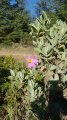
This hike, a little longer than Charlemagne's buttocks, takes you to a chapel and a viewpoint overlooking the surrounding area, all surrounded by wild vegetation.
Charlemagne's buttocks
 3.23 mi
+551 ft
-551 ft
2h 00
Easy
Departure from Lagrasse (Aude)
3.23 mi
+551 ft
-551 ft
2h 00
Easy
Departure from Lagrasse (Aude)
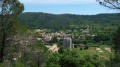
This short hike takes you up to a vantage point where you can admire the village of Lagrasse and its listed abbey. The name "fesses de Charlemagne" (Charlemagne's buttocks) comes from a legend which tells how Charlemagne's horse stumbled, throwing him onto the hill where he landed on his backside.