


Refine your search for walks in Chêne de la Tête d'Alouette
Chêne de la Tête d'Alouette walks


 From Rambouillet to Orgerus through the Rambouillet and Quatre Piliers forests
 Visorando Member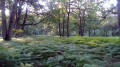
 18.03 mi
 +492 ft
 -591 ft
 7 hrs
7 hrs
 Very difficult
 Departure from Rambouillet (Yvelines)
A south-north crossing of the Rambouillet and Quatre Piliers forests, from station to station! The route, mainly through forest, is long and requires a good sense of direction for the first half. Several ponds and remarkable trees line the route.
Grand Tour of Paris: from station to station
 343.64 mi
+13,451 ft
-13,451 ft
26 days
343.64 mi
+13,451 ft
-13,451 ft
26 days
 Difficult
Departure from Cergy (Val-d'Oise)
Difficult
Departure from Cergy (Val-d'Oise)
This route, comprising 26 walks from station to station – generally long (averaging 21 km) – allows you to gradually circumnavigate the Île-de-France region and discover its full diversity. The route passes through several large forests, winds its way through cultivated fields and runs alongside numerous rivers. Apart from certain stages that are predominantly through woodland, there is a wealth of heritage to be discovered along the way.
Walks near Chêne de la Tête d'Alouette
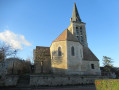
From Le Perray to Montfort via the Saint-Hubert and Hollande ponds
 11.64 mi
+197 ft
-453 ft
5h 30
11.64 mi
+197 ft
-453 ft
5h 30
 Moderate
Departure from Le Perray-en-Yvelines (Yvelines)
Moderate
Departure from Le Perray-en-Yvelines (Yvelines)
A hike from station to station that will take you through the forest of the Haute Vallée de Chevreuse Regional Nature Park. Ponds, castle, forest, ramparts and museum: everything you need for a wonderful day out with family or friends.
From Le Perray-en-Yvelines to Rambouillet through the forest
17.02 mi
+515 ft
-591 ft
8h 15
Very difficult
Departure from Le Perray-en-Yvelines (Yvelines)
Hike in the Rambouillet forest, but in the lesser-known and less frequented part. The Rochers d'Angennes are impressive; you don't expect to find yourself in a blue-collar atmosphere in this place. Hike from station to station with a fast TER at the end, if returning to Paris.
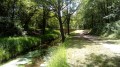
From Le Perray to Rambouillet via ponds, ditches and the Drouette river
 8.79 mi
+23 ft
-69 ft
4h 05
Moderate
Departure from Le Perray-en-Yvelines (Yvelines)
8.79 mi
+23 ft
-69 ft
4h 05
Moderate
Departure from Le Perray-en-Yvelines (Yvelines)
A hike from station to station with a water theme! In the Haute Vallée de Chevreuse Natural Park and then in the Rambouillet Forest, this is a pleasant route, mostly shaded, along ponds, small canals and a charming river, the Drouette.
From Saint-Léger-en-Yvelines to Villiers-Saint-Frédéric
12.35 mi
+482 ft
-702 ft
6h 05
Moderate
Departure from Saint-Léger-en-Yvelines (Yvelines)
This is the penultimate stage of the GR®1. It takes you out of the Rambouillet Forest and to the Villiers-Saint-Frédéric RER station. Halfway along the route is the pretty medieval town of Montfort-l'Amaury. The ruins offer superb views of the surrounding area. Half of the stage is through forest, i.e. up to Montfort-l'Amaury. The other part of the stage is more rural.
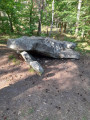
From Rambouillet to Saint-Léger-en-Yvelines, follow the GR®1 trail.
 15.84 mi
+597 ft
-669 ft
7h 50
Difficult
Departure from Rambouillet (Yvelines)
15.84 mi
+597 ft
-669 ft
7h 50
Difficult
Departure from Rambouillet (Yvelines)
The Rambouillet Forest is one of the largest forests in the Paris region. This section ofthe GR®®1 trailallows you to explore the western part of the forest. It is full of charm and features remarkable sites such as the Chêne de la Pocqueterie oak tree, the Rochers d'Angennes rocks and the Pierre Ardoue stone. The route starts in a town with great cultural potential, including the Château de Rambouillet, the Hermitage, the Laiterie de la Reine and the Chaumière aux Coquillages.
Follow the Yvette from Essarts-le-Roi to Saint-Rémy-lès-Chevreuse
 12.16 mi
+564 ft
-879 ft
6h 05
Difficult
Departure from Les Essarts-le-Roi (Yvelines)
12.16 mi
+564 ft
-879 ft
6h 05
Difficult
Departure from Les Essarts-le-Roi (Yvelines)
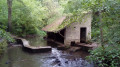
A hike from station to station that takes us to the source of the River Yvette and then up and down through the woods that frame its valley. The route crosses the Maincourt Marsh and then an area of rocky chaos. The forest trails are interspersed with villages and hamlets rich in heritage.
From Coignières to Villiers-Saint-Frédéric through the Yvelines
 11.61 mi
+466 ft
-751 ft
5h 45
Moderate
Departure from Coignières (Yvelines)
11.61 mi
+466 ft
-751 ft
5h 45
Moderate
Departure from Coignières (Yvelines)
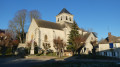
This is the thirty-fourth and final stage of the Grand Tour of Île-de-France via the GR®11. It starts in Coignières and ends in Villiers-Saint-Frédéric, where the radial section of the GR® coming from Paris meets the circular section, which will therefore be completed here. The route follows, more or less closely, the course of the Mauldre River, passing through Bazoches-sur-Guyonne, Mareil-le-Guyon and Neauphle-le-Vieux.
From Coignières to Montfort-l’Amaury, via Les Mesnuls
10.76 mi
+646 ft
-784 ft
5h 30
Moderate
Departure from Coignières (Yvelines)
A very lovely walk, with plenty of beautiful woodland, including the superb oak forest of the Bois des Hautes Bruyères. There are also numerous points of interest, the most notable being: the Jean Monnet House Museum, the Château des Mesnuls, and in Montfort-l’Amaury, the Maurice Ravel House, the castle ruins and their superb views. Beautiful villages and charming churches, many of which are open to visitors.
From Coignières to Saint-Rémy-lès-Chevreuse
9.44 mi
+203 ft
-509 ft
4h 30
Moderate
Departure from Coignières (Yvelines)
Hike along the Yvette river, with its wash houses, passing by the Château de la Madeleine. The route also passes through a forest in a former sandstone quarry.
From Villiers-Saint-Frédéric to Feucherolles
9.95 mi
+791 ft
-545 ft
5h 15
Moderate
Departure from Villiers-Saint-Fréderic (Yvelines)
This stage is the last of the old GR®1 route. The departure point is at Villiers-Saint-Frédéric, at the RER station. The entire route is rural. It passes through several villages, including Saint-Germain-la-Grange, Thiverval-Grignon and Davron. There are two notable churches: those of Davron and Thiverval-Grignon, not to mention Feucherolles. This is an undemanding section that allows you to finish the GR®1 at a leisurely pace.