


Refine your search for walks in Brière
Brière walks


 Mesquer - Quimiac
 Visorando Member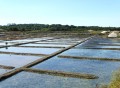
 13.66 mi
 +69 ft
 -66 ft
 6h 20
6h 20
 Easy
Easy
 Departure from Mesquer (Loire-Atlantique)
This route connects the three main areas of the municipality: Mesquer, Quimiac and Kercabellec. It allows you to discover the diversity of the area, first the marshes, then the countryside and the sea, which is particularly present around the Pointe de Mesquer.
La Brière between Sandun and Saint-André-des-Eaux
 8.21 mi
+59 ft
-62 ft
3h 50
8.21 mi
+59 ft
-62 ft
3h 50
 Moderate
Departure from Guérande (Loire-Atlantique)
Moderate
Departure from Guérande (Loire-Atlantique)
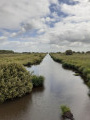
La Brière, France's second largest freshwater marsh, is a secret land hidden behind the surrounding hedgerows. The suggested route allows you to explore it from the land bordering it to the west and even catch a glimpse of it from the Sandun hill, which rises to a height of 28 metres. A real mountain in this flat country!But be careful, marshes are best explored when the water level allows it.Circuit temporarily closed
Quimiac, between sea and marsh
 9.98 mi
+30 ft
-30 ft
4h 35
Moderate
Departure from Mesquer (Loire-Atlantique)
9.98 mi
+30 ft
-30 ft
4h 35
Moderate
Departure from Mesquer (Loire-Atlantique)
The hike begins with three beaches and ends at Pointe de Merquel, which marks the entrance to the Bassin du Mès, famous for its salt marshes, mussels and oysters. The landscapes are magical, whether on the sea or marsh side.
Walk in the marshes around Kercabellec
8.17 mi
+36 ft
-36 ft
3h 45
Moderate
Departure from Mesquer (Loire-Atlantique)
Mesquer has a coastline opening onto the Bay of Vilaine and the open sea, but around Kercabellec, a small port between the village and Quimiac, there is a much more secret route between the marshes and the Merquel and Rostu tidal flats. Immerse yourself in this unique landscape where salt and shellfish farming are closely intertwined.
From Ranrouët Castle to La Brière
7.49 mi
+26 ft
-26 ft
3h 30
Moderate
Departure from Herbignac (Loire-Atlantique)
The Château de Ranrouët is a medieval gem nestled on the edge of the marshes. Here, there is no fortified rock, but a slight elevation in the greenery. The marshes that surround it provided protection, and the proposed route winds through the surrounding countryside where land and water constantly mix.
Balade autour de la cité médiévale de Guérande
4.18 mi
+184 ft
-180 ft
2h 05
Easy
Departure from Guérande (Loire-Atlantique)
Walk around the ramparts of Guérande to finish in the heart of the medieval town. The walk starts at the Gaudinais car park, around the ramparts, then follows a path that joins a short section ofthe GR® 34.
Between thatched cottages and marshes in Saint-Lyphard
 7.45 mi
+26 ft
-26 ft
3h 25
Moderate
Departure from Saint-Lyphard (Loire-Atlantique)
7.45 mi
+26 ft
-26 ft
3h 25
Moderate
Departure from Saint-Lyphard (Loire-Atlantique)
This hike allows you to discover the different faces of Brière: its marshes, its thatched cottages, its flora and fauna. Lots of paths, a few roads, all lined with oak trees, pines, gorse, willows and chestnut trees. Superb!
Walk in Grande Brière around Saint-Malo-de-Guersac
 4.56 mi
+23 ft
-23 ft
2h 05
Easy
Departure from Saint-Malo-de-Guersac (Loire-Atlantique)
4.56 mi
+23 ft
-23 ft
2h 05
Easy
Departure from Saint-Malo-de-Guersac (Loire-Atlantique)
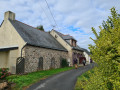
Walk along the edge of the Grande Brière. As you circle the village, you will discover meadows sometimes flooded by the rising spring waters, separated by the canals you will be walking alongside. In Rozé, you can climb up to a viewpoint to enjoy a view of the entire Grande Brière.
La Brière océane
11.68 mi
+98 ft
-98 ft
5h 25
Moderate
Departure from Assérac (Loire-Atlantique)
To the west of the Brière Regional Nature Park, the Brière coast stretches from Pont Mahé beach to the Pen Bé strait. It offers a varied landscape of beaches, shorelines, wild coastlines, moors and salt marshes. A return trip connects to this route for a foray into Morbihan to Pointe du Bile.
Le Rostu in the heart of the Mès salt marshes
 4.43 mi
+33 ft
-33 ft
2h 05
Easy
Departure from Mesquer (Loire-Atlantique)
4.43 mi
+33 ft
-33 ft
2h 05
Easy
Departure from Mesquer (Loire-Atlantique)
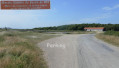
This hike is located in Mesquer, in the hamlet of Rostu.
The Bassin du Mès is an area where salt marshes have been created for centuries and were once highly developed. They are fed with seawater by channels leading from the "Merquel - Rostu - Pen-Bé" traicts, which are an enclave of the sea between the Pointe de Pen-Bé and the Pointe de Merquel. Oyster and mussel farming have also developed in this area. There are some beautiful views to be discovered.
Les Faillies Brières and Les Crolières de Gras
 5.96 mi
+33 ft
-33 ft
2h 45
Easy
Departure from Herbignac (Loire-Atlantique)
5.96 mi
+33 ft
-33 ft
2h 45
Easy
Departure from Herbignac (Loire-Atlantique)
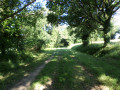
The Mès, a small coastal river in the north of the Guérande peninsula, flows through a low, wide valley consisting mainly of marshes, draining the water into the ocean.
The proposed route allows you to discover the upper part of these marshes and cross them via the Gras bridge, an ancient stone footbridge.
This route should only be attempted when the water level in the marshes allows the paths surrounding them to be used.
Circular route through the marshes: Étier de Boulay, Île de Rostu, Kercabellec
 6.55 mi
+66 ft
-66 ft
3h 05
Moderate
Departure from Mesquer (Loire-Atlantique)
6.55 mi
+66 ft
-66 ft
3h 05
Moderate
Departure from Mesquer (Loire-Atlantique)
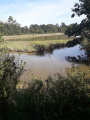
A walk through a varied landscape where the marshes tell the story of their distant origins, shaped by the earth and the ocean, with low, undulating vegetation carved out by small streams, and their domestication by man, with salt marshes and oyster beds, not to mention the iconic cabanes à carrelet (fishing huts).
Pen Bé Tower
 4.30 mi
+43 ft
-43 ft
2h 00
Easy
Departure from Assérac (Loire-Atlantique)
4.30 mi
+43 ft
-43 ft
2h 00
Easy
Departure from Assérac (Loire-Atlantique)
The Pointe de Pen Bé juts out like a ship between Pont Mahé Bay and the Pen Bé and Rostu straits. While its maritime location is undeniable at high tide, it changes completely at low tide, as the sea then deserted the coastal areas. Whether at high or low tide, this is a route that is worth exploring at any time, as the landscape is so changeable.
Between land and sea at Pont Mahé
7.00 mi
+66 ft
-72 ft
3h 15
Moderate
Departure from Assérac (Loire-Atlantique)
This route forms a circular loop between Pont Mahé Bay and Pen Bé Bay.
The Gagneries de la Chapelle des Marais circuit
8.32 mi
+10 ft
-10 ft
3h 50
Moderate
Departure from La Chapelle-des-Marais (Loire-Atlantique)
Farming in the marshes has always relied on mowing and grazing the meadows when they were no longer covered in water. Cows prefer dry land to the aquatic environment, and providing them with winter refuge areas is key to ensuring the continuation of this farming practice. This route invites you to discover the pastures of La Chapelle des Marais.
 Tour of the thatched-roof villages of Saint-Lyphard
18.20 mi
+138 ft
-148 ft
2 hrs
Easy
Departure from Saint-Lyphard (Loire-Atlantique)
Remnants of a time when much of what enabled the people of Bréca to make a living was extracted from the marsh, thatched cottages are still very much in evidence around Saint-Lyphard. There are said to be no fewer than 500 of them.
To discover this exceptional heritage, why not hop on your bike and explore the narrow roads and farm tracks that criss-cross the Saint-Lyphard area? A complete change of scenery is guaranteed!
The Herbignac Potters’ Trail
8.17 mi
+79 ft
-79 ft
3h 50
Moderate
Departure from Herbignac (Loire-Atlantique)
Passing through clay extraction sites and former pottery villages, this route pays tribute to one of Herbignac’s traditional trades, which continued until the mid-20th century.
The Brière Marshes: a chance to spot storks
 8.50 mi
+125 ft
-121 ft
4h 00
Moderate
Departure from Pontchâteau (Loire-Atlantique)
8.50 mi
+125 ft
-121 ft
4h 00
Moderate
Departure from Pontchâteau (Loire-Atlantique)
On your way to and from Pontchâteau town centre, discover the Brière marshes. With a bit of luck (in season), you may spot a nest of storks.
From Guérande to La Baule and back via the salt marshes
21.23 mi
+180 ft
-174 ft
2.5 hrs
Moderate
Departure from Guérande (Loire-Atlantique)
Guérande overlooks the Pays Blanc from its hillside. A cycle path allows you to reach La Baule beach in peace and quiet, before following the coastline past Le Pouliguen. From Kervalet, the scenery changes: the vastness of the marshes, criss-crossed by numerous embankments, invites you to take one of the small, winding roads that run through them. Finally, it will take a fair bit of effort to climb back up and reach the outskirts of the medieval town.
Pont Mahé Bay and Dunes
4.57 mi
+36 ft
-49 ft
2h 10
Easy
Departure from Pénestin (Morbihan)
Straddling the departments of Morbihan and Loire-Atlantique, Pont Mahé Bay is a vast sandbank at low tide and a renowned spot for board sports once the sea has returned. Connecting the two headlands that mark its boundaries is a pleasant way to cross administrative borders
La Cour aux Loups
9.07 mi
+72 ft
-102 ft
4h 15
Moderate
Departure from Herbignac (Loire-Atlantique)
Although Herbignac is not the commune in Brière with the most thatched cottages, the villages along this route offer some fine examples.
The banks of the Brière at Marlais
8.21 mi
+39 ft
-39 ft
3h 50
Moderate
Departure from Herbignac (Loire-Atlantique)
This route runs between the Brière and Mès marshes. These two protected wetlands are home to numerous birds, which you may spot along the way.
From the Pont Mahé marshes to those of Le Mès
8.05 mi
+125 ft
-118 ft
3h 50
Moderate
Departure from Assérac (Loire-Atlantique)
The Pointe de Pen Bé juts out with its ochre cliffs between the Traict de Rostu and Pont Mahé Bay. These two stretches of sea, which are revealed at low tide, form the foreground to the marshes – one a salt marsh, the other a freshwater marsh – which extend behind the coastal sandbars.
The circular walk that links them offers a lovely glimpse of this coastal countryside.
Route of the large islands
24.91 mi
+16 ft
-16 ft
4 hrs
Moderate
Departure from Saint-Joachim (Loire-Atlantique)
Discover the islands of Saint-Joachim and some of the islands of Saint-Malo-de-Guersac by bike, with some beautiful views of the Brière marshes.
Sea, marshes and countryside around Caire
8.82 mi
+138 ft
-121 ft
4h 10
Moderate
Departure from Assérac (Loire-Atlantique)
The beach and marshes of Pont Mahé, the Pointe de Pen Bé, the area around the Étang du Pont de Fer and the moors of Monchoix each offer a unique perspective on the landscapes of Asserac. Walking through this agricultural landscape that borders the coast serves as a reminder that the seashore was once a natural environment before urbanisation took over.
Chemin du Bocage in Kerhinet
 Tourist office0.54 mi
+10 ft
-10 ft
0h 15
Easy
Departure from Saint-Lyphard (Loire-Atlantique)
Tourist office0.54 mi
+10 ft
-10 ft
0h 15
Easy
Departure from Saint-Lyphard (Loire-Atlantique)
This small village of 18 thatched-roof houses was acquired in the 1970s by the Brière Regional Nature Park with the intention of renovating it and turning it into a showcase of traditional Brière housing. Kerhinet is a village situated to the south-west of the municipality of Saint-Lyphard, on the western side of the marshes. The village is open to visitors free of charge. You can enjoy a drink or an ice cream on site. There is a picnic area as well as free, designated parking.
From the medieval town to the hillside manor houses
4.67 mi
+135 ft
-138 ft
2h 15
Easy
Departure from Guérande (Loire-Atlantique)
From the ring of ramparts encircling the walled town, the suggested route heads westwards, following the hillside overlooking the salt marshes. Once isolated on the hillside, several small manor houses dot the route: Colveux, Chateaumady and Drezeux. Whilst the first is now joined by suburban housing estates, the protection afforded by the hillside has allowed the other two to retain their seclusion and their unobstructed views of the salt marshes.