Country:

 City:
City:


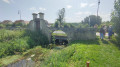
Park in the square near the Town Hall.
(S/E) From the Town Hall courtyard, you can visit the Palaeontology Museum housing Raymond Pillon’s collections.
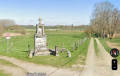
Turn right, passing in front of the War Memorial. Walk 100 metres, passing the old post office.
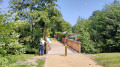
(1) Follow the schoolchildren’s path to the right, along the Upper Troesne. At the end of this path, turn left. At the T-junction, turn left again. Immediately after, turn right, cross a green space and take the footbridge over the Marquemont Canal.
(2) Continue past the footbridge, walking alongside the landscaped gardens on either side.
(3) At the end of the path, at a three-way junction, take the path on the right and continue to the Route de Loconville.
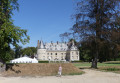
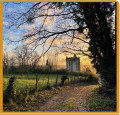
(4) Cross it at the pedestrian crossing to take the path that runs alongside the Ru du Moulinet. Follow it to the wall surrounding the castle, which dates back to the 12th century. To view it, turn right to go round the castle and head to the gate leading to its pretty façade. Retrace your steps to the end of the car park wall on your right. Take the path alongside the Ru du Moulinet again. Cross the road once more.
(4) On the other side, follow the road to the right for about fifty metres. Turn left onto Rue du Moulinet. At the end, turn left twice to take Rue du Préville.
(3) Back at the three-way junction you passed earlier, turn right.
(2) Turn right and cross the stream. You will come out onto Rue de la Foulerie; follow it to the left and crossthe Troesne. Walk along Place de la Foulerie (featuring a plane tree listed as a remarkable tree) and continue along Ruelle de la Foulerie. Join Rue de l’Hôtel de Ville and follow it to the right for about fifty metres.
(5) Walk up towards the church to reach the Church of Saint John the Baptist, notable for its architecture (16th-century Flamboyant Gothic).
(6) Climb a flight of steps and continue along a path.
(7) Enter the area where, at the height of the feudal era, a fortress stood, built from the 10th century onwards to withstand Anglo-Norman invasions (only a chapel remains, home to the descendants of the Counts of Chaumont; access is prohibited). Return to the previous junction.
(7) Turn sharply right. Walk down to Rue de la Laillerie (D583). Follow this street to the right for about fifty metres.
(8) Turn left onto Rue de la Libération (statue of Saint Roch in a niche on the façade of a house). At the junction, turn right twice and continue to the Maison des Soeurs de la Compassion. Enter the courtyard and turn right to head towards the small chapel containing remains dating from the 13th and 14th centuries.
(9) Retrace your steps back to Rue de Laillerie.
(8) Follow this street to the left and you’ll come to a dead end on the left. When the street turns left, turn right onto Rue du Jard.
(10) At a fork, turn right onto Chemin de la Fontaine Salée. Further on, pass beneath a telecoms mast. Walk past a tennis court and, at the fork immediately ahead, turn left and head back towards the church.
(6) Head down to the left towards Place du Marché.
(5) Turn right onto Rue de l’Hôtel de Ville.
(1) At the fork, keep right and you’ll soon be back at the car park where you started (S/E).



 Visorando Member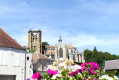
 Easy
Easy