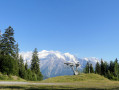
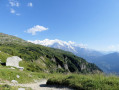
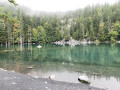
Tour des Fiz via the Passage du Dérochoir and Lac d'Anterne

I invite you to tackle the Tour des Fiz, a route of considerable length with a significant elevation gain.
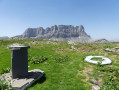
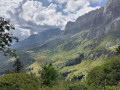
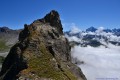
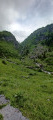
Along the way, you’ll be treated to magnificent and varied scenery throughout this hike.
Please note, you will encounter a challenging section during the ascent of the Passage du Dérochoir (6): the cliff access is fairly well-equipped but requires a degree of caution, particularly as it is quite exposed.

Details

24065031
Creation:
Last update:
Last review:
  • Walking
    Activity: Walking
  • ↔
    Distance: 26.27 km
  • ◔
    Duration according to the author: 10 hrs 
  • ▲
    Difficulty: Extremely difficult

  • ⚐
    Back to start: Yes
  • ↗
    Ascent: + 1,807 m
  • ↘
    Descent: - 1,802 m

  • ▲
    Highest point: 2,257 m
  • ▼
    Lowest point: 1,344 m

Photos

Description of the walk

The walk starts from the Plaine Joux car park (end of the D43 road)

(S/E) Head due east towards a small roundabout. Shortly after a barrier, follow a footpath to the left, then continue almost straight on along a track suitable for vehicles, heading uphill. Just past a sharp bend, turn left onto a slightly steeper path, running alongside the ski run.

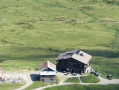
(1) Follow the path to the left towards the Chalet de Barmus through woodland. After crossing another path, rejoin the track.

(2) Cross the track and take the path opposite (still heading towards the Chalet de Barmus). The route (not shown on the map) winds its way uphill to the right and left, mostly through the undergrowth, before joining the track at the Chalet de Barmus.

(3) Follow the track to the right (heading east) for a good distance, remaining at roughly the same altitude.
You will arrive at the hamlet of Ayères des Pierrières. Walk through the hamlet to the crossroads at the end.

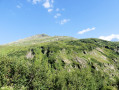
(4) Ignore the path straight ahead (that’s the one for the return journey) and take a path on the left heading north-west towards the Passage du Dérochoir. As you approach the cliff, the landscape becomes rocky and the path then becomes very rough, through a vast scree slope resulting from a major landslide in 1751. You should zigzag constantly and follow the red markings, which are fairly regular, as much as possible. At one point, as you pass the base of an imposing boulder visible on the left, the route becomes less rugged. After a good stretch of slab, you reach a slightly higher plateau in a much more pleasant setting.

(5) Head right towards the cliff. It feels like a via ferrata: a hanging rope and a few metal rungs help you cover thefirst few metres. Then, handrails, ladders, and more ropes and rungs accompany you all the way up the climb. Great care is required during this section.
You reach the ridge line where you can enjoy the many views.

(6) Continue left towards the Sales refuge. At thefirst fork (Sous le Dérochoir), head right, due north, along a steeply descending path that joins theGR®96.

(7) At a place called Combe à l'Ours, follow theGR® in the same direction; the going gets easier and easier as you head towards "Chalets de Sales" and then the Sales refuge.

(8) After the refuge, continue straight on towards Les Fardelay and the Lignon. Shortly after the chapel, follow a downhill path with a few natural hairpin bends. You’ll be walking through a valley surrounded by high peaks, and at times you’ll pass by a few waterfalls (it’s absolutely stunning!). A little further down, you’ll come to a fork in the path on a flat stretch.

(9) Continue either to the right or straight ahead; the route taken here is the one on the right, but the one straight ahead is also valid, as it joins the main route a little further on at a footbridge. After another descent, you’ll reach a fork near the Pleureuse and Sauffaz waterfalls.

(10) Take the path on the right, heading uphill towards Lac d'Anterne (GR®5route). The path winds its way up in short hairpin bends to reach the summit at Collet d'Anterne.

(11) From the small pass, a short descent begins; theGR®5heads south then south-southeast and reaches the Chalet d'Anterne on a vast plateau.

(12) Once you reach the Refuge Alfred Wills, continue along the path towards Lac d'Anterne. The path climbs at a steady but not excessive gradient. After a short while, you’ll come across the magnificent Lac d'Anterne, slightly overlooking the path at a junction. Follow the path alongside the lake for a while before reaching the lakeshore.

(13) Make the most of this spot where the rocky landscape meets the mountain pastures. Follow the path uphill to reach the Col d’Anterne.

(14) It is a lovely spot with numerous viewpoints. Continue along the path down a steep slope. At a junction marked by signposts, leave theGR® route which heads left and turn right towards Les Ayères. A little further down, you’ll reach a track suitable for vehicles, but do not take it.

(15) Continue along the path on the right, which joins the track a little further on; then follow the track for a short while until you reach a fork.

(16) Take the path on the left. Further on, you’ll come to a track; follow it straight on until you reach a junction marked by a large rock sheltering a curious little shepherd’s hut.

(17) Turn left towards Ayères via the Sentier Vuacheret. The path first descends steeply, then turns south-west on a gentler slope and shortly afterwards reaches a fork.

(18) Continue to the right along the path, then turn right again at the next crossroads to return to the junction where the circular route begins.

(4) Walk through the hamlet of Ayères des Pierrières, then follow the route back in the opposite direction to the outward leg and return to the Plaine Joux car park (S/E).

Waypoints

  1. S/E : km 0 - alt. 1,344 m - Car park - DECO PLAINE JOUX
  2. 1 : km 0.44 - alt. 1,405 m - Start of the trail
  3. 2 : km 0.81 - alt. 1,455 m - Junction with track
  4. 3 : km 1.48 - alt. 1,602 m - Barmus Chalets
  5. 4 : km 3.42 - alt. 1,633 m - Ayères des Pierrières - Junction of the circular loop
  6. 5 : km 5.02 - alt. 2,078 m - Below the cliff
  7. 6 : km 5.24 - alt. 2,218 m - Passage du Dérochoir (ou col)
  8. 7 : km 6.42 - alt. 1,989 m - Combe à l'Ours
  9. 8 : km 8.26 - alt. 1,870 m - Refuge de Sales
  10. 9 : km 10.6 - alt. 1,544 m - Flat section - Fork in the path
  11. 10 : km 11.43 - alt. 1,437 m - Cascades de la Pleureuse et de la Sauffaz
  12. 11 : km 13.24 - alt. 1,792 m - Collet d'Anterne
  13. 12 : km 15.16 - alt. 1,806 m - Refuge d'Anterne Alfred Wills
  14. 13 : km 17.61 - alt. 2,060 m - Lac d'Anterne
  15. 14 : km 18.88 - alt. 2,257 m - Col d'Anterne
  16. 15 : km 19.82 - alt. 2,001 m - Trail junction
  17. 16 : km 20.62 - alt. 1,960 m - Fork
  18. 17 : km 21.33 - alt. 1,873 m - La Pierre à l'Ours - Vuacheret Trail
  19. 18 : km 22.49 - alt. 1,636 m - Les Plans d'Ayères
  20. S/E : km 26.27 - alt. 1,344 m - Car park - DECO PLAINE JOUX

Notes

The route is presented as a one-day hike (as I completed it), but I recommend doing it over two or even three days, stopping at one of the various mountain huts along the way.

The starting point can be viewed on Google Maps: click here.
Good walking boots and walking poles are recommended.

Take your rubbish away with you; nature cannot digest it.

Here is a description of the difficulties encountered by section (the route is not uniform):
- green: fairly easy walking with no significant elevation changes or difficulties
- blue: steeper slopes and/or greater elevation changes on a well-marked route
- orange: route presenting some technical difficulties and/or poor trail conditions (markings or visibility of the path).
- red: a difficult route due to significant elevation changes that may require some climbing, in an environment presenting some hazards.
- black: route on a fairly difficult trail and/or involving imminent dangers
- White: routes in very challenging technical environments requiring specific equipment.

From (S/E) to (1): Blue difficulty
The route initially follows a footpath, then a wide track suitable for vehicles.
No signposts present.

From (1) to (3): Blue difficulty
A rather pleasant path takes us along
Signposts are present.

From (3) to (4): Green difficulty
Easy route on a wide track
Signposts are in place.

From (4) to (5): Red difficulty.
As you proceed, the going gets tougher and then becomes rough as you cross a scree slope, requiring careful attention both to your progress and to the difficulties encountered, and necessitating the use of your hands at times.
Red markings (follow carefully)

From (5) to (6): Black difficulty.
The route follows the cliff face with the aid of various equipment (ropes, metal rungs, ladders): in this area, where a false step is forbidden given the environment, a minimum of caution is recommended.
.
From (6) to (7): Orange difficulty
The descent requires caution in a few sections.
There are a few signposts.

From (7) to (8): Blue difficulty.
The route gradually becomes easier.
Signposts are present. White-red markings (GR®96).

From (8) to (10): Blue difficulty.
Throughout the descent into the valley, a good path punctuated by a few occasional hairpin bends accompanies us.
Signposts are present. White-red markings (GR®96).

From (10) to (11): Blue difficulty.
The path is generally in good condition and follows a gentle uphill slope.
Signposts are present. White-red markings (GR®5)

From (11) to (12): Green difficulty
The route is fairly easy.
Signposts are present. White-red markings (GR®5)

From (12) to (14): Blue difficulty
A decent, uphill path is followed
Signposts are present. White-red markings (GR®5).

From (14) to (15): Blue difficulty
On the upper part of the route, the path follows a fairly steep downhill trail.
Signposts are present. Follow the white-red markings (GR®5) until the fork.

From (15) to (16): Blue difficulty
Follow a footpath and then a track
Signposts are present. Yellow-red markings

From (16) to (17): Blue difficulty
A relatively easy path is followed.
Signposts are present. Yellow-red markings.

From (17) to (18): Blue difficulty
There is a steep downhill section at the start, but the route then becomes much less rugged and follows a pleasant path
No signposts along the way, but finding your way is not a problem.

From (18) to (4): Green difficulty
A track suitable for vehicles is followed.
Signposts are present.

From (4) to (3): Green difficulty
Easy route on a wide track
Signposts are present.

From (3) to (1): Blue difficulty
This is a familiar trail, but requires some caution in places when descending.
Signposts are present.

From (1) to (S/E): Blue difficulty
After joining the track, the route ends shortly afterwards.

This route passes through a protected area, which may be subject to special regulations:

Worth a visit

Les Rochers des Fiz and its rockfalls:
the area has been marked by continuous landslides for many centuries: to find out more, click here
The most significant recent event dates back to 1751, when a whole section of the Dérochoir collapsed; this can still be clearly seen today in the form of a vast scree slope. To find out more, I particularly recommend:
- the article in Le Monde: click here (please note: a fee is required to read the full article),
- the article on the Persée website: click here

Other events are worth noting, and the most significant recent one dates back to 1970, when a landslide claimed 71 lives, including 56 children. I invite you to read the articles on Wikipedia and France Bleu. You may also wish to listen to the France Inter programme ‘Affaires Sensibles’.
Further incidents of varying severity are to be feared in the future

Lake Anterne:
This is a natural lake covering an area of around 10 hectares. To find out more, I invite you to read the Wikipedia article.

Alfred Wills: he played a key role in the early days of mountaineering in the Alps in the 19th century. A refuge named after him was built in the 1980s near the Anterne chalets. To find out more, I invite you to read the Wikipedia article

Always be cautious and plan ahead when you're outdoors. Visorando and the author of this route cannot be held responsible for any accidents occurring on this route.

The GR® and PR® markings are the intellectual property of the Fédération Française de Randonnée Pédestre.

Reviews and comments

5 / 5
Based on 3 reviews

Reliability of the description
5 / 5
Ease of following the route
5 / 5
Route interest
5 / 5
Oliv'91
Oliv'91
• Edited:

Overall rating : 5 / 5

Date of your route : Jul 11, 2025
Reliability of the description : ★★★★★ Very good
Ease of following the route : ★★★★★ Very good
Route interest : ★★★★★ Very good
Very busy route : Yes

A magical loop to do. I was lucky to have perfect weather for this one. The goal was to enjoy everything this hike had to offer. We camped next to the Sales refuge and at Lac d'Anterne. I got to admire ibex, chamois, marmots and magnificent landscapes. Pure bliss.
There were quite a few people on Saturday morning because there was a trail run around the Fiz, but it was still really nice.
The route is clear and easy to follow. There are signs at all the junctions.
I made a detour to Lac de Pormenaz and descended via La Chorde. Be careful if you're prone to vertigo. It can be quite impressive on the way down.

Machine-translated

User 8514127

Overall rating : 5 / 5

Date of your route : Jul 12, 2025
Reliability of the description : ★★★★★ Very good
Ease of following the route : ★★★★★ Very good
Route interest : ★★★★★ Very good
Very busy route : Yes

A beautiful loop with many magical spots. Very popular after the passage of the Derochoir.

Machine-translated

Nata
Nata

Overall rating : 5 / 5

Date of your route : Sep 21, 2022
Reliability of the description : ★★★★★ Very good
Ease of following the route : ★★★★★ Very good
Route interest : ★★★★★ Very good
Very busy route : No

A very interesting route,
Time to be reviewed: 7.5 hours, including a 40-minute break.

Machine-translated

Other walks in the area

For more walks, use our search engine .

The GPS track and description are the property of this route's author. Please do not copy them without permission.