


Refine your search for walks in tête du Brec (2566m)
tête du Brec (2566m) walks


 Mont Pepoiri, Petoumier and Lacs de Millefonts
 Visorando Member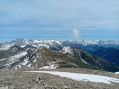
 12.11 mi
 +5,696 ft
 -5,669 ft
 10 hrs
 Very difficult
 Departure from Valdeblore (Alpes-Maritimes)
This is a beautiful circuit that allows you to discover the Baus de la Frema and Mont Pétoumier with incredible views of the Argentera and Gélas massifs, then the Lacs de Millefonts with the final climb to Mont Pépoiri, which offers an extraordinary panorama of the entire Mercantour and the middle country.
Walks near tête du Brec (2566m)
Saint-Dalmas de Valdeblore – Le Boréon
 12.91 mi
+4,491 ft
-3,720 ft
10 hrs
Very difficult
Departure from Valdeblore (Alpes-Maritimes)
12.91 mi
+4,491 ft
-3,720 ft
10 hrs
Very difficult
Departure from Valdeblore (Alpes-Maritimes)
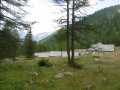
Second stage of the route and first stage on theGR®52. A long 21km stage taking in the Col de Veillos, numerous lakes, the Col du Barn, the Vacherie du Collet and the Col de Salèse, ending at a place called Le Boréon.
A spectacular stage thanks to its landscapes and views, but very difficult.
From Saint-Dalmas to Utelle
 15.80 mi
+4,124 ft
-5,745 ft
10h 50
15.80 mi
+4,124 ft
-5,745 ft
10h 50
 Difficult
Departure from Valdeblore (Alpes-Maritimes)
Difficult
Departure from Valdeblore (Alpes-Maritimes)
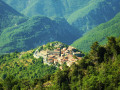
This twentieth stage marks the end of the crossing of the Mercantour Massif. From Saint-Dalmas, the GR®5 heads south to climb the steep slope towards the Cime de Colmiane, which it bypasses by heading for the Col du Varaire. It crosses the Bois Noir and reaches the Col des Deux Caïres, then the Caïre Gros. The route follows its ridge and, hugging the hillside, passes beneath Mont Chalancha, La Partissuola and the Cime de la Combe before descending to the small pass of Trous. Before the Col du Fort, the path descends to the Granges de la Brasque, crosses the upper part of the Riou du Figaret valley and arrives at the Col d’Andrion. Cutting across the hairpin bends of the M33, the GR®5 reaches the Col des Fournès and the Col de Gratteloup. Through rocky gaps, it runs alongside the Petit Brec d’Utelle and then the Brec d’Utelle. From there, the path descends towards the Crête de l’Albaréa and reaches the Col du Castel Ginesté. It crosses the slope below the ridges of the Têtes du Sac de Bécasse, Parabosquet and Les Pennes to reach the Utelle community lodge.
Saint-Dalmas de Valdeblore - Utelle
15.74 mi
+4,354 ft
-5,919 ft
11h 00
Difficult
Departure from Valdeblore (Alpes-Maritimes)
Étape de la traversée des Alpes de Saint-Dalmas de Valdeblore jusqu'à Utelle. Randonnée sur une ligne de crête offrant des panoramas extraordinaires sur l'arrière pays niçois.
Mercantour route via the GR®52
 65.54 mi
+21,585 ft
-24,639 ft
7 days
Very difficult
Departure from Saint-Martin-Vésubie (Alpes-Maritimes)
65.54 mi
+21,585 ft
-24,639 ft
7 days
Very difficult
Departure from Saint-Martin-Vésubie (Alpes-Maritimes)
TheGR® 52 is a route that crosses the Mercantour National Park, through the Alpes-Maritimes from Saint-Dalmas-de-Valdeblore to Menton.
ThisGR® route is very challenging due to the varied terrain and significant elevation changes.
You’ll reach altitudes of up to 2,700m, where you can admire the high-mountain landscapes, flora and fauna. Then, in the second half of the route, you’ll encounter panoramas that are more southern in character but just as extraordinary.
Saint-Martin-de-Vésubie - Saint-Dalmas de Valdeblore
 4.01 mi
+1,821 ft
-732 ft
3h 25
4.01 mi
+1,821 ft
-732 ft
3h 25
 Moderate
Departure from Saint-Martin-Vésubie (Alpes-Maritimes)
Moderate
Departure from Saint-Martin-Vésubie (Alpes-Maritimes)
The GR®52 starts in Saint-Dalmas de Valdeblore. This first stage is a transition to reach the starting point of the GR®.This is a lovely hike that passes through the small resort of La Colmiane and offers a relatively easy climb, following the GR®52 A through the woods for just over 6km.
Boréon – Cougourde Mountain Hut
 5.37 mi
+2,559 ft
-472 ft
4h 40
Moderate
Departure from Saint-Martin-Vésubie (Alpes-Maritimes)
5.37 mi
+2,559 ft
-472 ft
4h 40
Moderate
Departure from Saint-Martin-Vésubie (Alpes-Maritimes)
This first stage largely follows theGR®52. It takes you through wooded countryside and offers a relaxing break by the peaceful Lac de Trécolpas. From the Cougourde Mountain Hut, you’ll enjoy superb views of this majestic, pumpkin-shaped peak.
Editor’s note added on 26/07/2021: A section is closed due to bad weather. See the notices for an alternative route
Le Boreon - Refuge de Nice
 10.85 mi
+5,971 ft
-3,678 ft
12 hrs
Very difficult
Departure from Saint-Martin-Vésubie (Alpes-Maritimes)
10.85 mi
+5,971 ft
-3,678 ft
12 hrs
Very difficult
Departure from Saint-Martin-Vésubie (Alpes-Maritimes)
The most difficult stage of thisGR®, but the most beautiful for its landscapes, flora and fauna: chamois, marmots, ibex.
After the Pas des Ladres, we chose to take theGR®52via the alternative route that passes close to the Col de Fenestre, then descends to Lac de Fenestre before reaching La Madone de Fenestre.
Three sections are particularly difficult: between Lac de Trecolpas and the Pas des Ladres, the ascent of the Pas du Colomb, and the descent from the Pas du Colomb.
Roure - Saint Dalmas Valdeblore
9.54 mi
+3,261 ft
-2,657 ft
7h 15
Difficult
Departure from Alpes-Maritimes
Étape de la traversée des Alpes avec un départ de Roure jusqu'à Saint Dalmas de Valdeblore.
Randonnée allant de la vallée de la Tinée à l'arrière pays niçois.
Isola 2000 – Rifugio Questa
7.19 mi
+4,163 ft
-3,159 ft
6h 55
Difficult
Departure from Isola (Alpes-Maritimes)
The first stage of a circular walk around Isola. The route starts at the top of the resort and finishes at Rifugio Questa, on the Italian side, passing by the Terre Rouge Lakes and Lake Tavels.
Madone de Fenestre Mountain Hut – Relais des Merveilles
 6.64 mi
+2,280 ft
-3,343 ft
5h 00
Difficult
Departure from Saint-Martin-Vésubie (Alpes-Maritimes)
6.64 mi
+2,280 ft
-3,343 ft
5h 00
Difficult
Departure from Saint-Martin-Vésubie (Alpes-Maritimes)
This third stage is less demanding than the previous two. The entire route follows a marked path.
Only the start of the descent from the Pas du Mont Colomb and the sections over scree require a little care. This is the classic route linking the Madone de Fenestre valley with the Gordolasque valley. The scenery along the way is magnificent, and the Pas du Mont Colomb offers two completely different views from its eastern and western sides.