Soum de la Génie Braque circular loop via Cabanes d'Isarce and d'Aülhet

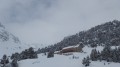
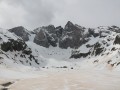
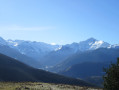
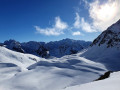
An exceptional and magnificent circular route on the heights of Saint-Pé-de-Bigorre, in the Tres-Croutz forest, then along the ridge of the Soums de Maletaule. This route circles the Génie Braque torrent, which supplies water to the village below. On the mountain pastures, the landscapes are magical in both summer and winter, on the northern side (St-Pé) and the southern side (the main Pyrenees range).

Details

196697
Creation:
Last update:
Last review:
  • Snowshoeing
    Activity: Snowshoeing
  • ↔
    Distance: 15.90 km
  • ◔
    Duration according to the author: 8 hrs 
  • ▲
    Difficulty: Difficult

  • ⚐
    Back to start: Yes
  • ↗
    Ascent: + 1,330 m
  • ↘
    Descent: - 1,330 m

  • ▲
    Highest point: 1,523 m
  • ▼
    Lowest point: 417 m

Photos

Description of the walk

Access: From Saint-Pé-de-Bigorre, cross the Gave de Pau at the bridge in the Le Bout-du-Pont district.
Follow the signs for “Monastère de Bethléem” until you reach a small road on the right signposted “Sep”. Take this road for a few hundred metres until you reach a pumping station. Park in the adjacent car park.

(S) to (1) Sep at the source of Bat dé Haü

(S/E) Walk up the tarmac road for about a hundred metres and, as soon as possible, take the yellow-marked path on the left which leads into the forest.
This is the Gatès path.
Gradually, the dense, damp woodland of boxwood, hazel and chestnut gives way to a magnificent beech forest.
You follow the Génie Braque upstream, overlooking the left bank. The path offers lovely views here and there of the ravine, the right bank and, at times, the ridge you are about to traverse.

At the 975m mark, after an hour and a half’s walk, the path crosses the Génie. Shortly afterwards, we emerge at the bottom of the mountain pastures, which are once again very steep. This is the start of the Cirque de Bat dé Haü, at the bottom near the spring and its hut, of which only ruins remain today. On the map, the Cirque is mistakenly labelled Clots des Cuts d'Ausets.
Through the tall grass (in summer), following the yellow markings, or “in the middle of nowhere” if snow covers everything in winter, following the wooden posts, you reach the Bat dé Haü spring in 15 minutes.

(1) to (3) From Bat dé Haü to the Cabane de l'Isarce

(1) From the spring, look for the signpost 10 metres away pointing towards the Plateau de l'Isarce, a 1-hour walk. Look for the yellow markings and the trail through the grass, then join the path leading towards another magnificent beech forest. After an easy walk, you reach the lower part of the Isarce mountain pastures at a place called Clot d'Eth Habout.

On a tree, a sign indicates the direction you have come from: “Saint-Pé de Bigorre 3 hours” and “Cirque de Bat de Haout 1 hour”. Leave the tree on your right and continue. Finally, a signpost for the regional nature reserve gives you some instructions.

Slightly to your left, with your back to the beech forest and the descending slope, you can see a sinkhole. On the right, a large tree with two trunks. Almost directly opposite, slightly to the right as you climb through the moorland, lies the Isarce plateau and the plateau’s ridge at an altitude of 1,350 metres. Make your way gently up to the plateau’s ridge.

(2) You begin to appreciate the magnificent views to the west, south and east. To the north is the Pic des Toupiettes (or d’Araü, or Arrau; formerly known as the Soum de Las Toupietas). Continue straight ahead off the path, descending the other side towards the north-west, and you’ll soon reach the Cabane de l’Isarce.

(3) to (8) Isarce and Soums Ridge Trail (Soums or Maletaule Ridge)

(3) We then leave the hut, retracing our steps back to the Isarce Plateau ridge in a few minutes.

(2) Turn right, skirting the doline to the west (marked at 1294m on the IGN map), then stay as close as possible to the ridge line. There are scattered yellow markings up to the Soum de la Génie Braque.

The ridge line (known as the Crête de Taulemale) almost coincides with the border between the Hautes-Pyrénées and the Pyrénées-Atlantiques, and thus between Bigorre and Béarn, and between the (former) administrative regions of Midi-Pyrénées and Aquitaine.

The path, or sometimes just a faint track, runs along the cirque of the Saint-Pè-de-Bigorre forest to the north and east, with some interesting precipices... You cross the mountain pastures of Clot det Haboub (or Taboup, depending on the name used) and then that of Clot de la Neü. Each of these corresponded to a designated shepherding area and a hut. They are all now in ruins, except for the recent tin-roofed hut at Marti-Peyras.

Continuing on a fairly steady climb, we easily reach the summit of Gangues de Courraü (1,447m).

(4) Continue on to reach the Soum de Marti-Peyras at 1,464m.

(5) Continue towards the Soum de Male-Taule at 1,493m.
All along the route, you’ll pass dozens of sinkholes on the right-hand side of the path, varying in depth (marked on the map by a circular contour line with an inward-pointing arrow and dots inside), the ruins of old stone shepherds’ huts and, above all, magnificent scenery!

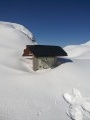
(6) Make a detour to the Marti-Peyras hut, rebuilt by the pastoral association in October 2014.
To the right, slightly higher up, the Soum de Moulle rises to 1,544m. It is the highest peak in the area. Retrace your steps to reach the Soum de Male-Taule at 1,493m.

(7) The path heads due east and soon reaches a rocky massif, which you can go round on the right (southwards across the plateau) or the left (northwards, over exposed sections, but not if it is covered in snow, as you must then avoid this side as it is too dangerous).

After this section, you reach a vast, rather rocky summer pasture below on the right: this is La Toue. Here you can make out the remains of a final hut (one of the three former huts at La Toue) and a fairly recent metal cattle enclosure.

A final ascent, short but steep, still along the ridge, takes you to the end of the hike: the Soum de la Génie Braque at an altitude of 1,529m.

(8) From up there, you have a 360° view: the plains of Tarbes and Pau, the main range of the Pyrenees and, closer by, the Saint-Pé cirque, the Soum de Moulle (1,544m), Pic de Hourbilagous (1,460m), Pic de Miquéu (1,452m), the Soums d’Aserole and Montné (1,387m, with its high-voltage electricity pylon)... At the foot of our Soum, on the southern side, there is a succession of sinkholes of varying depths. The place is called “Cuts d’Aüseths”, meaning “birds’ nests” in the Bigourdan dialect.

(7) to (11) From Soum de la Génie Braque to the Aülhet (Aoulhet) hut

(8) Leave the Soum de la Génie Braque via the east. The yellow markings are still present. Be careful, however, not to lose the trail. Although the markings are there, they are quite spaced out and no continuous trail is really visible. Do not hesitate to turn back if you go more than 2 minutes without seeing a yellow mark!

(9) At 1,455m, you reach a clearly marked trail at the signpost for the Bosc deth Troncar (in Gascon: ‘forest of the truncated’; from the truncated mountain?). Continue towards the Cabane de l'Aülhet, keeping to the cliff face, then the steep slopes of the Cirque de Saint-Pé on the left, passing numerous sinkholes on the right, followed by the peaks of Hourbilagous and Miquéu. In the hollow, below the Pic de Miquéu, you reach the Col du Larbastan.

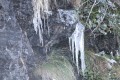
(10) Head to the left-hand end of the pass where you’ll find the yellow markings, then descend to the right into the Artigue summer pasture, stopping at the Fontaine de la Digitale on the left to top up your supplies, or simply to admire the water flowing through the rock fissures (or the long stalactites in winter). You’ll easily reach the Aülhet mountain hut. This is a wooden hut, of a shape quite unusual in our mountains, nestled in the Aülhet mountain pasture. It has replaced the light green steel-sheet hut, and before that, another stone hut a little further down, frequented for centuries by the shepherds of Saint-Pé.

(11) to (E) From the Aülhet Hut to the finish

(11) There are several ways to reach the valley from the hut. This time, the route takes you along the shepherds’ path, a very old mule track, also known as the “sentier de Pla dé Bers”, running along the Rède or Redo ridge, between the Redo and Génie Longue streams.

Leave the hut and head west-north-west towards the edge of the forest, following faint yellow markings, and find the most well-trodden path. At the edge of the forest, the path is marked by the signpost for the regional nature reserve. From there, the yellow markings are once again clearly visible all the way down to the valley.

Pass the hamlet known as l'Amphithéâtre, another magnificent beech forest on a circular hillside, and pass the Pla dé Bers junction, a former favourite spot for woodcutters and charcoal burners. Follow the ridge overlooking Coumo Redo (a proper ravine) to the left, reaching almost as far as the Monastery of Peyras.

(12) However, as the path reaches a junction and a sunken track completely overgrown with boxwood, you will find a sign reading “Cabane d’Aoulhet” on a tree to the left at the fork.

Take the path leading off to the left towards the Castets clearing (not signposted). It crosses the Redo via a pretty but rather precarious handmade footbridge... Or better still, take the ford at its foot! A small waterfall and the surroundings make the spot truly charming... Further on, the path passes through a mysterious spot, marked by ruins, open spaces and strange remains of buildings. This is a former youth camp dating from the Second World War. Until recently, there was a modern, low-level watchtower here, not for hunters, but for scouts.

After winding its way through the old camp and its ruins, the path crosses the Génie Braque via a footbridge that cannot be avoided. But be careful, it is particularly slippery!

The route ends with a short climb up to the Sep pumping station, the start and finish point (S/E).


Waypoints

  1. S/E : km 0 - alt. 438 m - Station de pompage de Sep (437m)
  2. 1 : km 3.84 - alt. 1,066 m - Source de Bat de Hau
  3. 2 : km 5.68 - alt. 1,353 m - Plateau de l'Isarce
  4. 3 : km 6.02 - alt. 1,284 m - Cabane de l'Isarce (1285m)
  5. 4 : km 7.43 - alt. 1,443 m - Gangues de Courraü
  6. 5 : km 7.84 - alt. 1,456 m - Soum de Marti-Peyras
  7. 6 : km 8.56 - alt. 1,393 m - Marti-Peyras Hut
  8. 7 : km 9.53 - alt. 1,486 m - Soum de Male-Taule (1490 m)
  9. 8 : km 10.11 - alt. 1,518 m - Soum de la Génie Braque (1529m)
  10. 9 : km 10.6 - alt. 1,458 m - Bosc deth Troncar (1455m)
  11. 10 : km 11.85 - alt. 1,255 m - Fontaine de la Digitale (1250 m)
  12. 11 : km 12.33 - alt. 1,162 m - Cabane de l'Aoulhet
  13. 12 : km 15.2 - alt. 428 m - Crossroads – Turn left
  14. S/E : km 15.9 - alt. 438 m - Station de pompage de Sep (437m)

Notes

Estimated time
I completed this route in just under 8 hours in winter with snowshoes, including breaks and a picnic. This is a fairly generous estimate, including two breaks by the wood fire in the two mountain huts.
In the absence of snow, on foot, allow between 6½ and 8 hours.

Safety
On the ridge:
- in winter, as is the case everywhere in the mountains, avoid approaching the north-facing precipice, where snow cornices may collapse,
- in both summer and winter, the route is dotted with sinkholes. It is dangerous to venture into them.
Take care not to be caught out by fog or very low cloud cover; everything looks the same and you can get lost in the sinkholes known as the Cuts d’Ausèth (or Culs d’Ausèth = ‘bird’s nests’ in Bigourdan, a mischievous name given to the sinkholes by our ancestors).

Water sources
All the springs mentioned are potential sources of drinking water. But be careful: drinking water in the mountains is not without risk...

Places to stop and take shelter
Snack breaks are possible at the three huts open all year round to shepherds, hunters and hikers.
These are the only three proper shelters on the route in the event of heavy rain or storms: the Isarce hut (3), Marti-Peyras (6) and Aoulhet (12).
There are also a few small shelters under rocks on the climb up Génie Braque, as well as makeshift shelters made of low walls or rock faces dotted here and there.

Equipment
Bring standard mid-mountain hiking kit (hiking boots, suitable clothing, rainwear, water, food, survival blanket, knife, compass, map, whistle, etc.).

Traffic
The route is completely deserted in winter under the snow, except occasionally near the Isarce mountain huts (coming from the Béarn side) and the Aülhet huts (coming from Peyras). However, from the June transhumance onwards, at weekends, you are likely to encounter several hikers or trail runners, either alone or in groups, and quite often a shepherd, heading up to the summer pastures to check on his flock or to repair a pipe or a drinking trough tap.

Toponymy – Spelling of place names
Several place names have different spellings: in Bigourdan, in Gascon, in Frenchified Gascon, in French, ...
Furthermore, the Clot des Culs d'Ausets is incorrectly marked on the map: it is south of the ridge, not north.
And the Soum de la Génie Braque is a recent name, having replaced the older names of Cap de la Génie Braque and, before that, Pailhè (straw, granary) de la Toue.

Worth a visit

Fauna and flora
The vegetation of this massif reflects the severity of soil drought caused by the terrain and the nature of the substrates
, which are highly permeable, though this is offset by high rainfall and cloud cover: boxwood, beech, lime and hazel are ubiquitous… This is why the wooded slopes are very damp and sometimes very slippery. (source: Saint-Pé Tourist Office).

With a bit of luck, you may also come across a wealth of wildlife. In particular, Egyptian vultures, of which there are some fine specimens inhabiting these peaks, and Corsican chamois and mouflons on the heights of Artigue and along the ridges.

You can enhance this route with:
- a detour via the Soum de l'Artigue: a beautiful view of the mountain pasture,
- a walk to the Clot des Culs d'Auset, along the edges of the sinkholes south of the Soum de la Génie Braque: there are an impressive number of them,
- a visit to the entrances of several caves, chasms and karstic caves, most of which are not marked on the IGN map (1,600 cavities are recorded in the massif; see www.karsteau.org), or even exploring them with a qualified guide,
- a detour to discover the origin of the name "Tres Croutz" or "Tres Crouts" in La Toue, which means "Three Crosses" in Bigourdan/Gascon. See the history of this name:
The Three Crosses bear witness to ancestral pastoral conflicts between Asson, Salles and Saint-Pé de Bigorre.
In 1569, the Bearnese Protestants of the Asson Valley decided to attack the Bigourdans of the Estrèms de Salles, with whom they were disputing the mountains of Azun and Maumula. The 1,500 men intended to lay waste to the village of Salles and seize all the livestock from Vergoun. But the battle was won by the Bigourdans. These conflicts became so serious that the King’s army had to be called in. It was impossible for the Bishop of Tarbes to restore harmony. Source: Abbé B. Abadie, *Le Sanglier du Picharrot*, published by Marrimpoey Jeune.
At a place known as "Tres Crots", the bishoprics of Tarbes, Lescar and Oloron converged on this mountain.
Today, all that remains are three crosses carved into a rock and the inscription 1716. They can be found on the IGN map between the "u" and the "e" of "La Toue".
- a detour via the junction of the three dotted lines: this is the easternmost point of the Pyrénées-Atlantiques department and the boundary of the communes of St Pé, crossed by the Arrialhs stream. But nothing marks this spot, save for a small fault line, retaining a patch of frozen snow even late in the season...
- a detour via the Col d’Espades.

Possible alternative route before the Cabane d'Aülhet:
- At the Col de Larbastan, off the path marked on the IGN map or signposted, turn left, leaving the Larbastan spring on your right. Continue down slightly from the 1300m contour line to 1250m, leaving the Garrot deth Abettou rock massif (1208m) on your right, until you reach a solitary tree and a cattle enclosure.
At the tree, take the marked path on the right, known as the Mesplé path, passing beneath the Soum des Brioles and reaching the Aülhet hut, with virtually no elevation gain (+66m).

Places of interest nearby
- The town of Lourdes, the Marian Sanctuary;
- The Batsurguère valley;
- The village of Saint-Pé-de-Bigorre, the village itself, its cultural heritage, its events, the Très Crouts forest and the Pibeste-Aoulhet Regional Nature Reserve, water sports;
- The story behind the reserve’s new signposting in autumn 2014;
- The Gaves Valley,

Reviews and comments

4.5 / 5
Based on 5 reviews

Reliability of the description
4.6 / 5
Ease of following the route
4.6 / 5
Route interest
4.4 / 5
hurlu3
hurlu3

Overall rating : 3.7 / 5

Date of your route : Jul 08, 2024
Reliability of the description : ★★★★☆ Good
Ease of following the route : ★★★☆☆ Average
Route interest : ★★★★☆ Good
Very busy route : No

Yellow markings barely visible (faded) and three beech trees blocking the path at an altitude of 660 m

Machine-translated

Anthony A
Anthony A
• Edited:

Overall rating : 4.7 / 5

Date of your route : May 08, 2023
Reliability of the description : ★★★★★ Very good
Ease of following the route : ★★★★★ Very good
Route interest : ★★★★☆ Good
Very busy route : No

A magnificent beech forest between Bat dé Haü and the Isarce plateau (between points 1 and 2). I didn’t think this place would be so beautiful. Wonderful memories.

Splendid views from the Isarce plateau, whether looking south towards the Pyrenees (the Pic du Midi is particularly clear) or across the plain to the north (from Lestelle-Bétharram to Lourdes).

Unfortunately, the clouds engulfed us shortly before we reached the Soum de la Génie Braque, which was supposed to offer us a magnificent 360° view. An excuse to come back.

The final descent through the forest proved to be extremely slippery. A few minor falls despite our caution.

Hiking time: 7 hours 20 minutes, including a long one-hour lunch break.

A lovely, varied hike with magnificent sections through the forest (a superb beech wood) and along the ridgelines. I’m only giving it 4 stars because the clouds prevented me from fully enjoying the second half of the hike. So, one to do again.

PS: I followed the GPS track as it’s easy to get lost without it.

Machine-translated

brunodelage464
brunodelage464

Overall rating : 4.7 / 5

Date of your route : Jul 16, 2019
Reliability of the description : ★★★★★ Very good
Ease of following the route : ★★★★★ Very good
Route interest : ★★★★☆ Good

A lovely, challenging hike.
The trail is pleasant and varied: woodland, a superb beech forest, a ridge with sinkholes...
The clouds hanging over the surrounding peaks meant I couldn’t enjoy the scenery. That will have to wait for another time.
I recommend using a GPS for the ridges and the descent after the refuge, where the markings are less visible.
Thank you for introducing me to this hike.

Machine-translated

MCTOUL
MCTOUL

Overall rating : 5 / 5

Date of your route : Apr 06, 2018
Reliability of the description : ★★★★★ Very good
Ease of following the route : ★★★★★ Very good
Route interest : ★★★★★ Very good

I went on this lovely walk again today under a sky that was mostly sunny throughout, with the following variations:
- at WP (1), I crossed the entire Cirque de Bat dé Haü, heading towards Miquéu via Larbastan. Then I followed all the ridges in the opposite direction to this route. At Toupiettes, I descended the steep slope off-track via Bénac and Garrapit, returning to the car.

I highly recommend this hike to anyone who wants to feast their eyes and give their legs a good workout!

Machine-translated

MCTOUL
MCTOUL
• Edited:

Hello domido65!
I’m really glad you found this hike appealing!
It’s a shame about the mistake, but it’s true that fog (or low cloud cover) is a danger in the mountains...
Luckily you didn’t get lost, as there are plenty of sinkholes (Cuts d’Aüsèth) and chasms in La Toue...
But the fact that you can’t see the peaks isn’t a reason to rule out the hike either: I’ve been known to set off in the fog, then break through the sea of clouds, and the view is magnificent!
If not, stay cautious, or even turn back!

See you soon on the trails of the 65
Best regards

Machine-translated

domido65
domido65

Overall rating : 4.7 / 5

Date of your route : Jun 05, 2016
Reliability of the description : ★★★★☆ Good
Ease of following the route : ★★★★★ Very good
Route interest : ★★★★★ Very good

We ran into a problem because we took too many detours; we were partly in the fog and mistook the Soum de Moulle for the Soum de la Génie Braque, so by following the ‘full east’ directions and the signposts, we ended up at the Col d’Espades. There, we had to turn back towards La Toue and head for the signpost at the Bosc deth Troncar.
Don’t do this if you can’t see the peaks.

Machine-translated

Other walks in the area

For more walks, use our search engine .

The GPS track and description are the property of this route's author. Please do not copy them without permission.