Country:
 City:
City:


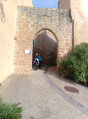
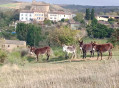
Car park and departure point in the village of Cazalrenoux. On the steps of Notre-Dame Church, the trail's welcome sign explains the principles of drawing and offers initial tips on how to express depth and perspective in a landscape
Yellow markings and pencil pictogram "Sentier dessin" (Drawing Trail).
(S/E) Go down the small country staircase, cross the street and follow the sunken path opposite, which winds its way through the undergrowth and gardens. At the small crossroads, go down the path on the right lined with a dry stone wall and cross the small wooden bridge to follow the stream on the left.
(1) At the crossroads, a covered well and a beautiful stone trough serve as models for thefirst easel on the theme of "À la source" (At the source). After this first sketch, go up the sunken path to the right, then take the small road that climbs to the right. Then take the path on the right, which opens onto a beautiful panorama.
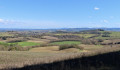
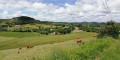
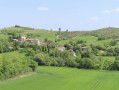
(2) Thesecond easel provides an opportunity to sketch the village from a beautiful viewpoint. After thissecond sketch, set off again following the ridge and then the small road to the right. After about 150 metres, turn left onto the path that climbs the grassy hill and rejoins the road further on.
(3) At the end of the path, take the road straight ahead, keep right at the crossroads and walk for about 200 metres. Then leave the road and take a path to the left. At the top, keep right to walk along and then enter the woods.
(4) Thethird easel, "in the forest", invites you to sketch the foliage. After thisthird sketch, continue along the path through the woods. When you leave the woods, go straight ahead between two fields (the communal path is ploughed for 20 metres) and take the path that leads to the Romanesque church and runs alongside the cemetery on the right.
(5) The Church of Saint-Jean provides a beautiful model for the fourth easel on the theme "Like architects". After thisfourth sketch, take the road to the right and immediately turn left onto the stony path, then continue along the grassy path. At the bottom, a wash house marks the entrance to a small road that leads to the village of Génerville, which is a pleasant place to stop (photo exhibition at the school in summer).
(6) To continue the route, take the dirt track on the right before the wash house. At the first crossroads, keep right on the stony path, then turn left to climb the hill (pech in Occitan).
(7) On the way up, thefifth easel on the theme of "Nature and culture(s)" invites you to sketch an entire tree. Then cross the top of the hill marked by a mobile phone mast and descend on the other side. At the bottom, take the path on the right, which becomes tarmac. After 60 metres of tarmac, turn left onto the path that climbs the hill overlooking the "Serre des Enchantées".
(8) At the top, follow the ridge path to the left, then continue straight ahead along a grassy area. Then turn right to enter the Serre des Enchantées and descend on a very steep path.
(9) Towards the bottom, thesixth easel, "hidden in the woods", invites you to reveal light and shadow. After this sixth sketch, continue through the woods. At the bottom, keep to the right, following the path that climbs more and more steeply. At the first landing, turn right, then at thesecond landing, turn left to cross the small road and climb up to Pech de Bousquet.
(10) From the top of this hill, theseventh easel, "At the end of the road," invites you to apply all the techniques you have learned during the course to one last sketch. A few dozen metres further on, follow the path on the right through the grass, which follows the ridge line and offers superb panoramic views, particularly towards the village of Cazalrenoux. At the end of the hill, descend to the right to return to the village road. After the medieval gate, turn left to return to the starting point (S/E).





 Visorando Member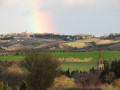

 Tourist office
 Easy
Easy