Refine your search for walks in Saint-Jacut-de-la-Mer
Saint-Jacut-de-la-Mer walks


 Les Hébihens from Saint-Jacut-de-la-Mer
 Visorando Member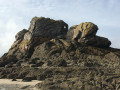
 4.91 mi
 +184 ft
 -190 ft
 2h 25
2h 25
 Easy
Easy
 Departure from Saint-Jacut-de-la-Mer (Côtes-d'Armor)
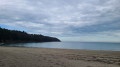
A beautiful walk between land and island, possible at low tide, towards the Hébihens archipelago.
The Hébihens Islands are a private island that extends the Saint-Jacut-de-la-Mer peninsula. This is an opportunity to discover magnificent beaches and a protected natural site with wild seascapes.
Before setting off, check the tide times and coefficients to see if the crossing is possible.
La Pointe du Chevet in Saint-Jacut-de-la-Mer
 5.28 mi
+171 ft
-148 ft
2h 35
Easy
Departure from Saint-Jacut-de-la-Mer (Côtes-d'Armor)
5.28 mi
+171 ft
-148 ft
2h 35
Easy
Departure from Saint-Jacut-de-la-Mer (Côtes-d'Armor)
The Pointe du Chevet tour is easy to do and offers two types of coastline. On the west side: a wild coastline opening onto the Baie de l'Arguenon and the Hébihens archipelago that extends beyond it. On the east side: the Bay of Lancieux: the polders and small ports of La Houlle Causseul and Le Châtelet. The coastline of Saint-Jacut-de-le-Mer is bordered by 11 beaches, which you can discover by straying from the suggested route, which follows theGR® 34 to (8).
Lancieux via the Chemin des Poissonniers
 4.70 mi
+69 ft
-69 ft
2h 15
Easy
Departure from Lancieux (Côtes-d'Armor)
4.70 mi
+69 ft
-69 ft
2h 15
Easy
Departure from Lancieux (Côtes-d'Armor)
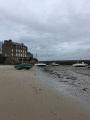
It is the morning light that reveals the full charm of Lancieux Bay, with its panoramic view of the Îles des Ebihens and the east coast of Saint-Jacut-de-la-Mer, as you walk along the lively beaches of Saint-Sieu and Les Briantais. The coastal path (GR® 34) overlooks the rocky shore, leading to the highest point on the coast at Tertre de Cordieu. The return journey takes you beneath a canopy of greenery that covers the Chemin des Poissonniers.
Tour de l'Arguenon maritime
 Tourist office
 9.04 mi
+427 ft
-413 ft
4h 30
9.04 mi
+427 ft
-413 ft
4h 30
 Moderate
Departure from Créhen (Côtes-d'Armor)
Moderate
Departure from Créhen (Côtes-d'Armor)
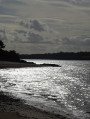
Discover a magical aber and hike through the valley from the estuary to the coast.Its name ‘ar’ ‘gwen’ ‘on’ (or the white river) comes from the fact that at high tide, its bed fills with a mysterious natural foam caused by the mixing of fresh and salt water at its mouth: nature in all its diversity.
In the footsteps of our Neolithic ancestors in Créhen and Trégon
 5.34 mi
+102 ft
-105 ft
2h 35
Easy
Departure from Trégon (Côtes-d'Armor)
5.34 mi
+102 ft
-105 ft
2h 35
Easy
Departure from Trégon (Côtes-d'Armor)
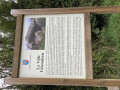
The megaliths you will encounter along the way – menhirs, dolmens and covered passageways – were erected by our distant ancestors during the Neolithic period, some 3,000 years before our era. As such, they could be better showcased.
This is an easy walk suitable for families in spring or autumn; much of it follows roads running alongside farmland. The route is signposted with yellow and/or blue markers.
The tip of Saint-Jacut-de-la-Mer via the coastal path
 8.20 mi
+377 ft
-361 ft
4h 05
Moderate
Departure from Créhen (Côtes-d'Armor)
8.20 mi
+377 ft
-361 ft
4h 05
Moderate
Departure from Créhen (Côtes-d'Armor)
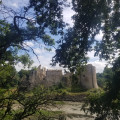
Hike along the coastal path and inland at Saint-Jacut-de-la-Mer with magnificent landscapes. If the tide is low, discover the Pointe du Chevet with its islets.
The Floubalay route in Ploubalay
 8.30 mi
+236 ft
-236 ft
4h 00
Moderate
Departure from Ploubalay (Côtes-d'Armor)
8.30 mi
+236 ft
-236 ft
4h 00
Moderate
Departure from Ploubalay (Côtes-d'Armor)
This route takes you along the Floubalay Stream through the woodland. After passing through a few villages, you arrive at Baie de la Beaussais, with Saint-Jacut-de-la-Mer and Île des Hébihens on the opposite bank. You will pass by Manoir de Bel-Être and Tour de Brenan. The second part of the walk takes you through the Ploubalay countryside before returning to the stream.
The marshes and polders of Beaussais-sur-Mer
 4.40 mi
+98 ft
-102 ft
2h 05
Easy
Departure from Ploubalay (Côtes-d'Armor)
4.40 mi
+98 ft
-102 ft
2h 05
Easy
Departure from Ploubalay (Côtes-d'Armor)
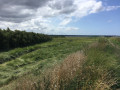
In a bucolic setting, follow the course of the Ru Le Floubalay, which flows into the polders of the Bay of Beaussais-sur-Mer. In Ville-ès-Prêtres, see the sculpture at the foot of the Ferme du Maris: "À l'abri dans le Marais"(Sheltered in the Marsh). It symbolises the work undertaken to regulate the devastating effects of the tides on this submersible area.
The banks of the Frémur from Ploubalay
 4.56 mi
+89 ft
-102 ft
2h 10
Easy
Departure from Ploubalay (Côtes-d'Armor)
4.56 mi
+89 ft
-102 ft
2h 10
Easy
Departure from Ploubalay (Côtes-d'Armor)
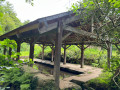
Starting from the centre of Ploubalay, this walk will take you through fields and woodland to the pretty hamlet of La Ruais with its wash house pond, a haven for frogs. You will then reach the left bank of the Frémur, a small coastal river that marks the boundary between the departments of Ille-et-Vilaine and Côtes-d’Armor, and which feeds the Bois Joli dam. At the entrance to Ploubalay, another (well-preserved) wash house is still supplied with running water diverted from another small coastal river, the Floubalay.
The banks of the Frémur from Saint-Briac-sur-Mer
 5.13 mi
+105 ft
-108 ft
2h 25
Easy
Departure from Saint-Briac-sur-Mer (Ille-et-Vilaine)
5.13 mi
+105 ft
-108 ft
2h 25
Easy
Departure from Saint-Briac-sur-Mer (Ille-et-Vilaine)
The Frémur estuary has two different aspects: the right bank is lined with mudflats and polders, which provide refuge for many species of birds during migration. The path is lined with hedges and undergrowth, providing a cool environment for walking.
The left bank is sandy, ideal for beach games in summer. It is also where boats moor. There is a beautiful view of the Roche-Good tide mill, nestled at the end of the estuary.
The three points of Saint-Briac to Saint-Lunaire
 7.47 mi
+348 ft
-331 ft
3h 45
Moderate
Departure from Saint-Briac-sur-Mer (Ille-et-Vilaine)
7.47 mi
+348 ft
-331 ft
3h 45
Moderate
Departure from Saint-Briac-sur-Mer (Ille-et-Vilaine)
From Bechay or Béchet Beach to Saint-Lunaire via Dinard Golf Course.
The outward journey follows the coast, along customs paths and part ofthe GR® 34; return via the boulevards with their maritime names, along departmental roads lined with beautiful granite houses.
The three headlands encountered along the route are Pointe de la Haye, Pointe de la Garde Guérin and Pointe du Décollé.
Magnificent views of the Breton coast.
Seaside walk in Saint-Briac-sur-Mer
5.53 mi
+226 ft
-236 ft
2h 45
Easy
Departure from Saint-Briac-sur-Mer (Ille-et-Vilaine)
Between Saint-Malo and Cap Fréhel, land and sea alternate between headlands and bays, offering walkers countless opportunities to explore the coastline. At the mouth of the Frémur, the village of Saint Briac occupies a well-sheltered spot where the coastline offers some of the rare south-facing beaches of the Côtes d'Armor. With unspoilt headlands, a few islands dotting the horizon, pretty holiday resorts and a seaside golf course, this is a very pleasant setting to take a stroll!
Le littoral à Saint-Briac
 8.37 mi
+341 ft
-344 ft
4h 10
Moderate
Departure from Saint-Briac-sur-Mer (Ille-et-Vilaine)
8.37 mi
+341 ft
-344 ft
4h 10
Moderate
Departure from Saint-Briac-sur-Mer (Ille-et-Vilaine)
Ce circuit du littoral emprunte le GR® 34. Il permet la découverte des anciens chemins des douaniers et offre un point de vue exceptionnel, de l’embouchure de la Rivière du Frémur jusqu’au Cap Fréhel.
 Saint Cast – Saint Jacut – Saint Cast by bike
22.67 mi
+896 ft
-906 ft
2.5 hrs
Moderate
Departure from Saint-Cast-le-Guildo (Côtes-d'Armor)
A short 36km route. Cycle path, seaside and
. Suitable for all abilities, small groups or families.
Around Saint-Lormel
 9.74 mi
+554 ft
-577 ft
5h 00
Moderate
Departure from Saint-Lormel (Côtes-d'Armor)
9.74 mi
+554 ft
-577 ft
5h 00
Moderate
Departure from Saint-Lormel (Côtes-d'Armor)
Between the Arguenon and the Guébriand, you’ll discover the banks of an estuary, a windmill, small villages that have retained all their charm, a chapel, an old church, its calvary and its yew tree. Castles hidden away in lush greenery will emerge as you round a bend in the woods.
A picturesque walk past the Bois Joli dam
 3.94 mi
+135 ft
-131 ft
1h 55
Easy
Departure from Pleurtuit (Ille-et-Vilaine)
3.94 mi
+135 ft
-131 ft
1h 55
Easy
Departure from Pleurtuit (Ille-et-Vilaine)
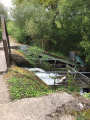
Located 5 km from Dinard, this route – which is easily suitable for families – runs along the western bank of the Bois Joli Dam reservoir. The route starts at the foot of a concrete embankment fitted with an eel ladder; the reservoir is a popular spot for anglers.After following the lower reaches of the Frémur, the route winds through the Breton bocage, passing through the pretty hamlet of La Ruais and its wash house. You then return to the riverbanks, against which the massive dam stands out. The idyllic path follows the contours of the reservoir.
The Tour de Saint-Lunaire in Blue and Green, via Pointe du Décollé
 5.27 mi
+151 ft
-138 ft
2h 35
Easy
Departure from Saint-Lunaire (Ille-et-Vilaine)
5.27 mi
+151 ft
-138 ft
2h 35
Easy
Departure from Saint-Lunaire (Ille-et-Vilaine)
A superb hike, half by the sea and blue, half in the countryside and green. It is best to start at low tide or when the tide is going out.
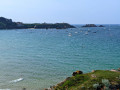
This is an opportunity to cross the Grande Plage de Saint-Lunaire, which is largely exposed at low tide, then climb up to Pointe du Décollé and admire the entire Côte d'Émeraude, from Cap Fréhel to Saint-Malo and Cézembre. Why not stop for a picnic? On the sea side, you can also discover the magnificent Longchamp Beach, which is immense at low tide and much smaller at high tide.
This is also an opportunity to explore the south of Saint-Lunaire, where the countryside is just as beautiful, with its sunken lanes, gardens and old Breton houses.
The walk ends at the Vallée de l'Amitié, where you can stroll along the Crévelin river for almost a kilometre in the shade of oak trees.
The Pointe de Saint-Cast-le-Guildo
 4.87 mi
+413 ft
-384 ft
2h 35
Easy
Departure from Saint-Cast-le-Guildo (Côtes-d'Armor)
4.87 mi
+413 ft
-384 ft
2h 35
Easy
Departure from Saint-Cast-le-Guildo (Côtes-d'Armor)
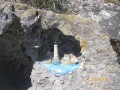
Hike to the Pointe de Saint-Cast-le-Guildo, its harbour and the seaside town.
Passing by Pointe Saint-Efficace in Matignon
 7.02 mi
+371 ft
-394 ft
3h 35
Moderate
Departure from Matignon (Côtes-d'Armor)
7.02 mi
+371 ft
-394 ft
3h 35
Moderate
Departure from Matignon (Côtes-d'Armor)
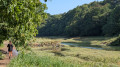
Right from the start, you will travel back in time. You will discover a medieval motte-and-bailey castle, then jump back a few centuries further to discover the Guerches, the ancestors of motte-and-bailey castles. Before reaching Pointe Saint-Efficace, you will pass the ruins of a watermill, then those of a tide mill and finally an old tide mill. As you walk along the sea, you will see Fort La Latte. On the way back, the Chapelle Saint-Germain is worth a detour.
Baie de la Fresnaye and Moulin de la Mer
 4.22 mi
+325 ft
-325 ft
2h 15
Easy
Departure from Matignon (Côtes-d'Armor)
4.22 mi
+325 ft
-325 ft
2h 15
Easy
Departure from Matignon (Côtes-d'Armor)
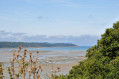
This short hike allows you to discover the southern part of Fresnaye Bay with its colours and lighting changing with the tides, the Moulin de la Mer site, the village of Saint-Germain de la Mer, and views of Fort La Latte.
Baie de la Fresnaye towards Saint-Cast
 6.21 mi
+558 ft
-538 ft
3h 20
Easy
Departure from Matignon (Côtes-d'Armor)
6.21 mi
+558 ft
-538 ft
3h 20
Easy
Departure from Matignon (Côtes-d'Armor)
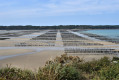
This route will introduce you to Fresnaye Bay with its changing light, oyster beds and Fort la Latte. It is worth doing at low tide and high tide, as the view of the bay, the colours and the atmosphere will be so different. By combining part of this walk with the "Baie de la Fresnaye and Moulin de la Mer" walk already described on this site, it is very easy to plan a day trip.
The hedgerows and ponds of the Frémur at the start of the Rues
 6.68 mi
+210 ft
-217 ft
3h 15
Moderate
Departure from Ploubalay (Côtes-d'Armor)
6.68 mi
+210 ft
-217 ft
3h 15
Moderate
Departure from Ploubalay (Côtes-d'Armor)
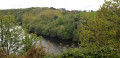
The Pleurtuit ponds, fed by the Frémur, are a delight for anglers and stretch out in deep meanders through peaceful countryside, just a few kilometres from the Dinard-Saint Malo conurbation.
They provide the drinking water supply for the entire urban area thanks to the Bois Joli dam, which was filled in 1992
The path marked in yellow circles the area; it can be accessed from various starting points, including the hamlet of Les Rues.