


Refine your search for walks in Saint-Amand-des-Hautes-Terres
Saint-Amand-des-Hautes-Terres walks


 The Saint-Amand Mill
 Visorando Member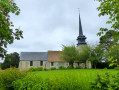
 9.67 mi
 +256 ft
 -253 ft
 4h 40
4h 40
 Moderate
 Departure from Saint-Amand-des-Hautes-Terres (Eure)
A pleasant route combining tarmac, paths and trails, starting from a small village in the Eure department, in the Oison valley.
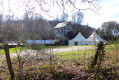
Circular route in the Oison Valley starting from Saint-Pierre-des-Fleurs
 8.25 mi
+636 ft
-640 ft
4h 20
Moderate
Departure from Saint-Pierre-des-Fleurs (Eure)
8.25 mi
+636 ft
-640 ft
4h 20
Moderate
Departure from Saint-Pierre-des-Fleurs (Eure)
Nestled in the heart of Roumois, in the Eure department, this hike connects the charming villages of Saint-Pierre-des-Fleurs, Le Bec-Thomas, Saint-Ouen-de-Pontcheuil and Saint-Amand-des-Hautes-Terres. Between green valleys, hedgerow paths and the peaceful banks of the Oison, the route offers an authentic immersion in the Normandy countryside. Along the trails, alternating between quiet country roads and wilder passages, you will discover a discreet rural heritage and open landscapes typical of Roumois.
The Clément Route in Crestot
 5.80 mi
+26 ft
-26 ft
2h 40
5.80 mi
+26 ft
-26 ft
2h 40
 Easy
Departure from Crestot (Eure)
Easy
Departure from Crestot (Eure)
A walk starting from the village centre, passing by the church, the hamlet of Le Hamel, the church at Hectomare, the hamlets of Le Bosc Harel and Londemare, and returning to Crestot via the north.
Fouqueville Circular
7.17 mi
+26 ft
-26 ft
3h 20
Moderate
Departure from Crestot (Eure)
A circular walk starting from the village centre and passing by the Mare du Moulin, the Croix Chère Mère, the Church of Fouqueville, the hamlet of Londemare and back to Crestot.
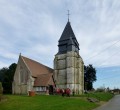
The Crestot tour
 3.47 mi
+13 ft
-13 ft
1h 35
Easy
Departure from Crestot (Eure)
3.47 mi
+13 ft
-13 ft
1h 35
Easy
Departure from Crestot (Eure)
A pleasant, flat walk that will allow you to discover the back of the properties in this small village in the Neubourg plain.
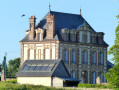
The Champ de Rouen
 10.02 mi
+131 ft
-141 ft
4h 45
Moderate
Departure from Le Thuit-Simer (Eure)
10.02 mi
+131 ft
-141 ft
4h 45
Moderate
Departure from Le Thuit-Simer (Eure)
For walking enthusiasts, a short hike in the Roumois region.
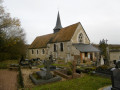
The Saint-Louis Collegiate Church and the small town hall of Saint-Germain-de-Pasquier
 6.11 mi
+633 ft
-768 ft
3h 20
Moderate
Departure from La Saussaye (Eure)
6.11 mi
+633 ft
-768 ft
3h 20
Moderate
Departure from La Saussaye (Eure)
Starting from La Saussaye, the path quickly opens up onto alternating undergrowth and small country lanes. The route allows you to enjoy a peaceful, green rural environment. After a pleasant warm-up, you reach Saint-Germain-de-Pasquier, a charming Norman village known for having the smallest town hall in France: with a surface area of around 8 m² (2.7 metres by 3), it is indeed one of the smallest town halls in France, listed in the Guinness Book of Records. It is housed in the former Sainte-Clotilde chapel, which was deconsecrated at the beginning of the 20th century and converted by a naval architect accustomed to small spaces. A short photo break is a must before continuing on to the Saint-Louis Collegiate Church, a beautiful building whose architecture combines simplicity and elegance.
Along the ponds of La Saussaye
 3.55 mi
+105 ft
-135 ft
1h 45
Easy
Departure from La Saussaye (Eure)
3.55 mi
+105 ft
-135 ft
1h 45
Easy
Departure from La Saussaye (Eure)
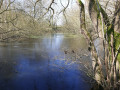
As you wander through the streets and lanes of La Saussaye, you will discover a number of ponds and learn of their purpose, preserved in the memories of the older generation. Along the way, you will notice beautiful brick houses and find remarkable trees, most of which are linked to the village’s historical periods.
Route de Saint-Louis in La Saussaye
 1.28 mi
+26 ft
-26 ft
0h 35
Easy
Departure from La Saussaye (Eure)
1.28 mi
+26 ft
-26 ft
0h 35
Easy
Departure from La Saussaye (Eure)
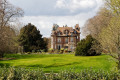
Starting from the Saint-Louis Collegiate Church and passing by the Manoir Saint-Nicolas, in an hour you will discover some remarkable features linked to the history of the village of La Saussaye, including the 14th-century Saint-Louis Collegiate Church.
Step through the cloister gate and let yourself be transported back to the Middle Ages. At that time, the square was surrounded by walls and entry was via either the lower gate or the upper gate, the only one remaining today. As you continue, you’ll discover some of La Saussaye’s hidden gems, such as the Saint-Louis Collegiate Church, the bell-ringer’s house, the Clos Saint-Nicolas where André Maurois lived from 1919 to 1926, and the Pommeraie, another beautiful residence with its pond and French garden.
Dué route in Saint-Germain-de-Pasquier
 Tourist office
 5.63 mi
+495 ft
-499 ft
3h 00
Easy
Departure from Saint-Germain-de-Pasquier (Eure)
5.63 mi
+495 ft
-499 ft
3h 00
Easy
Departure from Saint-Germain-de-Pasquier (Eure)
L'Oison was formerly known as Le Bec, Le Becquet (from the Norse bekkr meaning stream), but also Le Dué or Douet (from the Celtic four meaning running water). Discover beautiful Norman houses as well as around twenty species of wild orchids growing in the valley, which is classified as a natural area of faunistic and floristic interest.
The Fontaine Sainte-Clothilde, a miraculous spring, was for a long time a popular place of pilgrimage for the healing of all kinds of ailments. It is said that it gave strength to children who were slow to walk, who were then immersed in the very cold water of the spring.
The ‘Villages of the Future’ Route: Epégard, Le Troncq and Iville
 Local authority9.08 mi
+49 ft
-49 ft
4h 15
Moderate
Departure from Épégard (Eure)
Local authority9.08 mi
+49 ft
-49 ft
4h 15
Moderate
Departure from Épégard (Eure)
On the Neubourg plateau, this easy and pleasant circular walk links the charming villages of Épégard, Le Troncq and Iville. Amidst plains and small woods, you’ll find yourself in the heart of the Neubourg plateau. You’ll discover the treasures of these three villages, their heritage, their beautiful houses, the ponds and the typical landscapes of the Neubourg region.
La Croix de Marcouville
 9.64 mi
+266 ft
-282 ft
4h 40
Moderate
Departure from Bosguérard-de-Marcouville (Eure)
9.64 mi
+266 ft
-282 ft
4h 40
Moderate
Departure from Bosguérard-de-Marcouville (Eure)
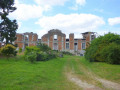
Cette agréable randonnée vous permettra de découvrir ce petit coin de Normandie un peu méconnu car loin des lieux touristiques. On croise en chemin le joli Château de la Mésangère, un bel étang perdu en forêt mais surtout le Chêne à la Vierge de la Mésangère. Cet arbre remarquable est assurément l'un des plus beaux (si ce n'est le plus beau) de toute la région.
The three calvaries of Vraiville
 3.71 mi
+112 ft
-115 ft
1h 50
Easy
Departure from Vraiville (Eure)
3.71 mi
+112 ft
-115 ft
1h 50
Easy
Departure from Vraiville (Eure)
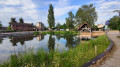
Set amongst the village, forest and plains, discover Vraiville: its pretty pond, its three wayside crosses and the beautiful stained-glass windows of its church.
Circular in the Bois de la Hérangère
 6.28 mi
+335 ft
-348 ft
3h 10
Moderate
Departure from La Londe (Seine-Maritime)
6.28 mi
+335 ft
-348 ft
3h 10
Moderate
Departure from La Londe (Seine-Maritime)
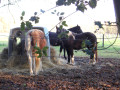
This walk offers you the chance to explore this remarkable forest heritage, breathe in the fresh air of the undergrowth and enjoy the tranquillity of a preserved environment. Whether you are a nature lover, a regular walker or simply curious, the Bois de la Hérangère will surprise you with its diversity and peaceful atmosphere.
Saint-Pierre-lès-Elbeuf Forest and the Oison Valley
 9.16 mi
+1,053 ft
-1,027 ft
5h 10
Moderate
Departure from Saint-Pierre-lès-Elbeuf (Seine-Maritime)
9.16 mi
+1,053 ft
-1,027 ft
5h 10
Moderate
Departure from Saint-Pierre-lès-Elbeuf (Seine-Maritime)
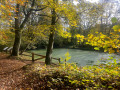
This walk consists of 70% forest walking or small footpaths. There are a few sections on roads which can be dangerous, particularly the final stretch near Valanglier. It begins with a view of Elbeuf and the Seine valley and ends with a view of the small Oison valley. There are no signposts.
 Circular route starting from Villez-sur-le-Neubourg
 10.42 mi
+344 ft
-348 ft
2.5 hrs
Moderate
Departure from Villez-sur-le-Neubourg (Eure)
10.42 mi
+344 ft
-348 ft
2.5 hrs
Moderate
Departure from Villez-sur-le-Neubourg (Eure)
A lovely circular route between valleys and plateaus, passing by the Château du Champ de Bataille.
Circular in the La Londe-Rouvray forest from the Brèche aux Loups
 5.64 mi
+249 ft
-230 ft
2h 50
Easy
Departure from La Londe (Seine-Maritime)
5.64 mi
+249 ft
-230 ft
2h 50
Easy
Departure from La Londe (Seine-Maritime)
Located on the outskirts of Rouen, the La Londe-Rouvray forest is a true natural gem, with majestic beech forests, winding paths and bright clearings. Ranked among the largest state-owned forests in Normandy, it invites you to escape and discover varied landscapes, shaped by the seasons and history.
Following the GPX track can be useful in the forest.
The Terre Ponds in Pots
 4.24 mi
+236 ft
-256 ft
2h 10
Easy
Departure from Bosc-Bénard-Commin (Eure)
4.24 mi
+236 ft
-256 ft
2h 10
Easy
Departure from Bosc-Bénard-Commin (Eure)
In the Londe forest, three former clay pits have now become three ponds. Known since Gallo-Roman times, the Terre à Pots site was only exploited from the 16th century until 1870. This clay was notably used to make the white earthenware tiles for the first stations of the Paris Metro. This easy forest walk offers the chance to discover a little-known quarry site.