


Refine your search for walks in Place Félix Éboué
Place Félix Éboué walks


 The Petite Ceinture in the 12th arrondissement and the village of Charonne
 Visorando Member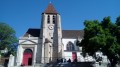
 4.83 mi
 +161 ft
 -43 ft
 2h 20
2h 20
 Easy
Easy
 Departure from Paris
A very pretty urban route in the 12th and 20th arrondissements of Paris. You take the old Petite Ceinture railway line and then wander through passages and numerous flower-filled cul-de-sacs, particularly around Rue des Vignoles. The modern and austere Saint-Esprit church and the oldest and most charming church in Charonne provide two superb and contrasting touches of heritage.
The towers of the 13th arrondissement and the village of Bercy
 3.99 mi
+144 ft
-167 ft
2h 00
Easy
Departure from Paris
3.99 mi
+144 ft
-167 ft
2h 00
Easy
Departure from Paris
An itinerary in the heart of the rapidly changing south-eastern districts of Paris! From the towers and slabs of Ivry to the fountain with lions, via the François Mitterrand Library, the park and the former wine-growing village of Bercy, the route avoids busy roads as much as possible and favours narrow streets and passageways, squares and gardens.
From Île de la Cité to Porte de Charenton
 4.51 mi
+69 ft
-33 ft
2h 10
Easy
Departure from Paris
4.51 mi
+69 ft
-33 ft
2h 10
Easy
Departure from Paris
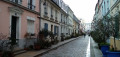
From the heart to the outskirts of the capital, an urban route that first crosses the Île de la Cité and the Île Saint-Louis. It continues along the banks of the Seine and then the Port de l'Arsenal. After passing by the Gare de Lyon, the route briefly follows the Coulée verte René Dumont. The walk ends via Square Saint-Éloi, the former Gare de Reuilly and Place Félix Éboué with its lion fountain.
The Petite Ceinture in Paris
 36.37 mi
+863 ft
-863 ft
10 days
Easy
Departure from Paris
36.37 mi
+863 ft
-863 ft
10 days
Easy
Departure from Paris
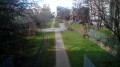
A tour of Paris following the route of the former Petite Ceinture railway line! A highly varied itinerary, reflecting the diversity of the arrondissements it passes through, which focuses on the converted sections of the old railway line, squares and gardens, and the narrow streets and passageways away from traffic.
The bestiary of Reuilly, Picpus and Porte Dorée
 4.02 mi
+43 ft
-72 ft
1h 55
Easy
Departure from Paris
4.02 mi
+43 ft
-72 ft
1h 55
Easy
Departure from Paris
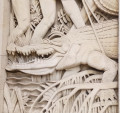
A walk through the 11th and 12th arrondissements of Paris, in search of depictions of animals. These are not distributed evenly along the entire route. The walk ends on a high note with the gigantic bas-relief on the Palais de la Porte Dorée, which depicts, amongst other things, an extremely diverse array of wildlife.
Walks near Place Félix Éboué
From the Bois de Vincennes to the banks of the Marne
 5.67 mi
+102 ft
-108 ft
2h 40
Easy
Departure from Paris
5.67 mi
+102 ft
-108 ft
2h 40
Easy
Departure from Paris
On the outskirts of Paris, a walk in three stages. First, a stroll along the banks of Lac Daumesnil and its islands, which are home to many birds. Next, a walk through the Bois de Vincennes along the Ruisseau de la Gravelle to the famous racecourse. Finally, a pleasant walk along the towpath of the Marne.
The Bois de Vincennes from the Porte Dorée
7.89 mi
+240 ft
-200 ft
3h 50
 Moderate
Departure from Paris
Moderate
Departure from Paris
Explore the Bois de Vincennes, passing by Lac Daumesnil, Lac de Gravelle, Lac des Minimes, the Arboretum, the Vincennes Racecourse, and the Butte aux Canons with its magnificent view over part of the Paris region
From Nation to Bastille via Faubourg Saint-Antoine
 3.41 mi
+13 ft
-52 ft
1h 35
Easy
Departure from Paris
3.41 mi
+13 ft
-52 ft
1h 35
Easy
Departure from Paris
An urban route that favours alleys, passageways and public gardens, in search of 19th and 20th century heritage.
From Gare de Lyon to Porte d'Auteuil
 11.35 mi
+259 ft
-249 ft
5h 25
Moderate
Departure from Paris
11.35 mi
+259 ft
-249 ft
5h 25
Moderate
Departure from Paris
This walk, part of the GR® 75, allows you to discover a large number of parks situated on the edge of Paris’s southern ring road. It serves as an intermediate stage and allows you to explore the southernmost section of the GR®. There are many notable spots along theGR® and in the surrounding area, such as the Butte aux Cailles, Montsouris Park and the Jardin des Serres d’Auteuil. As you pass through the many parks, you’ll feel as though you’re far removed from the city.
The bestiary of Charonne, Ménilmontant and Belleville
 3.76 mi
+285 ft
-16 ft
2h 00
Easy
Departure from Paris
3.76 mi
+285 ft
-16 ft
2h 00
Easy
Departure from Paris
A south-north crossing of the 11th and 20th arrondissements of Paris, in search of animal representations. Several alleys and passageways bear witness to the former presence of numerous workshops in these neighbourhoods.
A visit to Charonne Cemetery
 1.42 mi
+102 ft
-16 ft
0h 45
Easy
Departure from Paris
1.42 mi
+102 ft
-16 ft
0h 45
Easy
Departure from Paris
Of all the cemeteries in Paris, Charonne Cemetery is the smallest, but the walk to reach it is the longest. This peaceful, tree-lined cemetery, situated next to the charming church of Charonne, is the final resting place of several notable figures, particularly from the worlds of literature, theatre and cinema. A tribute is paid here to the federates who were shot in 1871.
Paris Pont d'Austerlitz - Massy
 14.65 mi
+361 ft
-180 ft
7h 05
14.65 mi
+361 ft
-180 ft
7h 05
 Difficult
Departure from Paris
Difficult
Departure from Paris
First stage of the Grand Tour of Île-de-France via the GR® 11, starting from the former confluence of the Bièvre and the Seine at the Pont d'Austerlitz in Paris, to the Massy-Palaiseau station in Essonne. It consists of climbing up the lower part of the Bièvre valley, where the river flows mainly underground but is sometimes exposed to the open air following rehabilitation programmes.
Grand tour of Île-de-France in 34 stages on the GR®11
 528.35 mi
+22,037 ft
-22,156 ft
34 days
Difficult
Departure from Paris
528.35 mi
+22,037 ft
-22,156 ft
34 days
Difficult
Departure from Paris
This marked GR® route around the Île-de-France region (with a few forays into neighbouring departments and regions) complements its "little brother", the GR®1, by forming a circular route around Paris, generally with a slightly larger radius.
It follows the same overall pattern: first, a radial section starting from Paris (more precisely from the Pont d'Austerlitz, near the former confluence of the Bièvre and the Seine), going up the entire Bièvre valley, then continuing to Villiers-Saint-Frédéric, in the Yvelines. From there, it is a circular route that loops around the Île-de-France region, close to its borders with neighbouring regions.
The route passes through beautiful regions, often untouched by intensive urbanisation, regional nature parks and other protected natural areas, and takes in some architectural wonders.
The Bestiary of Bastille, Popincourt and République
 5.64 mi
+43 ft
-39 ft
2h 40
Easy
Departure from Paris
5.64 mi
+43 ft
-39 ft
2h 40
Easy
Departure from Paris
A south-to-north walk through the 12th, 11th and 10th arrondissements of Paris, in search of depictions of animals. The Port de l’Arsenal and several narrow passages add a picturesque touch to this route.
The René Dumont greenway
 3.12 mi
+49 ft
-43 ft
1h 30
Easy
Departure from Paris
3.12 mi
+49 ft
-43 ft
1h 30
Easy
Departure from Paris
The René Dumont greenway is built on the platform of the former railway line that ran from the Gare de la Bastille. After briefly following the Canal Saint-Martin before it flows into the Seine, you follow this green space through the city, first at a height and then at ground level or through short tunnels. The Jardin de Reuilly, Square Charles Péguy and the Friche Ferroviaire at the junction of the former Petite Ceinture line add to the charm of this route.