


Refine your search for walks in Place de la République (Paris)
Place de la République (Paris) walks


 Walk in the Marais
 Visorando Member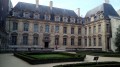
 3.48 mi
 +3 ft
+3 ft
 -10 ft
 1h 35
1h 35
 Easy
Easy
 Departure from Paris
This is an immersion in a historic district of Paris that was largely untouched by Haussmann's urban renewal and has retained many narrow streets, with architecture still dominated by 17th-century mansions. The suggested itinerary winds its way through narrow streets and gardens, allowing you to discover a rich heritage, including the Carreau du Temple, the Hôtel du Grand Veneur, the gardens of the National Archives, the Place des Vosges and the Hôtel Sully.
In the heights of Paris: Buttes Chaumont, Butte Bergeyre, Belleville
 4.90 mi
+436 ft
-469 ft
2h 40
Easy
Departure from Paris
4.90 mi
+436 ft
-469 ft
2h 40
Easy
Departure from Paris
The third stage of this urban journey crosses the north-eastern districts of Paris, including the lively Belleville neighbourhood. We wind our way through the Parc des Buttes Chaumont and then climb the discreet Butte Bergeyre, which offers an original view of Montmartre. We then pass by the Rue Piat viewpoint, which offers a panoramic view. A few touches of urban heritage and street art, as well as a walk along the Canal Saint-Martin, complete the picture.
In the footsteps of Georges Brassens: Belleville and Canal Saint-Martin
 4.84 mi
+43 ft
-279 ft
2h 15
Easy
Departure from Paris
4.84 mi
+43 ft
-279 ft
2h 15
Easy
Departure from Paris
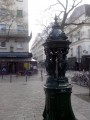
In this first section of our "Brassens" walk, we first pass through the Belleville and Ménilmontant neighbourhoods, with their narrow streets, footpaths and stairways. Then, after crossing the symbol-rich Place de la République, we walk along the charming Canal Saint-Martin.
République - Nation
 4.71 mi
+59 ft
-10 ft
2h 15
Easy
Departure from Paris
4.71 mi
+59 ft
-10 ft
2h 15
Easy
Departure from Paris
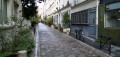
Although the title of this hike evokes a route commonly used by protest marches in Paris, the route itself avoids the main roads and favours the narrow streets and passageways where many workshops were once located.
In the footsteps of Georges Brassens in Paris
 18.86 mi
+463 ft
-705 ft
4 days
Easy
Departure from Paris
18.86 mi
+463 ft
-705 ft
4 days
Easy
Departure from Paris
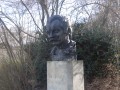
Originally from Sète, Georges Brassens (1921–1981) lived in Paris for around forty years and frequently referred to the city in his songs. This route takes you through Paris, passing by places where Brassens lived or worked, as well as sites that are directly or indirectly linked to some of his songs. Rich in heritage and passing through a variety of neighbourhoods, this city route is not just for die-hard ‘Brassens fans’.
The Bestiary of Bastille, Popincourt and République
 5.64 mi
+43 ft
-39 ft
2h 40
Easy
Departure from Paris
5.64 mi
+43 ft
-39 ft
2h 40
Easy
Departure from Paris
A south-to-north walk through the 12th, 11th and 10th arrondissements of Paris, in search of depictions of animals. The Port de l’Arsenal and several narrow passages add a picturesque touch to this route.
From the Basilica of Saint-Denis to Notre-Dame de Paris
 17.04 mi
+554 ft
-528 ft
5 days
Easy
Departure from Saint-Denis (Seine-Saint-Denis) (Seine-Saint-Denis)
17.04 mi
+554 ft
-528 ft
5 days
Easy
Departure from Saint-Denis (Seine-Saint-Denis) (Seine-Saint-Denis)
This urban itinerary, comprising five short stages, links two masterpieces of Gothic art in the Île-de-France region. It offers an opportunity to discover a rich and diverse heritage: medieval remains, 17th-century mansions, industrial and modern architecture, street art, and more. The purely urban sections are interspersed with a walk along the Canal Saint-Denis and a stroll through several parks and gardens, including those of La Villette and the Buttes Chaumont.
The bestiary of Paris
 146.53 mi
+2,999 ft
-2,625 ft
33 days
Easy
Departure from Paris
146.53 mi
+2,999 ft
-2,625 ft
33 days
Easy
Departure from Paris
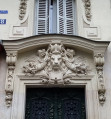
This guide brings together around thirty urban routes that allow you to discover representations of animals in the capital: sculptures, building decorations, murals, etc.
Green spaces in the 10th arrondissement of Paris
 4.49 mi
+75 ft
-33 ft
2h 10
Easy
Departure from Paris
4.49 mi
+75 ft
-33 ft
2h 10
Easy
Departure from Paris
The 10th arrondissement of Paris is characterised by a working-class, cosmopolitan and very lively atmosphere, marked by the presence of the Gare du Nord and Gare de l’Est stations. A densely populated area, it mainly offers small local green spaces. The largest gardens have often been created on former historic, railway or industrial sites, such as the Jardin Villemin or the Square Alban-Satragne. The Canal Saint-Martin, for its part, plays a major role by providing a green promenade and a central hub for socialising. Finally, there are a dozen community gardens and examples of community greening: tree bases and micro-gardens.