Moret-sur-Loing par Loing et Seine au départ de Saint-Mammès

Visit the medieval town of Moret-sur-Loing coming from Saint-Mammès along the banks of the Loing. Return along the banks of the Seine. Check the opening hours of the Pont Loup museum.

Please note: on Sunday mornings, there is a market in the car park.

The route has been significantly modified to take into account various passages that have become unusable by pedestrians and to avoid walking along the railway line on the way back, without walking too much on tarmac.

Technical sheet

2758396
Creation:
Last update:
Last review:
  • Walking
    Activity: Walking
  • ↔
    Distance: 11.23 km
  • ◔
    Average duration: 3h 20 
  • ▲
    Difficulty: Moderate

  • ⚐
    Return to departure point: Yes
  • ↗
    Vertical gain: + 56 m
  • ↘
    Vertical drop: - 55 m

  • ▲
    Highest point: 97 m
  • ▼
    Lowest point: 45 m

Description of the walk

Car park on the Quai de Seine in Saint-Mammès, at the confluence of the Loing and the Seine.
The (*) refers to details in the "Practical information or Things to see"section.

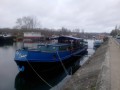
(S/E) From the car park, head towards the Loing and cross it via the footbridge. On the other side, take the track on the left and follow the river to the Chemin du Passeur, then turn right until you reach the crossroads with the Allée du Lido.

(1) Continue left along Allée du Lido until you reach the railway viaduct. Take the street on the left towards the Loing.

(2) Follow the towpath to the right and pass in front of the river stop. See the canal opposite, which joins the Loing, and continue to the entrance to Moret, with a large car park on the right.

(3) Do not continue straight ahead on Rue de la Pêcherie (too much traffic since the change in traffic flow in Moret). Go left along the quays and follow them until you reach a passage on the right that leads into town through a postern gate , which is worth a look, and joins Rue de la Pêcherie. This is an old exit from the town towards the ford (*). Stay along the Loing, go under the road and continue to the end of Quai des Laveuses for a view of the mill.

(4) Turn around, but without going back under the bridge. Take the stairs and the passage on the left to reach Rue de la Tannerie, then turn left. Atthe first crossroads, turn right onto Rue du Nord and walk past the church bell tower (*). Turn left onto Rue de l'Église and stop at the corner of Rue du Puits du Four (on the right) and Rue de Grez (opposite) to enjoy the view of the Logis du Bon Saint-Jacques buildings (*).

(5) Return to the front of the church for a visit and exit through the side door. At the south-eastern end of the square, turn right onto Rue du Donjon, then immediately left onto Escalier Royal to rejoin Rue de la Tannerie and continue to the right. At the end, go up to the right via the Escalier du Donjon. At the top, you will see Sisley's house opposite. Turn left onto Rue du Donjon and continue to No. 15: the keep that remains of the former royal castle (*).

(6) Go back a few metres and turn left onto Passage des Cours Communes (*). In the middle, continue almost in line with thesecond part of the passage. It will turn right to reach Rue Montmartre, which you will follow to the left. Turn right twice, first onto Rue Montmartre, then onto Rue de Grez. After No. 10 Rue de Grez, turn left onto Rue des Blondins, then, at the end, right onto Rue des Petits Chaumes until you reach Rue du Pavé Neuf and the courtyard of the Town Hall.

(7) Walk around the courtyard to see the Galerie François1er on your right (*). Return to Rue du Pavé Neuf and follow it to the right (west) to reach the Porte de Samois (*). Cross it to approach Rue des Fossés.

(8) See the Tourist Office and the Hostellerie du Cheval Noir. Turn back and cross the gate again. Continue straight ahead to the Place de l'Hôtel de Ville.

(9) Stop at the corner to see Maison Racollet (*) on the left overlooking the square and turn left to walk around it clockwise. At the corner, see the Cour du Couvent, then the passage to the left of the post office. Walk past the post office, then return to the square to see the Town Hall and, to its right, Maison Napoléon (*). Continue along Rue Grande to the end and go through the Porte de Bourgogne (*). Cross the bridge , looking at the mills (*) and the bridgehead. Continue opposite Rue du Peintre Sisley to No. 10, the chapel of the former Prieuré du Pont Loup (*).

(10) After visiting the museum, if you wish, continue until you cross the Canal du Loing (*) with the lock on your right.

(11) Just after the canal, immediately turn left onto the path between the canal and the Orvanne. Continue along the canal to the next bridge, next to lock No. 18. Follow the path up onto the bridge and Route de Saint-Mammès. We recommend taking a detour to the left in the middle of the bridge to see the confluence of the Canal and the Loing (*).

(12) Turn right and cross over the Orvanne. In the left-hand bend, continue straight ahead on Chemin des Sheep Pastures. After a few metres, when the path branches off to the right, take the path on the left that climbs up the hillside. After a zigzag that requires caution, take the path on the right at the end of the climb to find the cross on the oppidum (*) above thesecond path.

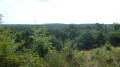
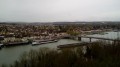
(13) Turn around to descend the hill and turn left towards the south-east. After about 120 metres, at the clearing, you can walk a few metres to the right for a view of Moret. Return to the main path and continue until you pass under the high-voltage power lines. Continue to the small tarmac road. Turn right/left, take the path along the edge and join a marked trail.

(14) Turn left/right onto the marked path. Pass in front of a gate leading to Les Renardières and follow the path to the bridge over the railway line, with the prohibited access to the EDF centre at Les Renardières on your right. Cross the bridge, take the track on the right and you will find the Sente des Nanchons on your left.

(15) Follow it to the left until you reach a small road: Rue des Nanchons. As the path along the Seine is no longer passable, follow Rue des Nanchons to the left until you reach the roundabout in front of the water sports centre.

(16) Continue straight ahead on Rue des Prés. Once you have passed the water sports centre, take the path on the right to walk along the Seine with a view of La Celle. Continue along the Seine and you will arrive at the sports centre on the left, with tables on the right. Continue along the old port of Saint-Mammès and its typical old warehouse houses on the left, Quai de la Croix Blanche. You will arrive near the Saint-Mammès bridge.
Cross the road before the bridge to use the pedestrian crossing.

(17) Use the passage between the church and the town hall. After the church, cross back over to reach the quay (at the water's edge) and enjoy the photos of the locks. Continue on to the car park (S/E).

Waypoints

  1. S/E : km 0 - alt. 46 m - Quai de Seine car park, near No. 60. - Seine [la]
  2. 1 : km 0.51 - alt. 46 m - Allée du Lido on the left
  3. 2 : km 1.43 - alt. 47 m - Pass under the railway line, then follow the banks of the Loing. - Loing (le)
  4. 3 : km 2.31 - alt. 47 m - Stay on the banks of the Loing after the car park.
  5. 4 : km 2.6 - alt. 45 m - Turn halfway at the end, then pass under the building.
  6. 5 : km 2.81 - alt. 56 m - Place Royale and church - Donjon de Moret-sur-Loing
  7. 6 : km 3.12 - alt. 58 m - The keep, then take the Venelle des 2 Communes.
  8. 7 : km 3.6 - alt. 55 m - Town hall courtyard
  9. 8 : km 3.84 - alt. 54 m - Square in front of the Tourist Office
  10. 9 : km 3.97 - alt. 54 m - Town Hall Square
  11. 10 : km 4.53 - alt. 48 m - Prieuré Saint-Pierre aux Liens (Pont-Loup)
  12. 11 : km 4.84 - alt. 52 m - On the left just after the Canal du Loing
  13. 12 : km 5.69 - alt. 47 m - View of the confluence - Canal du Loing
  14. 13 : km 6.05 - alt. 94 m - La Butte du Calvaire
  15. 14 : km 6.88 - alt. 95 m - Left/right on the marked path
  16. 15 : km 8.4 - alt. 70 m - Sente des Nanchons on the left
  17. 16 : km 9.44 - alt. 46 m - Roundabout at the water sports centre
  18. 17 : km 10.78 - alt. 48 m - Passage between the church and town hall -> banks of the Seine
  19. S/E : km 11.23 - alt. 46 m - Parking on the Quai de Seine

Practical information

(S) After the footbridge, it is no longer possible to walk along the Loing, hence the detour via Allée du Lido.

(7) In Moret, there are toilets in the courtyard of the town hall.
(15) At the crossroads between the footpath and Rue des Nanchons, the path along the Seine is no longer accessible. You now have to take Rue des Nanchons.

In the nearby area

(S/E) Footbridge over the Loing at the confluence with the Seine.


(3), Just before passing under the road, on the right, the old exit from the town via the postern gate and Rue de l'Abreuvoir. The paved passageway and fortified postern gate are the remains of the access to the river and the ford that allowed people to cross before the bridge was built.
- After the quays and the view of the mill, the passageway leading to Rue de la Tannerie reminds us that most towns on the banks of rivers had a tanners' quarter by the river.

(4) Rue du Nord, Notre Dame Church: a beautiful Gothic church begun in the 12th century and completed after the Hundred Years' War in the 15th century. At that time, the bell tower was added to the north side, but with insufficient foundations, causing it to lean. Its openings had to be walled up to prevent collapse. This is particularly visible from the end of Rue du Nord.

(5). At the corner of Rue de Grez and Place Royale: Le Logis du Bon St-Jacques: a magnificent medieval complex comprising the corner house and the adjoining houses on the square and the street. From 1822 to 1971, the building was inhabited by nuns who sold the famous barley sugar, as evidenced by the inscription on the façade, and is considered one of the oldest confectioneries in France (since 1638). Originally, it existed for its medicinal properties. The façades overlooking Rue de Grez feature wood carvings by Pierre Raccolet, the famous sculptor. The Saint James carved on the corner post of the ground floor bears witness to the passage of a pilgrimage route to Compostela.


(6) 15, Rue du Donjon: the keep is all that remains of the 12th-century royal castle. Moret-Sur-Loing is located on the border between Île-de-France and Burgundy. This 12th-century medieval town was a royal town with a church, keep, ramparts and fortified gates.
- After the U-turn, then 20 metres to the left: Passage des Cours Communes: an example of an old passageway, of which there are many in Moret.

(7) In the courtyard of Moret Town Hall, the Galerie François 1er, which dates from 1527. It was built by master masons and sculptors of the Renaissance for Nicolas Chabouillé, the King's finance officer. It connected his residence at the back of the courtyard to a building bordering the Rue Grande. Almost abandoned, it was detached when an owner bought it to adorn his Parisian home in 1822. In 1956, the Parisian building was sold to become an office building and the façade returned to Moret.

(8) The Porte de Samois or Porte de France is the western gate of the town. On the other side are the new neighbourhoods with the Place de Samois. On the right is the Tourist Office, then the Hostellerie du Cheval Noir. Between the two is the bust of Sisley. Returning to the Porte de Samois (or Porte de France), you can see the old fortifications on either side of the gate. The town was therefore located between the two gates.

(9) Place de l'Hôtel de Ville: as you arrive at the square on the left: the Maison Racollet. Contrary to what one might think, Pierre Racollet, the woodcarver already mentioned, completed this work in 1925. It is therefore a decoration added to the original house.
- On the right on Rue Grande: Le Point Sisley in the Maison Napoléon: Alfred Sisley was British but born in France, where he spent most of his life. He was part of the group of painters who launched Impressionism with Renoir, Monet and others. Together, they left their teacher's studio at the Beaux Arts to take their easels to the countryside and paint outdoors. For Sisley, this meant spending a lot of time in the Forest of Fontainebleau (Barbizon, Marlotte) and west of Paris (Louveciennes, Marly le Roi), then Moret sur Loing towards the end of his life. Like many Impressionists, fame came after his death and he lived in poverty.
- At the exit of the town, the Porte de Bourgogne dates from the end of the 12th century and was part of the medieval defence system built by Philip Augustus.
- Crossing the bridge, on the left is the Moulin Graciot, now dedicated to sculpture, and opposite, upstream, the Moulin Provencher, which has become the Musée du Sucre d'Orge, dedicated to the speciality of the Benedictine sisters in Moret. After the sisters left in 1970, production was taken over by a local craftsman, Jean Rousseau. This mill was a fulling mill, i.e. it was used to soften hides and certain fabrics by beating them with mallets. It therefore complemented the tanning mill. In 1779, it was converted into a sawmill, then a wheat mill. Destroyed at the end of the war in 1944, the ruins were bought by an industrialist to build his home on the site of the old mill operated by the Provencher family, which gave it its name.
On the right, on thesecond half of the bridge, upstream: a tanning mill. This is a mill for grinding oak or chestnut bark, which, once ground, was used for tanning leather. The tannin contained in the bark of these trees is astringent, meaning that it tightens the pores of the skin, thus preventing the penetration of water that allows bacteria to degrade the leather.

(10) Rue du Peintre Sisley, at No. 10, the chapel that remains of the former priory of Moret, called "the priory of Pont-Loup". Explanation: The Loing was formerly called Lupa. This name probably does not come from the animal, but from the fact that the names of the rivers Loing and Loue (in the Jura), and the first names Louis and Loup are distortions of Clovis (in the past, the "v" was pronounced "u"). The chapel has become a cultural centre and museum. See the opening hours in the practical information section.

(11) The Loing and Orvanne Canal. The canal comes from Rogny-les-Sept-Écluses, on the Loing, in the Yonne, on the border with the Loiret, where the Briare Canal arrives. This canal is therefore thesecond part of the Loire-Seine link.

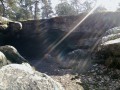
(13) After the climb, arriving on the plateau: ancient oppidum (fortified mound from the Gallic period) topped with a cross. The old large cross that dominated the valley, which was much less wooded at the time, no longer exists, following extensive damage.

(17) Just after the bridge, the church and belfry of the town hall of Saint-Mammès.

Reviews and comments

4.2 / 5
Based on 10 reviews

Reliability of the description
4.3 / 5
Clarity of route map
4 / 5
Route interest
4.2 / 5
Spycom
Spycom

Overall rating : 3 / 5

Date of walk : Aug 31, 2025
Reliability of the description : ★★★☆☆ Average
Clarity of route map : ★★★☆☆ Average
Route interest : ★★★☆☆ Average
Busy trail : No

Hello,

A slight disappointment on this hike, which alternates between the very beautiful and the very mediocre.

We set off from the port of Saint Mammès. Very nice, at the junction of the Seine and the Loing. But soon after setting off, between the start and point 1, we came across an industrial boat renovation site that was closed to the public. Fortunately, in August, there wasn't much activity and after a bit of negotiation, they kindly let us through. But that won't always be the case.

After that, there's nothing to say between the railway bridge and the oppidum cross. It's very nice. Moret is magnificent.

Once past the cross, it's not as nice. Apart from the novelty of walking alongside an active railway line, there's nothing very interesting until you return to the starting point. As the wooded path along the Seine is permanently closed (fungi are attacking the trees, which are falling one after the other), you have to take a road (fortunately with little traffic) that's not very interesting.

To be adapted in some way

Automatically translated

Laurette01
Laurette01

Overall rating : 4.7 / 5

Date of walk : Jun 08, 2025
Reliability of the description : ★★★★☆ Good
Clarity of route map : ★★★★★ Very good
Route interest : ★★★★★ Very good
Busy trail : No

We found this route delightful around Môret, and more nature-oriented from St Mammès onwards. A really easy hike. I get out of breath very easily on the climbs (after point 7), so that was my only sporting challenge . As for the track along the river after point 10, it is completely impassable and, given the number of fallen trees and vegetation, will remain so for some time. We therefore followed the road alongside small wooden properties. The route rejoins at the roundabout, which is very easy to find.


Automatically translated

Harriett
Harriett

Overall rating : 4.7 / 5

Date of walk : Apr 24, 2025
Reliability of the description : ★★★★★ Very good
Clarity of route map : ★★★★☆ Good
Route interest : ★★★★★ Very good
Busy trail : No

A fantastic, varied hike with lots of streams, rivers, tributaries and canals. A visit to Moret is well worth the trip.
The only downside, as mentioned by previous hikers, is that along the Seine at 10, it's impossible to get past the trees and bushes. We took the small road and rejoined the path a little before 11.

Automatically translated

avav
avav

Overall rating : 3 / 5

Date of walk : Aug 07, 2024
Reliability of the description : ★★★☆☆ Average
Clarity of route map : ★★★☆☆ Average
Route interest : ★★★☆☆ Average
Busy trail : No

Hello, overall a lovely walk, but one section has become completely impassable for about 500 metres along the banks of the Seine, with fallen trees and thorny bushes – in short, a real obstacle course.

Automatically translated

inconnu qui randonne

Overall rating : 4.7 / 5

Date of walk : Aug 15, 2024
Reliability of the description : ★★★★★ Very good
Clarity of route map : ★★★★★ Very good
Route interest : ★★★★☆ Good
Busy trail : No

Hello, lovely walk between Loingt, Lorvane and the Seine. Lots of very aggressive mosquitoes along the railway line and the Seine.

Automatically translated

Jmilla77
Jmilla77
• Last modified:

Overall rating : 4.3 / 5

Date of walk : Jul 26, 2023
Reliability of the description : ★★★★★ Very good
Clarity of route map : ★★★★☆ Good
Route interest : ★★★★☆ Good
Busy trail : No

A very pleasant walk from the start along the Loing with the barges, followed by a visit to Moret-sur-Loing. Return along the Loing Canal and then the Seine. Only the section along the railway line was less pleasant. I will definitely do this walk again, going around the woods from the Calvary (point 8), which would add 2 km.

Automatically translated

Isabelle et Coco
Isabelle et Coco

Overall rating : 4 / 5

Date of walk : Aug 05, 2023
Reliability of the description : ★★★★☆ Good
Clarity of route map : ★★★★☆ Good
Route interest : ★★★★☆ Good
Busy trail : No

Hike completed on Sunday, 6 August. Not many people on the trail, perhaps due to the holidays? Otherwise, a lovely walk along the water for most of the route. A few fallen trees blocked the path, making it a little difficult to get through, but we managed.

Automatically translated

spinoza2009
spinoza2009

Overall rating : 4.7 / 5

Date of walk : Jun 19, 2023
Reliability of the description : ★★★★★ Very good
Clarity of route map : ★★★★☆ Good
Route interest : ★★★★★ Very good
Busy trail : No

A superb walk with the discovery of Moret, which alone is worth the trip.

Automatically translated

Phildor
Phildor

Overall rating : 4.3 / 5

Date of walk : Jun 05, 2023
Reliability of the description : ★★★★☆ Good
Clarity of route map : ★★★★☆ Good
Route interest : ★★★★★ Very good
Busy trail : No

A pleasant and interesting hike with varied landscapes. It is difficult to find your way around Moret with GPS, so in my opinion it is better to take a description. Between points 10 and 11, there are a few trees lying across the path. You will need to do a bit of gymnastics to get past them, but it is still passable.

Automatically translated

catherineridray
catherineridray

Overall rating : 4.3 / 5

Date of walk : Jun 05, 2023
Reliability of the description : ★★★★★ Very good
Clarity of route map : ★★★★☆ Good
Route interest : ★★★★☆ Good
Busy trail : No

A very easy hike offering a wonderful introduction to the charms of Saint Mammés and a pleasant surprise visit to Moret sur Loing, which was very busy on this sunny Sunday.

Automatically translated

Other walks in the area

For more walks, use our search engine .

The GPS track and description are the property of the author. Do not copy them without permission.