


Refine your search for walks in Canal du Loing
Canal du Loing walks


 At the confluence of the Seine and the Loing
 Visorando Member
 5.52 mi
 +194 ft
 -217 ft
 2h 45
2h 45
 Moderate
 Departure from Saint-Mammès (Seine-et-Marne)
Rising between Forterre and Puisaye, and after a course of more than 150 kilometres, the Loing flows into the Seine to the south-east of the Forest of Fontainebleau. This rather short route runs alongside these two rivers and the Canal du Loing for much of its length. A section through the forest adds variety to the landscape. The beautiful old Saint-Mammès Church and a few reproductions of paintings by Alfred Sisley add an undeniable touch of heritage to this walk.
The Plaine de Sorques from Montigny-sur-Loing
 8.77 mi
+223 ft
-217 ft
4h 15
Moderate
Departure from Montigny-sur-Loing (Seine-et-Marne)
8.77 mi
+223 ft
-217 ft
4h 15
Moderate
Departure from Montigny-sur-Loing (Seine-et-Marne)
An easy hike with two bird observatories at the Plaine de Sorques, a sensitive natural area.
Bring binoculars.
Between rivers and canals in the heart of the Montargis conurbation.
 12.14 mi
+92 ft
-92 ft
5h 40
12.14 mi
+92 ft
-92 ft
5h 40
 Difficult
Departure from Montargis (Loiret)
Difficult
Departure from Montargis (Loiret)
Circular starting from the lakeside town of Montargis, known as the Venice of Gatinais. The junctions of the Briare, Orléans and Loing canals made it a veritable river crossroads between the Loire and Seine basins until the Orléans canal was decommissioned in 1954. Follow the waterways through the Loing valley, passing rivers, canals and lakes.
Château-Landon, the Loing Canal and the Étangs de Dordives
10.77 mi
+292 ft
-279 ft
5h 10
Moderate
Departure from Château-Landon (Seine-et-Marne)
This walk follows the city's monument trail and adds the canal, ponds and promenade along the Fusain to combine a cultural approach with the discovery of bucolic landscapes.
The Canal du Loing and the medieval past of Château Landon
 11.82 mi
+384 ft
-371 ft
5h 45
Moderate
Departure from Dordives (Loiret)
11.82 mi
+384 ft
-371 ft
5h 45
Moderate
Departure from Dordives (Loiret)
A circular route passing by the lakes of Dordives, taking the "Chemin de César" (Caesar's path), then the Gâtinais countryside to end up in Château-Landon, where you can explore its medieval past. The return journey follows the Canal du Loing with the Néronville canal bridge.
Episy-Ecuelles
 5.03 mi
+125 ft
-125 ft
2h 25
5.03 mi
+125 ft
-125 ft
2h 25
 Easy
Departure from Épisy (Seine-et-Marne)
Easy
Departure from Épisy (Seine-et-Marne)
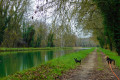
An easy, almost entirely flat hike from Episy to Ecuelles via theGR® de Pays du Lunain, passing behind the Episy aerodrome. The return journey is along the towpath beside the Canal du Loing. This route is easily manageable for a brave child.
From Nemours to Montigny, following the Loing river closely.
 9.35 mi
+131 ft
-66 ft
4h 25
Moderate
Departure from Saint-Pierre-lès-Nemours (Seine-et-Marne)
9.35 mi
+131 ft
-66 ft
4h 25
Moderate
Departure from Saint-Pierre-lès-Nemours (Seine-et-Marne)
A hike from station to station that starts along the Canal du Loing and the river that gave it its name. A circular hike around the Étang de la Clarette allows you to observe numerous birds before admiring the rich heritage of the commune of Grez-sur-Loing. The hike ends mainly through fields.
Moret-sur-Loing par Loing et Seine au départ de Saint-Mammès
6.98 mi
+184 ft
-180 ft
3h 20
Moderate
Departure from Veneux-les-Sablons (Seine-et-Marne)
Visit the medieval town of Moret-sur-Loing coming from Saint-Mammès along the banks of the Loing. Return along the banks of the Seine. Check the opening hours of the Pont Loup museum.
Please note: on Sunday mornings, there is a market in the car park.
The route has been significantly modified to take into account various passages that have become unusable by pedestrians and to avoid walking along the railway line on the way back, without walking too much on tarmac.
From Nemours to Souppes-sur-Loing along the canal
 8.76 mi
+118 ft
-108 ft
4h 10
Moderate
Departure from Saint-Pierre-lès-Nemours (Seine-et-Marne)
8.76 mi
+118 ft
-108 ft
4h 10
Moderate
Departure from Saint-Pierre-lès-Nemours (Seine-et-Marne)
A hike from station to station that mainly follows the towpath of the Canal Loing. Before reaching the canal, you cross a municipal park and a small maze of rocks. Along the way, the canal's surroundings become increasingly bucolic and reveal an interesting industrial heritage.
Episy, its marsh and the Etang de la Genevraye
 3.49 mi
+10 ft
-7 ft
1h 35
Easy
Departure from Épisy (Seine-et-Marne)
3.49 mi
+10 ft
-7 ft
1h 35
Easy
Departure from Épisy (Seine-et-Marne)
A circular route around the Étang de la Genevraye and a visit to the Marais d'Episy, which presents no difficulty.
Château Landon circular loop
13.50 mi
+295 ft
-305 ft
6h 30
Difficult
Departure from Souppes-sur-Loing (Seine-et-Marne)
Discover a variety of landscapes, including the Fusain Valley and Château-Landon on a limestone plateau overlooking Fusain. See Saint-Séverin Abbey, the little brother of Mont Saint-Michel, the Romanesque tower, the Templar Chapel, and the Grand Étang de Dordives lake with its water sports centre. A beautiful day ahead without too much elevation gain.
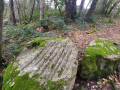
The Polissoirs de Faÿ-les-Nemours as seen from Bagneaux-sur-Loing station
 11.16 mi
+482 ft
-469 ft
5h 35
Moderate
Departure from Bagneaux-sur-Loing (Seine-et-Marne)
11.16 mi
+482 ft
-469 ft
5h 35
Moderate
Departure from Bagneaux-sur-Loing (Seine-et-Marne)
A walk through varied landscapes ranging from woodland to farmland, the main attraction being the discovery of the eight Neolithic grinding stones found in the commune of Faÿ-les-Nemours. This commune also boasts an interesting church and a castle.
From Fontainebleau-Avon station to Montereau station via Moret-sur-Loing
 17.59 mi
+531 ft
-594 ft
8 hrs
17.59 mi
+531 ft
-594 ft
8 hrs
 Very difficult
Departure from Avon (Seine-et-Marne)
Very difficult
Departure from Avon (Seine-et-Marne)
The first stage of a long journey towards the Jura. It is also a day walk, with the option of travelling there or back by train.
An excellent variety of landscapes in the south of Seine-et-Marne and the Gâtinais
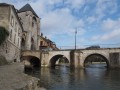
The route crosses the south-eastern part of the Forest of Fontainebleau, then passes through the town of Moret-sur-Loing. It continues along the Loing Canal and the Orvanne Valley. It then crosses the vast plateau of cereal crops overlooking the Yonne Valley before reaching Montereau.
From Montereau-Fault-Yonne to Moret-sur-Loing, from one confluence to another.
 15.76 mi
+492 ft
-456 ft
7h 40
Difficult
Departure from Montereau-Fault-Yonne (Seine-et-Marne)
15.76 mi
+492 ft
-456 ft
7h 40
Difficult
Departure from Montereau-Fault-Yonne (Seine-et-Marne)
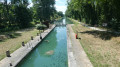
This is the twenty-fifth stage of the Grand Tour of Île-de-France via the GR®11, starting from Montereau station, not far from the confluence of the Seine and the Yonne, and ending at Moret-Veneux-les-Sablons station, not far from the confluence of the Seine and the Loing. The stage, entirely on the GR®11, follows a route on the left bank of the Seine, joining the Orvanne valley a little further south, and returns to Moret-sur-Loing and its beautiful historic centre, following the Canal du Loing on its towpath.
Poligny – Dordives Bridge via the GR®13
 12.28 mi
+427 ft
-482 ft
6h 00
Moderate
Departure from Poligny (Seine-et-Marne) (Seine-et-Marne)
12.28 mi
+427 ft
-482 ft
6h 00
Moderate
Departure from Poligny (Seine-et-Marne) (Seine-et-Marne)
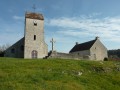
On the way to Santiago de Compostela from Fontainebleau via theGR®®13, to join the Via Lemovicensis at Vézelay.
 From Moret-Loing-et-Orvanne to Montcourt-Fromonville
 17.65 mi
+30 ft
-30 ft
2 hrs
Easy
Departure from Moret-sur-Loing (Seine-et-Marne)
17.65 mi
+30 ft
-30 ft
2 hrs
Easy
Departure from Moret-sur-Loing (Seine-et-Marne)
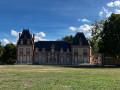
This route, running alongside the Loing Canal from Moret-Loing-et-Orvanne to Montcourt-Fromonville, is a real feast for the eyes, set against a serene waterside backdrop. Swans, grey herons, cormorants and moorhens all add to this sense of tranquillity.
From the Dordives Bridge to Nemours via Souppes-sur-Loing.
12.21 mi
+184 ft
-220 ft
5h 45
Difficult
Departure from Château-Landon (Seine-et-Marne)
A lovely route along the banks of the Loing, exploring the ponds surrounding Souppes-sur-Loing. Visit Nemours with its Chaintreauville Fountain, bridges covered in flowers in spring, beautiful church with its bell on the ground and the bridge over the Loing blessed by Pius VII.
Arrange for transport for the return journey.
Grand tour of Île-de-France in 34 stages on the GR®11
 528.35 mi
+22,037 ft
-22,156 ft
34 days
Difficult
Departure from Paris
528.35 mi
+22,037 ft
-22,156 ft
34 days
Difficult
Departure from Paris
This marked GR® route around the Île-de-France region (with a few forays into neighbouring departments and regions) complements its "little brother", the GR®1, by forming a circular route around Paris, generally with a slightly larger radius.
It follows the same overall pattern: first, a radial section starting from Paris (more precisely from the Pont d'Austerlitz, near the former confluence of the Bièvre and the Seine), going up the entire Bièvre valley, then continuing to Villiers-Saint-Frédéric, in the Yvelines. From there, it is a circular route that loops around the Île-de-France region, close to its borders with neighbouring regions.
The route passes through beautiful regions, often untouched by intensive urbanisation, regional nature parks and other protected natural areas, and takes in some architectural wonders.