Country:
 City:
City:


Park in the Orbière car park (leisure complex – accommodation – events). The car park is private but open to walkers.
(S/E) Follow the signs for the tree-top adventure park and walk down the path to the park’s reception. Turn right, following the wooden fences, then head left and go round the goat enclosure on the right. Follow the signs for “Pas japonais”. Once you reach the road again, continue to the left.
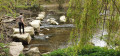
(1) Cross the Jouanne via the stepping stones. Once on the other bank, continue to the right. Follow the path as it bends left and you’ll reach a crossroads: a lovely view of Château de la Mazure.
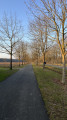
(2) Turn left and continue straight on along a lovely straight stretch through the heart of the Château de la Mazure woods. At the crossroads, keep left to join the D565.
(3) Cross it carefully and first turn right then left to join a dirt track. At the T-junction, take the track on the left towards the D21.
(4) About a hundred metres before reaching it, turn left and follow a path that leads onto the D21 at the entrance to the village of Forcé.
(5) Continue straight ahead, carefully following the road whilst keeping to the left-hand side of the carriageway. (If you wish, you can make a short detour to “Les Serres Au Comptoir”, which is located in the small car park). Otherwise, continue straight on, crossing the bridge over the Jouanne.
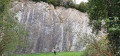
(6) Take the first street on the left to cross the Rochevier housing estate and continue straight on until you reach the sewage treatment plant. Just before you get there, follow the path on the right: take the opportunity to admire the lime kiln and the large cliffs on the right. Then get back on track and carry on straight ahead along the Jouanne. You’ll reach the picnic area provided by the Orbière leisure park.
(7) Take the path on the right and head uphill until you reach the main avenue of the leisure park. Turn right and continue straight on. Pass the reception area again and follow the path you took at the start back up to the Orbière car park (S/E).



 I recommend only walking on the Japanese steps in dry weather; the stones aren’t flat and can be slippery.
 Visorando Member
 Moderate
 Tourist office