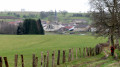
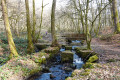
The Sentier des Pierres towards Les Voivres

The Étang Lallemand, created in 1572 to supply the neighbouring Quenot Forge, is an ideal starting point for exploring the Sentier des Pierres, an unusual walk steeped in history. You walk alongside the pond and then follow the signs marked with footprints, which are also indicated by pretty wicker posts topped with a terracotta head.

Details

34800858
Creation:
Last update:
Last review:
  • Walking
    Activity: Walking
  • ↔
    Distance: 5.63 mi
  • ◔
    Average duration: 3h 05 
  • ▲
    Difficulty: Moderate

  • ⚐
    Back to start: Yes
  • ↗
    Ascent: + 528 ft
  • ↘
    Descent: - 548 ft

  • ▲
    Highest point: 1,296 ft
  • ▼
    Lowest point: 948 ft

Photos

Description of the walk

From Bains-les-Bains, take the D434 towards La Chapelle-aux-Bois, then the D4 towards Les Voivres. At the village, turn left onto Rue du Moulin, then left again at the first street. Follow this road to Étang Lallemand.

Red Disc markings throughout the route
The route can only be completed in the direction indicated: Étang Lallemand – Les Voivres – La Chapelle de Bonne Espérance – La Carrière la Colosse

(S/E) With your back to the lake, take the road on the right for 600 m. You will arrive at the “La Clandestine” brasserie.

(1) Turn left onto a stony path towards Faing Martin and the old grindstone quarry, following the red circle and Yellow Ring markings. Continue to the next junction.

(2) Turn right to cut across the fields. 250 metres further on, turn left, skirting the forest, and continue to follow the red circle markings. You will reach a crossroads.

(3) Turn right towards La Grande Fosse , whose fountain was once used as a wash house by the locals. You’ll reach a crossroads at La Grande Forge.

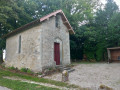
(4) Continue left, then right, and straight on again towards the Chapelle de Bonne Espérance, dating from the Second Empire and renovated by volunteers. Pass the chapel and arrive at La Basse des Orges.

(5) Take the path branching off to the left and leading into the forest. Follow the path downhill and turn left up the road to walk alongside the River Coney. Continue to the junction of paths on Rue du Billon.

(6) Turn right and head towards a small waterfall and the Gandon Quarry, which is made of granite. Continue to follow the red circle markings and head towards the Colosse sandstone quarry. The path turns into a track and reaches a crossroads.

(7) Turn right onto a downhill path. Then follow the path back up to a stony track near the building.

(8) Turn right towards the Pont des Fées to stay in the forest and follow the path. After about a hundred metres, take a path on the left. Be careful: the markings and the path are not very easy to see on the descent. Pass between the rocks and follow the low walls. Continue along the narrow path towards the Forge Quénot, the ruins of a former ironworks, taking the first path leading down to the right. Complete the circular route by keeping to the left just before crossing the stream, then head back up for 200 m towards the stony track.

(9) Turn right to reach Étang Lallemand. (S/E)

Waypoints

  1. S/E : mi 0 - alt. 1,106 ft - Lallemand Pond
  2. 1 : mi 0.41 - alt. 1,129 ft - Brewery
  3. 2 : mi 0.7 - alt. 1,201 ft - Junction
  4. 3 : mi 1.24 - alt. 1,276 ft - Junction
  5. 4 : mi 1.42 - alt. 1,220 ft - La Grande Fosse
  6. 5 : mi 2.1 - alt. 1,161 ft - La Basse des Orges
  7. 6 : mi 2.85 - alt. 1,027 ft - Rue du Billon
  8. 7 : mi 3.66 - alt. 1,027 ft - Crossroads
  9. 8 : mi 4.22 - alt. 1,017 ft - La Colosse
  10. 9 : mi 5.32 - alt. 1,079 ft - Crossroads after Forge Quénot
  11. S/E : mi 5.63 - alt. 1,102 ft - Lallemand Pond

Notes

Thank you to the Club Vosgien for organising this walk and for the work carried out by its teams throughout the year to mark out and maintain these paths.

Worth a visit

(S/E) Etang Lallemand: created in 1572 to serve as a reservoir for the canton’s first forges.

  • La Colosse sandstone quarry: opened in 1895 for the reconstruction of the Bouzey pond dam.
  • The Pont des Fées: Dating from the 4th century, we are not certain that this bridge was ever completed, let alone used. Indeed, the Roman Empire was already experiencing significant unrest along its borders, with incursions by ‘barbarian’ peoples such as the ‘Franks’ and the ‘Huns’. In this context (which was not about to improve), funding engineering works was certainly not a priority unless it served a military purpose.

The construction of the bridge was certainly of greater economic than strategic interest, given its proximity to the spa town of Bains-les-Bains and the Roman road.

  • Qenot Forge: In 1634, the forge was built by a master smith from Switzerland.

Alas, the venture was short-lived, for the forge, barely established, had to endure the ravages of the war between the Duchy of Lorraine (of which Les Voivres was a part) and the France of Louis XIII with its Swedish allies.

In 1795, thanks to its two hammers and four refining furnaces, the forge was still in full operation, producing 60 tonnes of steel annually for the manufacture of ploughshares, cutlery and springs for horse-drawn carriages.

From 1634 to 1795, the forge was sold several times but continued to operate.

Unfortunately, metallurgical activity ceased around 1830 due to a lack of sufficient water supply, despite all the dams that had been built.
In 1839, the property was sold and, despite an attempt to convert it into a starch factory, it was abandoned and fell into disuse.

Reviews and comments

3.5 / 5
Based on 7 reviews

Reliability of the description
3.4 / 5
Ease of following the route
2.9 / 5
Route interest
4.1 / 5
fanfan
fanfan

Hello,
This hike is quite popular. It is worth doing, but I notice that despite all the reviews left, it is not improving.
Regarding point 2, the route avoids joining the small road, but if you follow the path straight ahead until you reach a small wheel, you will arrive at a crossroads where you will find an orientation table and a pretty calvary with a superb view of the surroundings. You can then retrace your steps and turn right to rejoin the original route. You can enjoy a beautiful spot and avoid crossing a field.

The descent to the Quenot forge should be removed from this route as it is far too dangerous, poorly maintained and poorly marked.

Hike No. 35102280 from Bains-les-Bains allows you to reach the Quenot forge safely and then on to the Lallemand pond and back.
This hike involves a lot of road walking and should be avoided in hot weather.

I hope that this hike will one day be corrected because the area is very pretty and the entire route offers some lovely discoveries.

Machine-translated

archeveque
archeveque

Overall rating : 3 / 5

Date of your route : Feb 27, 2026
Reliability of the description : ★★★★☆ Good
Ease of following the route : ★★☆☆☆ Disappointing
Route interest : ★★★☆☆ Average
Very busy route : No

Hello, do not turn left at point 2 to avoid crossing a cultivated field. Continue straight ahead and turn left just above to find the path. Follow the Visiorando trail carefully, as the signage is often missing or the colour of the dots does not correspond. Be careful at the Colosse quarry, as there is a lot of waterwater. Avoid the Forge Quenot descent as it is really too dangerous and the path is often invisible. What is meant by "stone paths"? Are these the quarries or the carved stones? If so, I only saw three or four at the end of the route. Otherwise, there are some very beautiful old restored houses at the start of the route.


Machine-translated

archeveque
archeveque

Hello, do not turn left at point 2 to avoid going through a cultivated field. Continue straight ahead and turn left just above to find the path. Follow the Visiorando trail carefully, as the signage is often missing or the colour of the dots does not correspond. Be careful at the Colosse quarry, as there is a lot of water, and avoid the Forge Quenot descent, as it is really too dangerous and the path is often invisible.

Machine-translated

Filbaby
Filbaby

Overall rating : 3.7 / 5

Date of your route : Jul 20, 2025
Reliability of the description : ★★★☆☆ Average
Ease of following the route : ★★★☆☆ Average
Route interest : ★★★★★ Very good
Very busy route : No

A very pleasant walk, but not always easy to follow based on the description, and there were a few fallen trees on the path at the end of the circuit.

Machine-translated

randonanard
randonanard

Overall rating : 3.3 / 5

Date of your route : Mar 04, 2025
Reliability of the description : ★★★★☆ Good
Ease of following the route : ★★★☆☆ Average
Route interest : ★★★☆☆ Average
Very busy route : No

There are a few sections to avoid: too much water below the Colosse quarry and the descent towards Forge Quénot, with fallen trees blocking the path and a dangerous trail. Otherwise, it’s fine.

Machine-translated

nisu
nisu

Hello,
Yes, I’ve reported this issue to Suricate… I’m waiting for their reply

Machine-translated

nisu
nisu

Hello,
I completely agree with you. The person who designs a route cannot be responsible for maintaining and monitoring the condition of the terrain.That’s not their job. As part of a trail-marking team in my area, we’re responsible for marking and maintaining the trails, so if anyone could pass on information—particularly regarding the condition of the path leading down to the forge—to the local trail-markers, that would be brilliant.
Thank you in advance if you can help or if you know someone who can, as it really is a lovely hike

Machine-translated

fanfan
fanfan

Hello,
Since we first discovered this route in 2023 – which was already a bit difficult to follow but still passable, except near the Quenot forge – we have noticed that the path is deteriorating and may cause problems with navigation or even safety.
We note that ‘Grandin’, the creator of this route, designs walks in all regions of France; how, in this case, can we ensure that the route is maintained and corrected based on feedback from walkers? This seems impossible to me.
Thank you

Machine-translated

nisu
nisu
• Edited:

Very difficult to follow; the signposting is barely visible
Access to the Quenot forge is difficult, even dangerous
Are there any plans to repair this path? I was planning to take a group of hikers to explore your region in February 2025. Trees have fallen across the path; some clearing work would be necessary.
If you read this message, please let me know whether the path to the forge will be cleared

Machine-translated

jeannebertha
jeannebertha

Overall rating : 2.3 / 5

Date of your route : Jul 22, 2024
Reliability of the description : ★★☆☆☆ Disappointing
Ease of following the route : ★☆☆☆☆ Very disappointing
Route interest : ★★★★☆ Good
Very busy route : No

We got completely lost because the route description lacked detail and clarity (even though we’re used to hiking)
Avoid the Quénot forge at all costs – the path is completely unmaintained and poses a real danger
Despite our advanced age (75 and 80), we managed to get through it unscathed, but we will never do this route again!!

Machine-translated

CATHERINE ARNOLD
CATHERINE ARNOLD
• Edited:

Overall rating : 2.7 / 5

Date of your route : Jun 17, 2024
Reliability of the description : ★★☆☆☆ Disappointing
Ease of following the route : ★★☆☆☆ Disappointing
Route interest : ★★★★☆ Good
Very busy route : No

The path wasn’t well maintained, so we got lost and weren’t able to complete the walk; however, we did walk through a very pleasant area and we’ll be back to do it

Machine-translated

martial99
martial99

Overall rating : 5 / 5

Date of your route : Sep 03, 2023
Reliability of the description : ★★★★★ Very good
Ease of following the route : ★★★★★ Very good
Route interest : ★★★★★ Very good
Very busy route : No

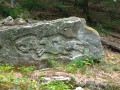
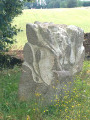
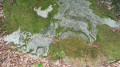
A very pleasant route, offering varied scenery and terrain; it alternates between tarmac roads (very little), wide forest tracks (for the most part) and more rugged footpaths. The route is dotted with points of interest: quarries, sculptures, a chapel, a stream, an old mine and smithy, a pond, a waterfall, and more. Signposting is very clear and consistent. A lovely outing (allow 3 hours). Most of the route is shaded. I highly recommend it.
PS: My review does not include the Quenot forge, which we were unable to visit as we were pressed for time (scheduling). The route allows you to take a shortcut to avoid this detour via the forge.

Machine-translated

fanfan
fanfan

Overall rating : 4.3 / 5

Date of your route : Jul 14, 2023
Reliability of the description : ★★★★☆ Good
Ease of following the route : ★★★★☆ Good
Route interest : ★★★★★ Very good
Very busy route : No

Hello

We’ve just completed this lovely route, full of discoveries. Well done and thank you.

Please be aware, however, that the descent towards the Quenot forge is dangerous, as the path is no longer maintained, particularly after the descent along the wooden handrail. We left the route and climbed back up a steep slope to avoid venturing onto a path that was becoming dangerous.

This description is missing the location of the stones; we saw a few of them but perhaps not everything there was to see.

Throughout this route, which is indeed well signposted although some signs are damaged or lying on the ground, we were able to find our bearings using the information boards dotted along the route (particularly near the Chapel of Bonne Espérance), but the Visorando route and these boards do not correspond and do not feature the same points of interest. We were a bit confused trying to follow the two routes and the two marking systems.
We never got lost, just a bit flummoxed.

This isn’t a criticism, just a point of information: the site is superb, the walk very pleasant, with lovely views of the countryside.
We might come back here with a group of hikers.

NOTE: We spoke to some locals from Thalimont who told us about their village; there used to be a spinning mill near the swing bridge. As for the smithy, they are unaware of any remaining ruins.

With our best regards.
Françoise and Jean Noel, originally from Nancy

NOTE TO MODERATORS:
I note that the description of this walk includes tourist information or points of interest within the main text.
Also, certain parts of the text are in bold or italics.
I like this approach because it’s not easy to follow the description in two different places whilst on the walk.
However, for all my walks posted online, I have always been refused the use of special characters in the description, and this additional information has been systematically moved to the ‘Nearby’ section.

Machine-translated

fanfan
fanfan

Hello

We’ve just completed this lovely route, full of discoveries. Well done and thank you.

Please be aware, however, that the descent towards the Quenot forge is dangerous, as the path is no longer maintained, particularly after the descent along the wooden handrail. We left the route and climbed back up a steep slope to avoid venturing onto a path that was becoming dangerous.

This description doesn’t mention where the stones are; we saw a few of them but perhaps not everything there was to see.

Throughout this route, which is indeed well signposted although some markers are damaged or lying on the ground, we were able to find our bearings using the information boards dotted along the route (particularly near the Chapel of Good Hope); however, the Visorando route and these boards do not correspond and do not feature the same points of interest. We were a bit confused trying to follow the two routes and the two signposting systems.
We never actually got lost, just a bit flummoxed.

This isn’t a criticism, just a point of information: the site is superb, the walk very pleasant, with lovely views of the countryside.
We might come back here with a group of hikers.

NOTE: We spoke to some locals from Thalimont who told us about their village; there used to be a spinning mill near the swing bridge. As for the smithy, they are unaware of any remaining ruins.

With our best regards.
Françoise and Jean Noel, originally from Nancy

Machine-translated

Other walks in the area

For more walks, use our search engine .

The GPS track and description are the property of this route's author. Please do not copy them without permission.