Country:

 City:
City:



Head for the car park on the Chemin du Lac in Lourdes.
(S) Leave the car park by taking the road on the left and immediately turn right (the Chemin Henri IV sign is clearly visible).
Please note that this description may be brief, as the red and white markings ofthe GR®782are very well maintained, making it impossible to "get lost" on the Chemin Henri IV!
Climb the road, which becomes a single track, and reach the hamlet of Lagues by taking the path on the left at the next T-junction.
(1) Cross the tarmac road, turning left and then immediately right to rejoin the path through the woods. After passing a barn on your left, take the path on the left at the fork and continue straight ahead, turning right at the next fork. Follow the path, then take the road through the hamlet of Philibert to the next junction.
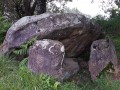
(2) Cross the D3 and continue straight ahead along the Henri IV path with its distinctive markings. After about 1 km, admire the Dolmen Peyre Duzets on the right, dating from the Bronze Age (2000 BC). Continue along the path (GR®782) on the ridge, parallel to a high-voltage power line.
(3) At the junction with the D412, continue straight ahead towards Saint-Vincent, whose church tower is clearly visible.
(4) You can picnic in Saint-Vincent. Turn right, pass in front of the church and the tennis court, continue for 150 metres and take the D421 on the left at the next fork. Pass the cemetery on your right and continue along the road, passing the Barbary Rose Garden and continuing to the next junction.
(5) Cross the Route de Bénéjacq (D936), pass under the high-voltage power line and take the path on the left at the next fork (the path is actually a continuation of the tarmac road). Continue straight ahead on theGR® trail, passing numerous paths and tracks on your right and left.
(6) At the next junction with the tarmac road, take the red and white marked path opposite. Cross the Bois de Bordères.
(7) At the next junction with the D145, cross the road in an S-shape and rejoin Chemin Henri IV. Pass the telephone relay antenna on your right, veer slightly to the left just after it, and take the path opposite 700 metres further on at a right-angle bend. Walk along the Bois de Beuste.
(8) When you reach a new section of tarmac road, go straight ahead, walk past a barn on your right on Rue du Bois and take the second path on the left at the bend in Rue du Bois (follow the red and white markings!). Cross the Bois de Boeil on the ridge.
(9) Cross another tarmac road and continue straight ahead on Chemin Henri IV.
(10) At the next fork, turn right and continue on theGR® trail, which descends gently. Then take a section of gravel path.
(11) Continue straight ahead at the junction towards Rigabert, climb towards the telephone relay antenna (near Fort de César) and continue along the edge of the woods on the very steep dirt path that extends the path we are following. Continue to follow theGR® markings. Continue downhill to the hamlet of Ousse.
(12) At the stop sign, cross the D38, turning left and then right, go through the metal gate and climb the gravel path (Chemin Henri IV).
(13) At the next crossroads, turn right and 20 metres further on, turn left along the fence of a house. This last section ofthe GR® is flat and straight, with several traces of old gas wells that have now been dismantled (the photos on Google Maps are not up to date!). Pass a new telephone relay antenna on the left and follow the path to the edge of the Bois du Lanot.
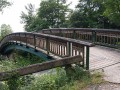
(14) When you reach a large information panel about the Chemin Henri IV hiking routes, turn right and then immediately left, continuing to follow the red and white markings. Reach the Henri IV footbridge over the D938. Continue on theGR® along a tarmac section, pass a first barrier and leave a vacant lot on your left, evidence of gas exploitation in the region.
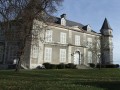
(15) At the entrance to the Châtaigneraie, two parallel paths lead to our destination: a footpath (left path) or a gravel path (right path). On this path, pass the second barrier and 400 metres further on, admire the view above the northern exit of the Franqueville Tunnel.
Arrival at the car park of the Château de Franqueville (E).




 Visorando Member
 Moderate
 Easy
Easy 
 Tourist office