Country:

 City:
City:


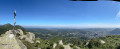

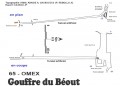
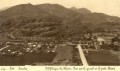
This route along the northern ridge was chosen because it is easily accessible from Lourdes and offers the opportunity to explore the entire Béout massif. You can see the summit and the cable car's secondary summit at all times.
From Lourdes town centre, head for the slopes of Béout by following signs for "Cité Saint-Pierre" or "Auditorium Padre Pio" or "Village des Jeunes", 33 Avenue Monseigneur Rodhain, Lourdes.
Park your car either near the entrance to Cité Saint-Pierre or in one of the establishment's car parks (if the security service allows you to enter, especially in low season).
(S/E) Enter the establishment's grounds via the paved communal road that runs through it. Quickly make your way to the top of the site, leaving two large accommodation buildings on your right (Pavillons Saint Vincent-de-Paul and Ozanam) and another large building on your left (marked "Bureau des guides" and "Accueil").
Continue uphill. Then pass a series of three other accommodation pavilions on your right (marked "Sainte Anne, Saint Martin and Saint Jacques").
At the crossroads, leave the donkey stable and the stone-built toilet block on your left and take the small road that climbs steeply towards the Mouniquet farm and the Chapelle de l'Alliance chapel.
Continue climbing this small tarmac road, which runs alongside the edge of a wood on the left, bordered by a rustic stone wall, and a meadow on the right. Pass a two-storey stone barn on the right on the hillside and continue climbing.
(1) At an elevation of 526 metres, there is a small car park on the right and a wooden sign saying "Béout" (Photo No. 24924). Follow the sign and go through a zigzag cattle grid. At this point, you are leaving the establishment's property.
As at the start of the route, you will follow a circular path with virtually no markings. From time to time, you will find old yellow markings. Be careful not to stray from the well-marked paths or the simple tracks.
Immediately after the gate, turn left along the fence and climb up the embankment. Then a path climbs a few dozen metres to the right across a meadow. Stay on the right-hand side of the hill and do not cut across the meadows.
You will arrive at a small clearing, which may or may not have been mowed, depending on the season.
(2) Keep left to pass upstream of a short hedge of trees with a low stone wall at its foot. There is not always a well-marked path (especially at the beginning of the summer season, when it has not yet been used), nor are there any visible markings.
Head for Turoun Esplat (in its small pass section) above Mouniquet and head roughly south, leaving the modest secondary summit of Turoun Esplat at 633 m on your right.
At the end of this new "pla", after passing the small pass at an altitude of 620 m, the slope becomes very steep.
However, choose to continue on this path (several possible passages), roughly marked in yellow, heading right towards the cross at the summit of Béout.
This takes you past the western escarpments to the summit.
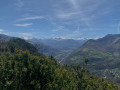
From there, near the summit cross, you can see the town of Lourdes and its surroundings, the Arboucau valley and the Soum d'Ech to the west, the Batsurguère valley to the south-west, the main Pyrenean mountain range in the distance to the south and its "big brother" and rival, the Pic du Jer (948 m) and its funicular railway.
We then continue the route towards the viewpoint of the old cable car and the radio communications pylon, which we will have in direct view.
The path, which is not marked or only very slightly marked in yellow, descends through the ferns. Following the ridge, you pass by a first isolated rock block, clearly visible from a distance (photo No. 24925), then at an altitude of 765 metres you reach a group of two blocks (photo No. 24926), including the famous "Mysterious Rock" mentioned on the IGN map. These granite boulders, whereas all the other rocks here are limestone, have long been a mystery, hence their name. Today we know that they were dragged here by glaciers and probably come from Cauterets or Gavarnie. They are erratic boulders.
The end of the route via the small pass of Béout, between the Grand Béout (the cross) and the Petit Béout (the antenna), is quite chaotic, crossing sharp limestone pavement and dense, low vegetation (photo No. 24938).
(5) The viewpoint can be reached in 1 hour 15 minutes from the start (for good walkers; allow 1 hour 30 minutes to 1 hour 45 minutes if taking breaks).
The view of Lourdes and the surrounding area is very interesting. The place is mysterious because it has been virtually abandoned after a glorious past.
We are opposite the Pic du Jer, which stole the limelight from the Béout at the end of the 1980s. The Béout cable car, obsolete and too costly to renovate, was shut down in 1986. However, until 2000, the two cable car cabins remained suspended from their cable until the installations were dismantled.
For its part, the Pic du Jer funicular, built in 1900, has been in operation for over a century and has undergone two renovations that have preserved the historic character of the installation. Its operators developed other activities at the summit, which have made it a tourist attraction in Lourdes to this day.
On our belvedere and in the premises of the old station, open to the elements and left abandoned, sheep have made their home.
There is a curious atmosphere, as in all sites from the industrial era that have been abandoned by humans without removing the vestiges of the past.
Continuing south-east, you soon come across a rusty sign, on which you can still make out the word "Gouffre" (chasm) with an arrow, and a steel handrail, embedded several metres into the rock.
This path leads a few hundred metres down to the "Gouffre de Lourdes" and the old technical and visitor facilities of this cave.
The return circular does not follow exactly the same route.
Retrace your steps to elevation 721. Be careful to stay on the trail (and keep a close eye on children) as there are many faults in this part of the massif, on the small pass of Béout.
Then take a path on the right that leads to the eastern side of the massif, through ferns and rocks. Keep your eyes on a fairly large rock, which you will pass on your left (photos 24948 and 24949).
This path, which is poorly marked, unmarked and, it must be said, little used, avoids going back over the ridge and the summit of Béout.
You will rejoin the path you took on the way up. Stay on this track for a little over a hundred metres.
(6) As soon as a path branches off to the right (not marked on the IGN map, but clearly visible on the ground), take it and descend steeply towards the buildings of the old Mouniquet farm.
As soon as the path passes near the hedge of trees, you will enter the private property of Mouniquet. However, you are allowed to walk on this path at this point.
Stay on the path behind the buildings, without attempting to climb over the fences, then return to the small "pla" at the very beginning.
The descent back to the starting point through Cité Saint-Pierre does not pose any particular problems.



 Visorando Member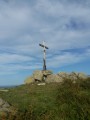
 Difficult
 Easy
Easy 
 Very difficult