


Refine your search for walks in la Tronne
la Tronne walks


 Heading back up towards the source of the Tronne
 Visorando Member
 5.82 mi
 +98 ft
 -98 ft
 2h 45
2h 45
 Moderate
 Departure from Mer (Loir-et-Cher)
A small stream originates in a place called Bausdisson.
It flows through the town from north to south and joins the Loire after a journey of around twelve kilometres.
This small river, called the Tronne, gives the town of Mer a certain charm.
In fact, Mera means "marsh" or "place covered with water" in Latin, which is the origin of the name Mer.
The wash houses and mills of Suèvres
 5.64 mi
+33 ft
-33 ft
2h 35
5.64 mi
+33 ft
-33 ft
2h 35
 Easy
Departure from Suèvres (Loir-et-Cher)
Easy
Departure from Suèvres (Loir-et-Cher)
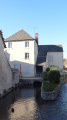
Suèvres, a former fortified town, is home to numerous springs and rivers which fostered the development of water mills from the Middle Ages onwards, powered by wheat from the Beauce region. Wash houses, mills and castles abound in this rich region of the Loire Valley.
A tour of the wash houses in Suèvres and the surrounding area
 5.31 mi
+36 ft
-36 ft
2h 30
Easy
Departure from Suèvres (Loir-et-Cher)
5.31 mi
+36 ft
-36 ft
2h 30
Easy
Departure from Suèvres (Loir-et-Cher)
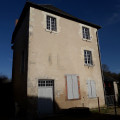
A short, very pleasant walk through the village of Suèvres, a former fortified town, and its surroundings. Numerous springs and rivers facilitated the construction of watermills as early as the Middle Ages.
Along the banks of the Loire, starting from Ménars
11.32 mi
+207 ft
-207 ft
5h 25
Moderate
Departure from Menars (Loir-et-Cher)
Here is a very varied route along the banks of the Loire. It will allow you to discover castles, churches, pretty little villages, wash houses and, of course, the banks of the Loire. Along these banks, you’ll sometimes walk along the flood defences and sometimes along the narrow paths that run right up to the river.
Wandering through the narrow streets of Mer
 4.86 mi
+62 ft
-62 ft
2h 15
Easy
Departure from Mer (Loir-et-Cher)
4.86 mi
+62 ft
-62 ft
2h 15
Easy
Departure from Mer (Loir-et-Cher)
Mer lies on, or almost on, the banks of the Loire. In the past, the bridge over the Loire linking Mer to Muides was called the Pont de Mer. Mer was once a fortified town, a large, enclosed market town smaller in size than it is today; the suburbs were not part of it. Inside the town walls, the layout was the same as it is today.
Most of the narrow streets have been preserved, and the former Hôtel-Dieu has taken the place of the Marché au Beurre.
Walks near la Tronne
From Meung-sur-Loire to Orléans via the GR®3
 11.81 mi
+59 ft
-36 ft
5h 30
Moderate
Departure from Meung-sur-Loire (Loiret)
11.81 mi
+59 ft
-36 ft
5h 30
Moderate
Departure from Meung-sur-Loire (Loiret)
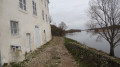
TheGR®®3offers beautiful views of the royal river and its islands. Running along the right bank of the Loire, it reveals some vestiges of the Loire's maritime past, the cellars where wine was stored and the wine press house, not to mention the magnificent church of La Chapelle-Saint-Mesmin overlooking the river.