Country:

 City:
City:


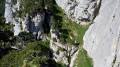
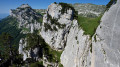
The starting point can be reached by bike (electric or otherwise) and is situated at the hairpin bend at the end of the tarmac road to l’Aulp du Seuil. Cars can be parked at the Col de Marcieu; in this case, you’ll need to make your way to the starting point via this tarmac road (as the alternative of climbing up the ski runs is rather unpleasant).
(S/E) From the start, head north-east (NE) along the wide, vehicle-accessible track of Combe Noire, which continues from the tarmac road. After the first hairpin bend, a sign on the right indicates the Aulp du Seuil path.
(1) Follow this path due north; it crosses two ski runs and the route of a ski lift. The path makes a bend of more than 90º to head south-west (SW) and continues to climb before rejoining the Combe Noire track.
(2) Turn left onto this track (SW), leaving a steep slope on your right, to reach a three-way junction on the track (this is actually a hairpin bend on the track).
(3) Pass the return path on your right and take the right-hand branch of the track, which climbs gently, still heading south-west. Follow this track until you come to a fairly steep forest track that climbs to the right, heading north-east.
(4) Climb this steep section for less than 100 m to reach the ‘Les Playères’ sign.
(5) Turn left to head towards Les Playères, first south-west then south-south-west, still on a track suitable for vehicles but overgrown with grass. Pass close to some water tanks (first plastic, then metal). From here, keep a close eye on the right-hand side of the track; shortly after a large rock bordering the track, a tiny cairn (less than 20 cm high) sits on a small boulder and marks the start of the Charassons path.
(6) Turn right onto this path, which winds a few times before heading NNE. The path climbs before reaching the base of the Charassons couloir, amongst small scree slopes.
(7) The idea is to ascend this couloir without ever taking the paths that branch off to the left of it (these are paths leading to the Pas des Charassons, which is now off-limits due to the owner of the 750 ha Hauts de Chartreuse nature reserve in the Marcieu valley). From time to time, old yellow arrows indicate the way forward.
So head up the north-west-facing gully, passing short rocky outcrops which are not difficult but do require you to use your hands. You will then reach the base of a more impressive outcrop than the previous ones.
(8) Do not attempt to climb this, but retrace your steps for 1 metre or 2 to find a bypass path leading off to the right (left bank of the couloir, towards the east). After 20 metres, this path climbs steeply northwards towards the base of the rocks. Turn left (west) below this base to return to the couloir and continue up it until you reach a fixed rope. This rope is mainly used for abseiling in bad weather and isn’t really useful for climbing up the rock.
(9) Once you reach the bolt securing the rope, you can take a detour to the right (well-marked path) to admire the base of the cliffs beneath a typical rocky pillar (‘pestel’). Then return to the couloir and continue climbing it. The slope is steep and leads to a ledge. Just before this, cross the couloir to the right-hand side and head WSW along a balcony-like ledge passing beneath some beautiful overhanging rock formations.
This ledge joins a path coming in from the left and passes in front of a rock on which yellow markings suggest the word “cheminée”. Continue along the path towards the SW, climbing a few metres before reaching the base of a rock where a Yellow Cross indicates that you should not turn right (NE).
(10) In fact, you should head right, following the cliff-foot path that climbs towards the first of the Charassons’ hanging gardens. Don’t stay too close to the cliffs (my GPX track takes an unnecessary detour) and head for the foot of the rocky promontory towards ENE, staying on the passable grassy slopes. Reach the foot of the cliff and follow it ESE until you catch sight of the splendid double arch of the Astragale.
(11) After the photo session, head back along the base of the cliff to the WNW towards the gully blocked by a clearly visible wedged boulder, which runs up to the NE at the top of the hanging garden. Reach the wedged boulder.
(12) Pass beneath it and climb the chimney – half earth, half rock – which leads to the grassy shoulder marking the summit of the garden. Once there, the detour southwards onto the rocky promontory to admire the route you’ve taken is well worth it. Return north and take the footpath along the cliff base, which descends very steeply towards the foot of the next hanging garden. Avoid following the cliff base as you climb back up; instead, head towards the base of some very easy rocks, which will allow you to gain a foothold on a steep grassy slope. An ice axe will be useful on this slope.
Climb the slope to the NNE until you reach the base of a rocky ledge that blocks access to some ‘easy’ couloirs a little further up. A weak point on this ledge is situated very close to the foot of the cliff, just to the right (looking northwards up the slope) of a dark cavity. Very good holds allow you to negotiate this obstacle, but the climbing difficulty reaches almost grade 4 in a single move.
(13) Cross the climbing section then head up to the right (ENE) towards a small couloir that climbs northwards towards what the IGN erroneously calls the Pas de l’Écharasson (the pass isn’t there, and the name is also incorrect). Take your time exploring the jumble of sharp limestone pavements and pine trees that cover the small plateau at the top of this gully, then head back towards the barbed wire fence belonging to the owner of the Marcieu valley to pass close to a tiny arch. To the north of this, a split rock serves as a landmark, behind which (and thus further north) a path sets off, running along the base of the cliff towards the Grésivaudan valley (east).
(14) Descend this path, which leads into a copse of pine trees. Climb down a few rocks to reach the cliff-foot path that runs northwards towards the Aulp du Seuil ‘boulevard’ path (the southern path of the Aulp du Seuil). Caution: these rocks overlook a sheer drop, and the utmost care is required when descending them.
At the junction with this summer pasture path, once you have crossed the barbed wire, descend the hairpin bends of the Aulp du Seuil path and follow the well-marked track, where you will frequently encounter other walkers. Follow this path down to an altitude of around 1,330 m, and just before a steep section, turn right onto a set of easy wooden steps leading to the three-way junction encountered on the way up.
(3) Follow the route you took on the way up in the opposite direction, leaving the Combe Noire track to head right into the forest to the north-east, and follow the path to the junction marked with the ‘Aulp du Seuil’ sign.
(1) You can continue straight ahead, as shown on the map, through the forest rather than returning along the track to the left. Both paths lead directly back to the starting point (S/E).


 Visorando Member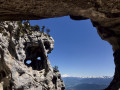

 Moderate
 Easy
Easy