


Refine your search for walks in Église Saint-Frambourg (Senlis)
Église Saint-Frambourg (Senlis) walks


 Route between Aumont-en-Halatte and Senlis
 Visorando Member
 9.58 mi
 +384 ft
 -407 ft
 4h 45
4h 45
 Moderate
 Departure from Aumont-en-Halatte (Oise)
Former capital of the Sylvanectes Gauls, Senlis was known as Augustomagus in the 1st century, during the reign of the Roman Emperor Claudius.
From the 3rd century onwards, thanks to its walls, the Gallo-Roman enclosure of Senlis was one of the best-preserved in northern Gaul. The date of construction has still not been determined. What remains certain, as was already established in the 19th century, is that the fortifications were built after the passage of the Germanic hordes in 275–276, and after the year 278, withstanding the barbarian invasions and later the Norman raids.
Senlis boasts a history spanning ten centuries of virtually uninterrupted royal presence. The town was the site of a Merovingian and later Carolingian castle or palace from the early Middle Ages onwards; although it has completely disappeared and there is no definitive archaeological evidence, it is mentioned in numerous ancient deeds and documents.
Grand tour of Île-de-France in 34 stages on the GR®11
 528.35 mi
+22,037 ft
-22,156 ft
34 days
528.35 mi
+22,037 ft
-22,156 ft
34 days
 Difficult
Departure from Paris
Difficult
Departure from Paris
This marked GR® route around the Île-de-France region (with a few forays into neighbouring departments and regions) complements its "little brother", the GR®1, by forming a circular route around Paris, generally with a slightly larger radius.
It follows the same overall pattern: first, a radial section starting from Paris (more precisely from the Pont d'Austerlitz, near the former confluence of the Bièvre and the Seine), going up the entire Bièvre valley, then continuing to Villiers-Saint-Frédéric, in the Yvelines. From there, it is a circular route that loops around the Île-de-France region, close to its borders with neighbouring regions.
The route passes through beautiful regions, often untouched by intensive urbanisation, regional nature parks and other protected natural areas, and takes in some architectural wonders.
From Chantilly to Borest via Senlis through the Massif des Trois-Forêts
 19.92 mi
+302 ft
-269 ft
9h 25
19.92 mi
+302 ft
-269 ft
9h 25
 Very difficult
Departure from Chantilly (Oise)
Very difficult
Departure from Chantilly (Oise)
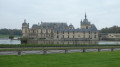
Eleventh stage of the Grand Tour of Île-de-France via the GR®11, connecting Chantilly-Gouvieux station to the village of Borest, reached by crossing the Chantilly estate, the Chantilly and Ermenonville forests, with a detour through the historic centre of Senlis and, optionally, a moment of reflection in front of the memorial to the victims of the March 1974 plane crash. The route follows, more or less closely, the Nonette River, which is crossed several times. The route for this stage is almost entirely in the forest, with little elevation gain, making it a very pleasant hike, and the crossings of Chantilly and Senlis add a rich touch of heritage. This stage requires an overnight stay to avoid laborious car manoeuvres. It is therefore the first of two consecutive stages, both entirely within the Oise department, between the Chantilly-Gouvieux and Crépy-en-Valois railway stations.
Walks near Église Saint-Frambourg (Senlis)
From Borest to Crépy-en-Valois through the Valois
 16.95 mi
+492 ft
-394 ft
8h 15
Very difficult
Departure from Borest (Oise)
16.95 mi
+492 ft
-394 ft
8h 15
Very difficult
Departure from Borest (Oise)
Twelfth stage of the Grand Tour of Île-de-France via the GR® 11, connecting the village of Borest to Crépy-en-Valois station, both in the Oise department. This long stage consists of crossing the Valois region to Crépy-en-Valois, mainly through agricultural plains and wooded areas.
From Fosses to Saint-Mard along the Biberonne
 14.32 mi
+417 ft
-440 ft
6h 55
Difficult
Departure from Fosses (Val-d'Oise)
14.32 mi
+417 ft
-440 ft
6h 55
Difficult
Departure from Fosses (Val-d'Oise)
A walk from station to station, through fields, woods and villages in the Goële plain. The route is punctuated by numerous crossings of the River Biberonne, a few ponds and some beautiful churches.
From the Bois du Tremblay to the Forêt de Coye
9.87 mi
+761 ft
-659 ft
5h 10
Moderate
Departure from Luzarches (Val-d'Oise)
A lovely walk, from station to station, starting in Luzarches and crossing the Bois du Tremblay along the GR®655. You’ll come across the Luzarches Mill and the Brassay Bridge. The route passes through the Coye Forest, past the Pain de Sucre and the Fontaine aux Verres. It’s a fairly shaded route, which is pleasant in summer when it’s very hot.
From Luzarches to Fosses via the Forest of Coye and the Pierre Longue
 12.11 mi
+650 ft
-502 ft
6h 10
Difficult
Departure from Luzarches (Val-d'Oise)
12.11 mi
+650 ft
-502 ft
6h 10
Difficult
Departure from Luzarches (Val-d'Oise)
Starting mainly in the forest and then crossing fields on good paths, this hike from station to station has its share of remarkable sights. You can enjoy an old market hall, two beautiful churches, a dovecote, a spring and a menhir, as well as a natural curiosity, the two intertwined trees in the Forest of Coye.
From Cires-lès-Mello to Chantilly via Saint-Leu d'Esserent
 12.36 mi
+459 ft
-390 ft
6h 05
Difficult
Departure from Cires-lès-Mello (Oise)
12.36 mi
+459 ft
-390 ft
6h 05
Difficult
Departure from Cires-lès-Mello (Oise)
Tenth stage of the Grand Tour of Île-de-France via the GR®11, connecting the Cires-lès-Mello railway station to the Chantilly-Gouvieux railway station, around the River Oise and two of its tributaries, the Thérain and the Nonette. The built heritage here is remarkable, between the abbey church of Saint-Leu d'Esserent and, of course, the town and estate of Chantilly.