


Refine your search for walks in Église Saint-Denis (Moigny-sur-École)
Église Saint-Denis (Moigny-sur-École) walks


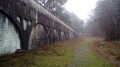
 Loop of Milly-la-Forêt via the Vanne and Loing aqueducts
 Visorando Member
 9.64 mi
 +433 ft
 -420 ft
 4h 50
 Moderate
 Departure from Milly-la-Forêt (Essonne)
A hike that alternates between villages rich in heritage (old market hall, churches, wash houses, castle) and a trail through the Forêt des Trois Pignons dotted with sandstone rocks.
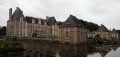
The Château de Courances
 2.86 mi
+39 ft
-39 ft
1h 20
 Easy
Departure from Moigny-sur-École (Essonne)
An original way to get to Courances Castle: on foot! This short walk takes you round the outside of the grounds, with the first half rich in heritage (churches, a mill, a wash house, etc.) and the second half more bucolic, ending on an educational trail dedicated to fruit trees.
La Platière de Bellevue and La Roche Grenolée
 4.70 mi
+279 ft
-262 ft
2h 25
Moderate
Departure from Moigny-sur-École (Essonne)
A short hike that alternates between forest and fields, with a pleasant route on a plateau. You can see a Neolithic polishing stone and an old sandstone quarry.
From Dannemois to Courances via Moigny-sur-École
 7.99 mi
+417 ft
-446 ft
4h 00
Moderate
Departure from Dannemois (Essonne)
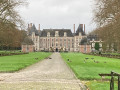
In addition to fields and woods, this hike passes through three villages: Dannemois, where Claude François had his second home (Le Moulin), Courances and its château, and Moigny-sur-École.
From Boissise-le-Roi to Boutigny-sur-Essonne via the Chemin de l'École
 17.05 mi
+492 ft
-436 ft
6 hrs
 Very difficult
Departure from Boissise-le-Roi (Seine-et-Marne)
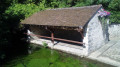
A walk from station to station showcasing the full diversity of southern Île-de-France! For the first two-thirds of the route, the path crosses back and forth over the River École, with its old mills and countless wash houses. You then wander across a plateau with its typical heathland landscape. The walk concludes with a route that is mainly through woodland. A castle and a few Romanesque or Gothic churches add to the rich heritage of this walk.
From Maisse station to Coquibus via the Cyclop and the Moulin Grenat
 Association / Club / Walk leader
 9.96 mi
+423 ft
-246 ft
4h 55
Moderate
Departure from Maisse (Essonne)
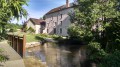
A day or a weekend in the Fontainebleau Forest, without a car, starting from Maisse station (RER D). Visit the “Cyclop”, a kinetic metal sculpture partly covered in mirrors, as tall as a seven-storey building, which stands proudly in the heart of the Milly Forest. Monumental yet hidden away, it surveys its surroundings with its single golden eye.
Two days in the forest, accessible by train from Paris
 16.49 mi
+627 ft
-604 ft
2 days
Moderate
Departure from Maisse (Essonne)
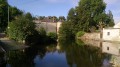
A two-day route starting from the Maisse RER D station. Visit to Jean Tinguely’s ‘Cyclop’. Accommodation at the Coquibus Farm Lodge and return to Maisse station the following day via Milly-La-Forêt, with optional visits to Jean Cocteau’s house and the Chapelle des Simples. Easily accessible by train from Paris
Grand Tour of Paris: from station to station
 343.64 mi
+13,451 ft
-13,451 ft
26 days
 Difficult
Departure from Cergy (Val-d'Oise)
This route, comprising 26 walks from station to station – generally long (averaging 21 km) – allows you to gradually circumnavigate the Île-de-France region and discover its full diversity. The route passes through several large forests, winds its way through cultivated fields and runs alongside numerous rivers. Apart from certain stages that are predominantly through woodland, there is a wealth of heritage to be discovered along the way.
From Milly-la-Forêt to Ballancourt-sur-Essonne through the Gâtinais region.
 20.81 mi
+758 ft
-781 ft
10h 15
Very difficult
Departure from Milly-la-Forêt (Essonne)
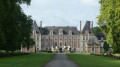
This is the twenty-eighth stage of the Grand Tour of Île-de-France via the GR®11, connecting Milly-la-Forêt to the Ballancourt-sur-Essonne train station after crossing the French Gâtinais region. It is designed to follow on fromthe previous stage coming from Fontainebleau, after a night's stay there.This stage begins in the École valley, which boasts a rich heritage: Milly-la-Forêt, Moigny-sur-École, Courances and its château, and Dannemois, dear to Claude François. It continues through the fields of the Gâtinais, then the ridges and sandstone plateaus of the Grands Avaux forest, ending at Ballancourt-sur-Essonne in the valley of the same name.The stage is very beautiful but very long, and undoubtedly the most physically demanding of all those on the GR®11, especially in its second part. However, it is possible to split it in two by staying overnight and/or shorten it in several places by simplifying it.
Grand tour of Île-de-France in 34 stages on the GR®11
 528.35 mi
+22,037 ft
-22,156 ft
34 days
Difficult
Departure from Paris
This marked GR® route around the Île-de-France region (with a few forays into neighbouring departments and regions) complements its "little brother", the GR®1, by forming a circular route around Paris, generally with a slightly larger radius.
It follows the same overall pattern: first, a radial section starting from Paris (more precisely from the Pont d'Austerlitz, near the former confluence of the Bièvre and the Seine), going up the entire Bièvre valley, then continuing to Villiers-Saint-Frédéric, in the Yvelines. From there, it is a circular route that loops around the Île-de-France region, close to its borders with neighbouring regions.
The route passes through beautiful regions, often untouched by intensive urbanisation, regional nature parks and other protected natural areas, and takes in some architectural wonders.