Country:

 City:
City:


Almost the entire route is marked in yellow, but several short hiking trails are used.
We will only mention the markings or lack thereof when they are not yellow.
The start is at the junction of the road leading to Les Eyrauds. It is possible to park at the junction along a greenhouse.
(S/E) At the start, go up the road leading to Les Eyrauds and turn right onto an uphill path. Pass the greenhouses and take the path on the right that runs alongside a clearing.
(1) Join the road and turn left. This road joins another road after about a kilometre.
(2) Turn right. Please note that there are yellow markings on both sides. Go downhill to cross a stream and then continue straight ahead on a path that goes uphill.
(3) Cross the D15 and the path then descends towards the Moulin de Boyer, after passing greenhouses that grow small fruits (raspberries, blueberries, redcurrants, etc.). At the Moulin de Boyer, take a look at the bridge over the Lignon. It is not uncommon to see beautiful brown trout upstream from the bridge.
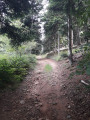
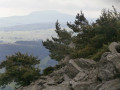
(4) Return to the mill and walk along its right side to climb up a beautiful grassy path. Take the opportunity to admire Mont Mézenc by turning around. This path turns into a small road at the hamlet of Le Vent.
Follow the road up to Aulagnier Grand.
(5). There, pass the beautiful wash house and drinking trough dating from 1932 and turn right at the three-way junction. Once you have turned right, follow the small path that runs alongside a building on the left and climbs towards the D15. Join a small road and climb a few metres, then take a grassy path on the left. This path joins a small road and arrives at a crossroads near a wooden bus shelter
(6) Turn right and join the D15. Cross it to reach the small Sapet road: a beautiful slice of redwood indicating a timber business opens this road.
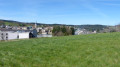
Go down this road (beautiful view of the village of Mazet) and take a path on the right just before you reach the restored Costereste farm. This path takes you across meadows towards Laroue and its fortified house (beautiful sequoia tree in the park). Continue along the path opposite, then go downhill to join the D7
(7) Cross this road and turn left at the three-way junction that follows immediately. Walk alongside the campsite. Once you have passed the campsite, you will arrive at the start of the botanical trail.
(8) Follow this path to the right, which joins a small road. Follow it to the right before leaving it to the left after about 200 m.
(9) Go downhill to cross a small bridge over the Ruisseau de Ligne (sign saying "No vehicles over 2 tonnes"). Go back uphill towards the hamlet of Les Ruches, which you cross to reach a road.
(10) Leave the yellow markings here, which continue opposite, and turn right onto the road. Follow this road for less than 200 metres to rejoin the yellow markings on a path that descends to the right. This path joins a wide forest track, which you take to the right. Continue downhill to reach a small isolated house (there are numerous paintings in the woods, clearly made by the owner of the house).
Pass between two buildings to follow the Ruisseau de la Ligne stream again, which you cross via a bridge.
Go straight up to reach a road, which you take to the right for less than 200 m. You will arrive at the hamlet of Vacheresses.
(11) Take a good path on the left that climbs up to a road, which you take on the left. Arrive at the hamlet of La Cumine and take a path that descends to the right (it runs alongside a house on the left). Descend to cross a small stream before climbing back up into the woods.
You will then reach a crossroads with paths marked in yellow.
(12) Go up to the right and reach the Égaux farm after passing some abandoned greenhouses. Take the road slightly to the left that joins the D151.
(13) Turn left onto the D151, follow it for 100 metres and turn onto the first path on the right. This path crosses a small stream and goes uphill. It leads to a road, which you take to the right. The finish point is right there (S/E).

 Visorando Member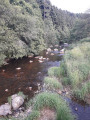

 Easy
Easy 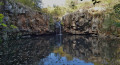
 Difficult