


Refine your search for walks in Cizay-la-Madeleine
Cizay-la-Madeleine walks


 Around Asnières Abbey
 Tourist office
 6.93 mi
 +102 ft
 -95 ft
 3h 15
3h 15
 Moderate
 Departure from Cizay-la-Madeleine (Maine-et-Loire)
This pleasant walk through farmland and the Brossay forest allows you to discover the region's rich architectural heritage.
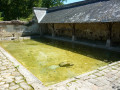
Vineyards and woods around Les Ulmes
 7.14 mi
+164 ft
-138 ft
3h 25
Moderate
Departure from Les Ulmes (Maine-et-Loire)
7.14 mi
+164 ft
-138 ft
3h 25
Moderate
Departure from Les Ulmes (Maine-et-Loire)
The name comes from the Latin word ulmus, meaning elm tree, and was given to the village because of the presence of this tree. The surrounding woods and estates were entrusted to the monks of Saint-Maur Abbey, and the village developed around a priory and its church. The priory, which was remodelled in the 16th and 17th centuries, is still attached to the Church of Saint Vincent of Spain, which features beautiful remains from the 11th and 12th centuries.
 Route du Coudray-Macouard
14.26 mi
+157 ft
-171 ft
2 hrs
 Easy
Departure from Le Coudray-Macouard (Maine-et-Loire)
Easy
Departure from Le Coudray-Macouard (Maine-et-Loire)
A shaded route through the forest. Between Saumur and Montreuil-Bellay, this former fortified village is a must-see for heritage enthusiasts. Numerous15th- and16th-century manor houses and18th-century stately homes line the medieval-style narrow streets.
Please note: Be sure to follow the direction of traffic; the route is shared with horse riders.
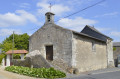
From woods to vineyards and wash houses around Vaudelnay
 13.83 mi
+213 ft
-210 ft
6h 35
13.83 mi
+213 ft
-210 ft
6h 35
 Difficult
Departure from Vaudelnay (Maine-et-Loire)
Difficult
Departure from Vaudelnay (Maine-et-Loire)
Farm tracks, much of which runs through woodland and the Saumur Puy-Notre-Dame appellation vineyards.
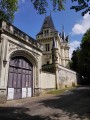
The woods around Rou-Marson
 Visorando Member
 4.27 mi
+135 ft
-135 ft
2h 05
Easy
Departure from Rou-Marson (Maine-et-Loire)
4.27 mi
+135 ft
-135 ft
2h 05
Easy
Departure from Rou-Marson (Maine-et-Loire)
From the Place du Château de Marson, a short walk takes you through the woods, past water features and along the botanical trail, where you can discover the area’s plant biodiversity.
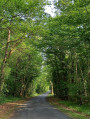
When the Romans lead us to Marson
 7.09 mi
+194 ft
-197 ft
3h 25
Moderate
Departure from Distré (Maine-et-Loire)
7.09 mi
+194 ft
-197 ft
3h 25
Moderate
Departure from Distré (Maine-et-Loire)
A lovely trip to the countryside through woods and meadows, taking in the Land Art, the castle and Marson Pond along the way.
The Puy-Notre-Dame vineyard
 2.87 mi
+92 ft
-92 ft
1h 25
Easy
Departure from Le Puy-Notre-Dame (Maine-et-Loire)
2.87 mi
+92 ft
-92 ft
1h 25
Easy
Departure from Le Puy-Notre-Dame (Maine-et-Loire)
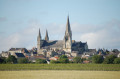
Le Puy-Notre-Dame stands at 106m on a tuffeau hill. The name ‘puy’ derives from the Celtic word ‘peuch’ (small mountain). Centred around an early church and a Cluniac priory founded by William VIII, Duke of Aquitaine, the village grew, welcoming pilgrims on their way to Santiago de Compostela and those who came to venerate a relic brought back from the Crusades: the Holy Belt of the Virgin.
The Argentay hill
 5.09 mi
+135 ft
-105 ft
2h 25
Easy
Departure from Les Verchers-sur-Layon (Maine-et-Loire)
5.09 mi
+135 ft
-105 ft
2h 25
Easy
Departure from Les Verchers-sur-Layon (Maine-et-Loire)
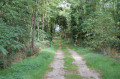
Verchers-sur-Layon has an unusual history, comprising 15 hamlets, some of which are actual villages. It was formed in 1818 by the merger of three parishes: Saint-Just, Saint-Pierre and La Lande. This union was marked by architectural richness, with a rather exceptional heritage (the church of Saint-Just, the châteaux of Échuilly and Bussy-Fontaine, etc.) and renowned wine-growing.
A journey through the heart of the vineyards.
At the confluence of the Thouet and Dive rivers in Brézé
 6.54 mi
+72 ft
-66 ft
3h 05
Easy
Departure from Brézé (Maine-et-Loire)
6.54 mi
+72 ft
-66 ft
3h 05
Easy
Departure from Brézé (Maine-et-Loire)
The village of Brézé lies in the shadow of a castle steeped in history. It was to a member of the Dreux family, the owners of Brézé, that Mirabeau addressed his famous retort on 23 June 1789: ‘We are here by the will of the people and we shall only leave by the force of bayonets.’
Grassy or stony towpaths along the Thouet and the Canal de la Dive.
Dolmen Trail starting from Saugré
 4.67 mi
+131 ft
-131 ft
2h 15
Easy
Departure from Dénezé-sous-Doué (Maine-et-Loire)
4.67 mi
+131 ft
-131 ft
2h 15
Easy
Departure from Dénezé-sous-Doué (Maine-et-Loire)
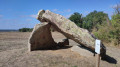
This walk is a revised version of the “Sentier des dolmens”, a 13-kilometre route illustrated on a sign at the Saugré washhouse. The route described here takes you past several dolmens and ends in hamlets where the houses have cave dwellings. The walk regularly offers very unobstructed views where the eye can see for miles.
The Dénézé-sous-Doué Dolmens Trail
 8.04 mi
+187 ft
-171 ft
3h 50
Moderate
Departure from Dénezé-sous-Doué (Maine-et-Loire)
8.04 mi
+187 ft
-171 ft
3h 50
Moderate
Departure from Dénezé-sous-Doué (Maine-et-Loire)
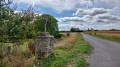
A trail around Dénezé-sous-Doué, taking you past several dolmens, including the imposing Saugré Dolmen, as well as a number of heritage sites in Dénezé and the surrounding area. This trail is described on a sign at the entrance to the washhouse. The yellow signposting is very easy to follow.
Route of Bellevigne to Brézé castle
 Association / Club / Walk leader
 4.67 mi
+164 ft
-148 ft
2h 15
Easy
Departure from Brézé (Maine-et-Loire)
4.67 mi
+164 ft
-148 ft
2h 15
Easy
Departure from Brézé (Maine-et-Loire)
A walk that will take you through the vineyards and past the châteaux of Brézé, Grand Fond, Fouquet and La Ripaille.
Around the Thouet in Saumur
4.54 mi
+23 ft
-23 ft
2h 05
Easy
Departure from Saumur (Maine-et-Loire)
A short walk around the Thouet, ideal for families.
South of Pompierre via Villemolle and Verrie
6.90 mi
+52 ft
-52 ft
3h 15
Easy
Departure from Chênehutte-Trèves-Cunault (Maine-et-Loire)
An easy walk along paths through meadows and woodland
⚠️ At certain times of the year, hunting may take place along this route, particularly between (5) and (6) in the Verrie area.Hikers are free to abandon or alter their route if they consider the conditions to be unsafe.
Stroll in Saumur
4.20 mi
+138 ft
-138 ft
2h 05
Easy
Departure from Saumur (Maine-et-Loire)
This beautiful Loire city certainly deserves a more in-depth visit, here it is offered a short discovery loop, a good option for a stopover on a journey between Anjou and Touraine regions.
Through the vineyards of Concourson-sur-Layon
 5.47 mi
+289 ft
-279 ft
2h 45
Easy
Departure from Concourson-sur-Layon (Maine-et-Loire)
5.47 mi
+289 ft
-279 ft
2h 45
Easy
Departure from Concourson-sur-Layon (Maine-et-Loire)
A lovely, easy walk through the vineyards on the hillsides of Concourson-sur-Layon.
A few windmills and vineyard huts can be seen along the way, and the walk ends at a lovely spot near the river, the Layon, which has given its name to the local sweet wine: Coteaux du Layon.
In the footsteps of Robrica in Chênehutte
 5.16 mi
+262 ft
-246 ft
2h 35
Easy
Departure from Chênehutte-Trèves-Cunault (Maine-et-Loire)
5.16 mi
+262 ft
-246 ft
2h 35
Easy
Departure from Chênehutte-Trèves-Cunault (Maine-et-Loire)
A hilly, wooded route. Situated on the left bank of the Loire, downstream from Saumur, this village in the Loire Valley is a former Gallo-Roman settlement and home to one of the most important archaeological sites in Maine-et-Loire. Finds made on the plateau prove human presence dating back to the Neolithic period (4500 to 4000 BC).
In the heart of the Saumur-Champigny vineyards
 7.18 mi
+390 ft
-384 ft
3h 40
Moderate
Departure from Saumur (Maine-et-Loire)
7.18 mi
+390 ft
-384 ft
3h 40
Moderate
Departure from Saumur (Maine-et-Loire)
A hilly route along the hillside through the vineyards. Home to a magnificent 14th-century Romanesque church and the Manoir de Morains, where Marguerite d'Anjou is said to have died. Dampierre-sur-Loire is also renowned as a commune in the Saumur-Champigny appellation.
Please note: section along the Loire River impassable in case of flooding.
Between Dampierre-sur-Loire and Montsoreau
 11.72 mi
+531 ft
-515 ft
5h 35
Difficult
Departure from Saumur (Maine-et-Loire)
11.72 mi
+531 ft
-515 ft
5h 35
Difficult
Departure from Saumur (Maine-et-Loire)
A circular loop exploring the troglodyte dwellings on the hillside between Dampierre-sur-Loire and Montsoreau, alternating between sections through the vineyards of Souzay - Champigny, including the unusual "Clos Cristal", the tuffeau cliff shaped by man and erosion overlooking the Loire, the remarkable villages and their heritage, and the wild left bank of the Loire.
From the Loire to the Authion
 8.14 mi
+20 ft
-20 ft
3h 45
Moderate
Departure from Saint-Martin-de-la-Place (Maine-et-Loire)
8.14 mi
+20 ft
-20 ft
3h 45
Moderate
Departure from Saint-Martin-de-la-Place (Maine-et-Loire)
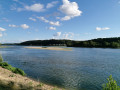
A flat route between the banks of the Loire and the Authion. It allows you to explore the birthplace of Aristide du Petit Thouars and its heritage.
Please note: Paths along the banks of the Loire are impassable during periods of high water
Circular around the vineyards around Souzay
 5.07 mi
+210 ft
-207 ft
2h 30
Easy
Departure from Souzay-Champigny (Maine-et-Loire)
5.07 mi
+210 ft
-207 ft
2h 30
Easy
Departure from Souzay-Champigny (Maine-et-Loire)
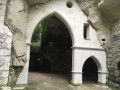
In the heart of the Saumur Champigny AOC, between vineyards, wines and troglodyte dwellings. Discover the village of Souzay, its heritage and the diversity of our Loire landscapes.
The Château de Berrie through the vineyards and fields
 6.85 mi
+279 ft
-259 ft
3h 25
Moderate
Departure from Pouançay (Vienne)
6.85 mi
+279 ft
-259 ft
3h 25
Moderate
Departure from Pouançay (Vienne)
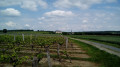
A circular route in the heart of the Loudunais vineyards (AOP Saumur) and along the canalised Dive river. You can enjoy a beautiful panorama from the ruins of a windmill, pass through pretty villages with troglodyte cellars and walk past the foot of an ancient fortified castle with moats that are still visible.
Route designed and marked by the Loudunais Community of Communes, and certified by the Vienne departmental committee of the FFRP (French Federation of Hiking and Rambling).
Between the Loire and the hillsides between Trèves and Chênehutte
 5.90 mi
+249 ft
-230 ft
2h 55
Easy
Departure from Chênehutte-Trèves-Cunault (Maine-et-Loire)
5.90 mi
+249 ft
-230 ft
2h 55
Easy
Departure from Chênehutte-Trèves-Cunault (Maine-et-Loire)
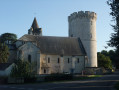
A hilly, wooded route between Trèves and Chênehutte, along the Loire and on the hillside. This route also winds through the historic streets of the village of Trèves.
From the Loire to Les Roches
 8.88 mi
+174 ft
-187 ft
4h 15
Moderate
Departure from Gennes (Maine-et-Loire) (Maine-et-Loire)
8.88 mi
+174 ft
-187 ft
4h 15
Moderate
Departure from Gennes (Maine-et-Loire) (Maine-et-Loire)
The settlement of Gennes dates back to the Neolithic period (4500 BC). Menhirs and dolmens, inherited from this distant era, stand proudly before the eyes of walkers. Its Gallo-Roman amphitheatre has also stood the test of time, offering a real journey through history. The Étang and the Forest of Joreau are a nature reserve and have been classified as a Natural Area of Ecological, Faunistic and Floristic Interest (Z.N.I.E.F.F.) since 1992.
Views of the Loire at Cunault
 4.89 mi
+203 ft
-184 ft
2h 25
Easy
Departure from Chênehutte-Trèves-Cunault (Maine-et-Loire)
4.89 mi
+203 ft
-184 ft
2h 25
Easy
Departure from Chênehutte-Trèves-Cunault (Maine-et-Loire)
Dominated by its Romanesque church, a former Benedictine priory, the village of Cunault was a place of pilgrimage and renowned fairs in the Middle Ages and until the end of the 19th century, an important port on the Loire specialising, like its neighbouring (and twin) port of Trèves, in the shipment of tuffeau stone.
Steep slope at the start, then flat, shaded paths.
The source of the Aubance
 8.73 mi
+387 ft
-358 ft
4h 20
Moderate
Departure from Louerre (Maine-et-Loire)
8.73 mi
+387 ft
-358 ft
4h 20
Moderate
Departure from Louerre (Maine-et-Loire)
Hiking route in the forest with slight elevation gain.
Between vineyards and forest in Grézillé
 7.69 mi
+223 ft
-203 ft
3h 45
Moderate
Departure from Grézillé (Maine-et-Loire)
7.69 mi
+223 ft
-203 ft
3h 45
Moderate
Departure from Grézillé (Maine-et-Loire)
A region of woods and heathland, sometimes infested with wolves, the commune of Grézillé has a history dating back to Antiquity, with turbulent periods, particularly during the Revolution. Primarily agricultural, the village was home to tuffeau quarries in the 19th century, which a few decades later became mushroom farms and wine cellars. A gently undulating route that winds through vineyards and woods.