


Refine your search for walks in Cessey
Cessey walks


 Between Loue and Mont de Cessey
 Visorando Member
 6.51 mi
 +909 ft
 -909 ft
 3h 45
3h 45
 Moderate
 Departure from Cessey (Doubs)
Route through the forest and wide paths, connecting the two parts of the commune of Cessey via the Mont de Cessey ridge and the Loue river.
Circular Quingey route via Cessey and the Ferme des Routes
 3.36 mi
+253 ft
-276 ft
1h 45
3.36 mi
+253 ft
-276 ft
1h 45
 Easy
Departure from Cessey (Doubs)
Easy
Departure from Cessey (Doubs)
A lovely little walk along the River Loue, then through meadows and forests with a variety of tree species. A family walk with a section emerging from the forest offering a unique view of the village of Quingey.
A quick stroll between the Loue and the Bois de Quingey
2.79 mi
+226 ft
-226 ft
1h 30
Easy
Departure from Quingey (Doubs)
If you only have 1 to 1½ hours to let off steam, here is an idea for a short walk in Quingey/Cessey.
Abbans Castle
 4.73 mi
+417 ft
-404 ft
2h 30
Easy
Departure from Abbans-Dessus (Doubs)
4.73 mi
+417 ft
-404 ft
2h 30
Easy
Departure from Abbans-Dessus (Doubs)
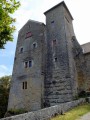
On its rocky spur overlooking the Doubs valley, Abbans Castle was probably built on the site of a Roman castrum. The oldest parts date from the 12th century. It was at the top of the keep that Claude Dorothée de Jouffroy d'Abbans set up his study and forge, where he built his steamboat. Enjoy a short country walk in this historic setting along a pleasant ridge path, then through the Grande Fin valley, discovering the castle from different angles.
The Bois de Moini
6.61 mi
+1,053 ft
-1,047 ft
3h 55
Moderate
Departure from Quingey (Doubs)
Hike exclusively in the forest, on paths and trails with some beautiful ascents and descents. Views of the Doubs and Loue valleys.
The Grand Finale
 5.94 mi
+614 ft
-614 ft
3h 15
Easy
Departure from Abbans-Dessus (Doubs)
5.94 mi
+614 ft
-614 ft
3h 15
Easy
Departure from Abbans-Dessus (Doubs)
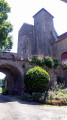
Perched on its rocky outcrop, overlooking the Doubs valley, Abbans Castle likely replaced a Roman castrum. The oldest parts date from the 12th century. It was at the top of the keep that Claude Dorothée de Jouffroy d’Abbans set up his study and forge, where he built his steamboat. A short stroll through the countryside in this place steeped in history, taking in the cool Sentier du Ruisseau, the peaceful Grande Fin valley and the monument commemorating the long-forgotten rag-and-bone men of the 1870s.
The Marquis' Castle
 8.24 mi
+1,056 ft
-1,056 ft
4h 40
Moderate
Departure from Abbans-Dessous (Doubs)
8.24 mi
+1,056 ft
-1,056 ft
4h 40
Moderate
Departure from Abbans-Dessous (Doubs)
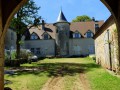
This hike, following in the footsteps of Marquis Claude François Dorothée de Jouffroy d'Abbans, naval architect and designer of the steamboat, will take you between the Loue and Doubs rivers, from oratories to churches, in the heart of our devout Comtois countryside, leaving you time to meditate on the twilight paths of our wooded mountains.
Le Grand Méandre and Les Forges de Chenecey
 3.43 mi
+423 ft
-423 ft
1h 55
Easy
Departure from Chenecey-Buillon (Doubs)
3.43 mi
+423 ft
-423 ft
1h 55
Easy
Departure from Chenecey-Buillon (Doubs)
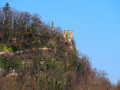
"The seigneurial tower spreads its mismatched wings at the top of a steep cliff at the foot of which flows the Loue. The tranquil river continues to lap at the rocky escarpment, striving to draw the same circular patterns on the earth as it always has," writes Carole Martinez. A walk rich in discoveries: old-fashioned farms, a fountain entwined with mossy walls, an old forge and, the highlight, the Grand Méandre de la Loue and its thousand-year-old sentinel, the keep of Charencey.
La Vouivre à la Trace, the natural environments around Chenecey
 Local authority
 3.16 mi
+427 ft
-427 ft
1h 50
Easy
Departure from Chenecey-Buillon (Doubs)
3.16 mi
+427 ft
-427 ft
1h 50
Easy
Departure from Chenecey-Buillon (Doubs)
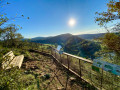
A family walk around Chenecey, featuring information boards about the natural habitats and clues left by the Vouivre river as it flows through the area.
Set against the exceptional backdrop of the Loue Valley, set off on an exploration to discover a diverse and well-preserved natural heritage. It all stems from a karst landscape shaped over time, so ancient that it is home to a strange mythological creature.
For younger children, the walk comes with an explorer’s booklet full of puzzles. This booklet is available free of charge from the booklet box at the church and from local shops in the village (the Boulangerie de la Loue, the restaurant Chez Gervais, the post office and the town hall). You’ll need a pencil.
The ruins of the feudal castle of Chenecey
 4.59 mi
+820 ft
-814 ft
2h 50
Easy
Departure from Chenecey-Buillon (Doubs)
4.59 mi
+820 ft
-814 ft
2h 50
Easy
Departure from Chenecey-Buillon (Doubs)
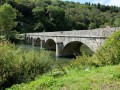
A ruined feudal castle dating from the 9th century overlooking the village and the Loue valley, the ruins of Charencey Castle are listed as a Historic Monument. From the church, located on the banks of the Loue, you will climb up to these secret ruins, continuing through a beautiful forest, perhaps imagining that you will come across a team of oxen pulling a cart up to the castle. Finally, you will return through the sunny pastures overlooking the valley.
Around the old castle of Chenecey-Buillon
 7.30 mi
+876 ft
-863 ft
4h 05
Moderate
Departure from Chenecey-Buillon (Doubs)
7.30 mi
+876 ft
-863 ft
4h 05
Moderate
Departure from Chenecey-Buillon (Doubs)
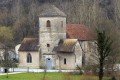
From Chenecey church, you will climb up to the solitary ruins of Charencey Castle overlooking the Grand Méandre de la Loue. From valleys to hills, you will continue through a vast, bright forest and meadows lost deep in the woods, reaching the riverbank to return to the village.
Walls and Whispers: discovering the heritage of Chenecey and Buillon
 5.71 mi
+407 ft
-413 ft
3h 00
Moderate
Departure from Chenecey-Buillon (Doubs)
5.71 mi
+407 ft
-413 ft
3h 00
Moderate
Departure from Chenecey-Buillon (Doubs)
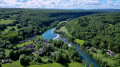
They will guide you through times gone by that are nevertheless at the origin of the unique landscape of Chenecey and Buillon. The activities of yesteryear explain today's landscapes: a strong identity and a rich and diverse memory that has been built up over time and passed down from generation to generation.Through a digital app, just like those who came before you, you are invited by the monks of the former Cistercian abbey and the famous painter James Tissot to leave the hustle and bustle of the village behind and enter places that invite you to relax and contemplate. Ten stations will allow you to discover places that are inaccessible to the public, as they were in their heyday. Human relationships, self-awareness, art and connections with nature have evolved over time and in line with the challenges of each era. Through this retrospective journey, this walk invites you to reflect on the future of these places.
L'Essart du Loup
 6.76 mi
+906 ft
-902 ft
3h 55
Moderate
Departure from Vorges-les-Pins (Doubs)
6.76 mi
+906 ft
-902 ft
3h 55
Moderate
Departure from Vorges-les-Pins (Doubs)
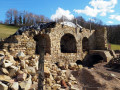
A forest and countryside walk, accompanied by the Montferrand keep and the Bisontin mountains, down the beautifully named Chemin de l'Essart du Loup, an old cart track, to discover the Monument de Vorges in memory of the long-forgotten poor biffins of 70, a gypsum factory and the small valley of Moulin Caillet lost between two mountains.
A trail along the ridges and banks of the river Doubs between Vorges-les-Pins and Busy
 6.36 mi
+794 ft
-794 ft
3h 35
Moderate
Departure from Vorges-les-Pins (Doubs)
6.36 mi
+794 ft
-794 ft
3h 35
Moderate
Departure from Vorges-les-Pins (Doubs)
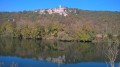
A stroll along the ridge separating the Loue Valley and that of the river Doubs and then along the banks of the Doubs with a panoramic view of the Château de Montferrand ruins.
The Goulot Farm circular walk
 14.03 mi
+1,240 ft
-1,240 ft
7h 30
14.03 mi
+1,240 ft
-1,240 ft
7h 30
 Difficult
Departure from Boussières (Doubs)
Difficult
Departure from Boussières (Doubs)
This long hike will take you to the Goulot farm, offering superb panoramic views over the lower Doubs valley and the Chaux and Serre forests. There are also views of the first and second Doubs plateaus. The varied trail surfaces, short climbs and long descents will ensure a wide variety of experiences throughout the route.
Circular walk around Boussières via the Caillet Mill and Notre Dame du Mont
 5.61 mi
+604 ft
-591 ft
3h 05
Easy
Departure from Boussières (Doubs)
5.61 mi
+604 ft
-591 ft
3h 05
Easy
Departure from Boussières (Doubs)
A short family walk combining a tarmac road at the start, followed by long stretches through woodland before climbing up to the chapel to enjoy a magnificent view over the Doubs valley and Besançon.
The Cussey-sur-Lison valley
 8.00 mi
+958 ft
-935 ft
4h 30
Moderate
Departure from Cussey-sur-Lison (Doubs)
8.00 mi
+958 ft
-935 ft
4h 30
Moderate
Departure from Cussey-sur-Lison (Doubs)
Natural site with four viewpoints over the Jura Mountains and the Cussey valley, a corniche and dry grasslands. Places of interest: the Cussey fountain and wash house, Echay, a typical village in the Lison valley.
The Reculée de la Goulue
 3.44 mi
+459 ft
-453 ft
2h 00
Easy
Departure from Cussey-sur-Lison (Doubs)
3.44 mi
+459 ft
-453 ft
2h 00
Easy
Departure from Cussey-sur-Lison (Doubs)
From a small village typical of the Lison Valley, whose slate-roofed houses have retained their old-world charm, you’ll explore the little valley of Cussey-sur-Lison via two viewing points perched on the heights of its limestone cliffs, before returning through the valley floor, accompanied by the cascades of its tuffier stream: the Goulue.
Along the Goulue
 3.81 mi
+554 ft
-558 ft
2h 15
Easy
Departure from Cussey-sur-Lison (Doubs)
3.81 mi
+554 ft
-558 ft
2h 15
Easy
Departure from Cussey-sur-Lison (Doubs)
Starting from Cussey-sur-Lison, this lovely circular walk combines heritage, woodland and Jura landscapes. After exploring the village and its Saint-Christophe church, the path leads to the Croix and Chaux viewpoints, offering beautiful views of the valley, the cliffs and Mont Poupet. The walk then descends into the heart of the Goulue gorge, following the stream and its small waterfalls. A varied and peaceful walk, taking in limestone cliffs, woodland and rural heritage.