

 Country:
 City:




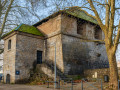

Park in front of the Pont de Velotte.
(S/E) Cross the bridge. Take the towpath below, heading to your right (towards Besançon).
Please note: to reach the towpath, go down the left-hand side and then turn right onto it after making a U-turn towards Besançon.
Continue along the towpath and join the Mazagran path a little further on.
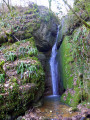
Please note: you’ll be sharing the path with cars. At the start of the Mazagran path, the River Doubs has a waterfall, with Île Malpas just beyond. Walk to the Mazagran footbridge.
Cross the footbridge.
(1) Turn left and walk alongside the Rhône–Rhine Canal. Continue along the towpath until you reach the Tarragnoz lock and its small harbour. Carry on to the entrance of the river and pedestrian tunnel.
(2) Walk through the tunnel. At the exit, turn right back onto the towpath. Here, the countryside meets the city. On the opposite bank, you’ll see the Rhodiacéta, an open-air museum.
Carry on to the Passerelle de la Malate.
(3) Cross the footbridge and take the path on the left. Do not take the road. Walk alongside the River Doubs.
You’ll come to a football pitch on your right. Head down the fairly steep path on the left.
Carry on along the path and you’ll arrive, on the garden side, at the Rhodiacéta Museum.
Carry on along the dirt track until you reach the Rodhia auditorium, named in honour of the Rhodiacéta.
Note: you can climb up onto the terrace and, from there, on the opposite bank, look up to admire our magnificent citadel.
Carry on along the path to the Chardonnet Footbridge.
(4) Cross it. Turn right onto the path that runs between the river port and the rear of the Cité des Arts, a superb setting that houses the conservatoire of music, dance and theatre.
Carry on along the towpath and pass under the Bregille Bridge.
(5) Carry on along the towpath until you reach the Moulin Saint-Paul and its lock. This mill dates back tothe 11th century. It was demolished and then rebuilt between 1831 and 1834 in its current form.
Carry on and pass under the Pont de la République.
(6) Carry on and then pass under the Robert Schwint Bridge.
(7) Stay on the towpath; above it lies Quai Vauban, built between 1691 and 1695, with its superb buildings.
Pass under the Pont de Battant, which leads to the old Battant district – also known as the Tanners’ Quarter – featuring the statue of the Marquis d’Abbans, inventor of the steamboat and the paddle wheel.
(8) Continue along the River Doubs and pass the bastioned Cordeliers Tower. This tower was built by Vauban in 1691 and formed part of the town’s fortifications. Head towards the Pont Canot.
(9) Walk under this bridge and then past the bastioned Marais Tower, also built by Vauban in 1691 and forming part of the town’s fortifications. Continue along this path until you reach the Charles de Gaulle Bridge.
(10) Carry on straight ahead, then follow the bend; walk past the waterworks along the River Doubs and, once you’ve passed it, rejoin the canal and follow it. Walk along the D683 for a few metres to reach the towpath leading to the entrance of the river tunnel.
(2) Turn right and follow the route back in the opposite direction to the outward journey until you reach the Mazagran Footbridge, which you passed on the way out.
(1) Do not cross the footbridge, but continue straight ahead along the Casemene towpath until you reach the Velotte lock.
(11) Walk past the Velotte lock and carry on to reach the car park at the Pont de Velotte (S/E).

 Visorando Member

 Easy