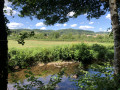
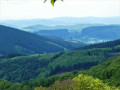
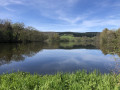
South of Le Beuvray, the landscape changes dramatically: you emerge from the forests and the view stretches further afield; the colour shifts from pine green to the spring green of the hills, and the small pastures bordered by low stone walls are a delight for the white cows. From ponds to mills, following the streams, water is an integral part of the southern Morvan.
Rives du Morvan for Larochemillay, Villapourçon, Millay and Poil. 03 86 30 43 10.
Worth a visit
On Mont Beuvray, at the end of the 2nd century BC, the Gaulish Aedui people founded Bibracte, their short-lived capital, which served as both the crucible and the tomb of Celtic unity, before the capital was moved a century later to the site of present-day Autun. Set on the mountainside, the Bibracte Museum paints a picture of the oppidum and its era. As well as shedding light on a pivotal chapter in European history, it explains the methodology and techniques of archaeology. The archaeological site, set in a lush green setting where the forests are as magnificent as the landscapes, has been the subject of annual excavations since 1984 as part of the European Archaeological Centre.
The Barlots’ tomb, comprising two burial enclosures. The rich grave goods found (a Greek wine amphora, dates, figs, etc.) suggest that this was an aristocratic tomb, situated prominently along the main access road to the oppidum of Bibracte.
Ettevaux Castle
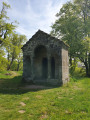
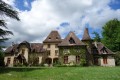
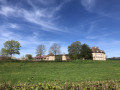
A bourgeois residence was built in Machefer in the 19th century. Next to it stand a large outbuilding and a dovecote in the form of a very slender tower. Accommodation. At La Croix Saint Louis, there is a fine view of Ettevaux Castle, which dates fromthe 18th century and was remodelled inthe 19th. Set in beautiful grounds, there is a Neo-Gothic chapel, rebuilt in 1821 on the site of an older one.
To open this route on your smartphone, you must have the Visorando app installed. If not, got to the Apple Store (iPhone) or Google Play Store (Android) to download the app.



 Country:

 City:


 Visorando Member

 Local authority
 Easy

 Very difficult
 Difficult