Country:

 City:
City:


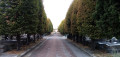
Starting point and access: Porte de Charenton.
- Metro – Line 8. Take Exit 1 onto Avenue de la Porte de Charenton.
- Tram – Line T3a.
(S/E) As you exit the metro station, turn immediately left and walk alongside the buildings of the Léo Lagrange Sports Centre on your left. At the first set of traffic lights, cross Avenue de la Porte de Charenton to the right. On the other side, follow the avenue to the left and you will soon reach the cemetery entrance.
The route within the cemetery is a guide only and there are various alternative routes. In the description below, the names appearing on the graves may be highlighted for three different reasons:
1) Graves of notable figures, in which case a lower-case letter in brackets refers to a short entry in the ‘Sights’ section, where the names are listed in the order in which they appear on the route.
2) Particularly original monuments.
3) Useful landmarks on the ground.
(1) Enter the cemetery and turn right onto Avenue des Platanes. At the corner by the Krouri grave, turn left and note the Grabowska grave on the right, whose headstone is heart-shaped and adorned with a grieving young woman. At the junction, turn right at the corner of the Signoret grave and follow a grassy path. This leads onto Allée de l’Ouest; follow it to the right.
At the end, rejoin Avenue des Platanes and follow it to the left. Then turn left between the Chaponnet and Virginet graves. Immediately turn right onto a path, leaving the Oswald grave on your left. Note, on the left-hand side, the richly decorated grave of Fabia Demaria. At the end of the path, first turn right then left to reach a junction.
(2) Continue straight ahead along Avenue des Platanes in Division 0. Turn left after the second row, at the corner of the Lohezic grave. Then turn right after the third row, at the corner of the Galliat grave. Follow a path and note the variety and abundance of decorations from one grave to the next.
At the end of the path, rejoin the tarmac road, turn left twice and follow a tree-lined avenue. Cross the Avenue de l’Ouest on the left-hand side and follow the Avenue des Tilleuls into Section 5. Note, on the right, the grave of Aurélie Nzumba N’Sendi, adorned with numerous figurines (dogs, a cat, the Virgin Mary, a garden gnome, etc.).
At the junction that appears immediately, turn right onto Allée de l’Ouest in Section 6. Soon after, turn left onto Avenue des Maronniers. Shortly afterwards, turn left onto a path that starts between the Lardier and Boulben graves. Note, on the left-hand side, a grave decorated with two butterflies and then, on the right-hand side, a grave decorated with a bulldog. You’ll come out onto a grassy path; follow it to the right, running parallel to a tarmac road. At the end, turn left and you’ll immediately reach a junction.
(3) Then turn right onto Avenue des Tilleuls in Section 3. Immediately on the right is the Guebels family grave, adorned with a marble medallion. At the next junction, turn right onto Avenue de l’Est, in Section 7. On the right-hand side, the second and third rows form a military rectangle housing the remains of soldiers who died during the 1914–1918 war.
At the next junction, continue straight on along the Allée de l’Est. At the end, rejoin the Avenue des Maronniers and follow it to the left into Section 10. Turn left onto this tarmac path and note, on the left-hand side, the Lim grave, whose headstone depicts a small Asian temple. At the junction, turn right onto the Avenue des Acacias.
(4) After the fourth row, turn left onto a grassy path, leaving the Venet grave on your right. Note, on the left, the grave of Christine Diebolt, whose headstone is adorned with a stained-glass panel featuring a dove.
You’ll come out onto a dirt track lined with trees; follow it to the right. Then turn left onto a paved path, leaving the Harispe grave on your right.
(5) At the end, turn right, passing a gate on the left. Opposite is a memorial honouring, on the one hand, the soldiers who died in May–June 1940 during Operation Dynamo (a) and, on the other hand, the gendarmes who died in April–May 1988 during the Ouvéa hostage crisis (b). On the right is a war memorial to those who died for their country. Retrace your steps.
(5) Continue straight on along Avenue des Platanes into Section 13. At the next junction, turn left onto Avenue de l’Est into Section 4. Maurice Chevit’s grave (c) is in this section, but I couldn’t find it…
Further on, rejoin Avenue des Tilleuls and follow it to the right. First turn right then left at the foot of a fountain, pass two chairs on the right and follow a path. Then turn right onto a track, passing Émile Sauvage’s grave (d) on the left. At the end of the track, turn left onto a path, passing the Dedienne grave on the left.
Then take a grassy path on the left which starts between the Atalia and Delille graves. On the left, a single grave marks the resting place of two brothers who died in action during the 1914–1918 war. At the end, turn right onto a grassy path. At the end, rejoin the Allée Est and follow it to the right, passing the funerary urns on your left.
You’ll come out onto Avenue des Platanes; follow it to the left into Section 3. At the junction with Avenue Centrale, turn right and leave the cemetery.
(1) On leaving the cemetery, first turn left then right to cross Avenue de Charenton at the traffic lights. On the other side, head diagonally to the left and walk alongside the buildings of the Léo Lagrange Sports Centre. At the end, turn right and you will immediately reach the Porte de Charenton metro station (S/E).
 Visorando Member

 Moderate