


 Country:

 City:
City:


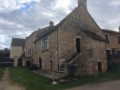
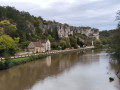
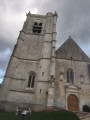
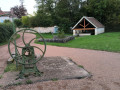
(S/E) Cross Rue de la Fontaine with care and join Rue de Magny opposite the car park. Rue de Magny (the D321 road) heads north-west on a gentle descent towards the Canal du Nivernais.
Cross the railway line carefully (level crossing) and cross the Canal du Nivernais via a bridge. Continue straight on towards Château de Saint-Marc to cross the Yonne, then head uphill to the first path on the left (before a large agricultural shed on the right).
(1) Turn left onto the flat, stony track. Follow it for about three hundred metres, then turn right onto a grassy, uphill track.
(2) When you reach a fork in the path, take the right-hand path heading north-east. Further on, the path joins the D217 road. Follow it carefully to the right, downhill, to the junction with the D321 road about two hundred metres further on. Turn left onto the hillside path between two fields and head to the next crossroads.
(3) Turn right onto the old tarmac farm track which descends the hillside towards Magny. The small road joins the D217 at the southern entrance to Magny, near a fine country house on the right-hand side of the D217.
Head left onto the road to cross through Magny. As you pass through, you’ll see some fine examples of traditional local architecture, including farmhouses and town houses. On leaving Magny, look out for a beautiful château on the left-hand side. Continue along the tarmac road, Rue André Picq, for about four hundred metres.
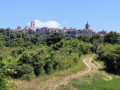
(4) Turn left onto a path that enters a wooded area and immediately turn right onto a small path that climbs the gently sloping hillside. The path crosses the Bois de la Tour until it reaches the plateau , which it follows along the eastern edge , offering magnificent panoramic views of the meandering Yonne. The path turns towards the centre of the plateau and runs along the edge of the woods on the right. It reaches a T-junction. Take the path on the right, which leads out of the woods and crosses a clearing where a castle stands on the right, a good fifty metres away. Continue straight on along the Chemin des Chaumes de la Tour, which immediately runs alongside the castle farm; then, upon reaching a wooded area on the left, begins the descent down the hillside towards Merry-sur-Yonne and becomes tarmac.
(5) At the bottom of the descent, the small road, Chemin de la Tour, crosses the railway line via a bridge and immediately turns left to run alongside it. At this point, two paths branch off towards the east and north-east.
The road veers away from the railway line by turning right and joins the Route de Compostelle (D217).
At the crossroads, head straight ahead (on the left-hand side of the D217) to pass in front of Saint-Denis Church. As you approach the outskirts of Merry-sur-Yonne, turn into a dead-end road on the right to take a short detour and see a pretty covered wash house less than a hundred metres away.
Back on the D217, continue towards the edge of the village and towards the Yonne. Note a small rest area on the left immediately after passing the village sign.
Cross the Yonne, then the Canal du Nivernais via two successive bridges.
(6) Turn immediately left and follow the D100 road, walking along the path beside the canal for about sixty metres. Cross the D100 road carefully before the bend and take the small path that starts before a hedge on the right-hand side of the road. Turn immediately right onto the uphill path.
The path passes beneath the Ferme des Vignes, which is situated on the edge of a plateau. Continue along the path, which climbs gently up the cliffs towards the east and joins the Route du Haut des Roches as it reaches the plateau, at a bend in the road.
Continue straight on along the Route du Haut des Roches along the edge of the plateau, with cultivated fields on your left. Once again, there are lovely views over the valley. The road passes above the Rochers de Saussois, a spot renowned for rock climbing. Shortly afterwards, the hillside on your right becomes wooded; the road becomes the Route des Longues Raies, then veers away from the edge of the plateau and crosses a stretch of farmland.
(7) At the next junction with a white gravel track, turn right onto the track heading south-west. Continue straight on to the edge of the hillside. The track enters the woods and descends the hillside diagonally, emerging onto a small road just above the D100. When you reach this small road, turn left and follow it carefully. It is flat and leads into a small valley that is home to the hamlet of Vaulabelle.
(8) Take the path on the right which crosses the valley floor, then climbs through the Goulots area via a wood to a sweeping view of the Rochers du Saussois.
(9) As the path reaches a sort of ridge, it turns sharply left and then crosses it heading south. Continue straight along the path until you reach the football pitch at a place called La Croix Pélerin.
At the crossroads at the end of the football pitch, you will find a wayside cross, the Croix Pèlerin, and, on the left-hand side, a mobile phone mast.
Continue straight on along Route Saint-Pèlerin, which descends diagonally down the Garet hillside towards the village of Châtel-Censoir. Continue straight on along Rue Chatonnière, which follows on from Route Saint-Pèlerin and leads onto Avenue de la Gare (the D100). Turn left and follow Avenue de la Gare (pavement) until you reach the first path on the right, Chemin de Magny.
(10) Turn right onto Chemin de Magny, which leads towards the Canal du Nivernais. Cross the railway line with great care (gate) and turn left to follow the towpath along the Canal du Nivernais. When you reach Route de Magny, which crosses the canal via a bridge, turn left onto Rue de Magny towards the village and return to the car park (S/E).

 Visorando Member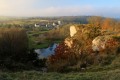
 Difficult
 Easy
Easy 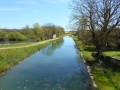
 Tourist office
