

 Country:

 City:
City:


Park on the Col de la Bonette road, on the Tinée side at Camp des Fourches, a former military camp now used as a car park. It is marked by signpost 41a.
(S/E) Follow the road towards Col des Fourches, taking the sharedGR® 5 and 56 marked in red and white. Pass marker 41b and reach Col des Fourches at marker 41.
(1) Keep left on theGR® to descend into the Salse Moréne valley. Reach a shelter and then begin the climb to reach the junction at marker 37.
(2) Leave theGR® here, which heads off to your left, and stay on the path straight ahead towards the Col de Pouriac border pass.
(3) Continue along the path to reach the Col de Pouriac at marker 39.
(4) Take the path on the left. Walk along the border for a while, then slightly into Italy. This path is signposted. Take care here as the slope is steep; after a hairpin bend to the left, reach the summit of the Tête de l'Enchastraye.
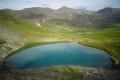
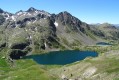
(5) Head right, off the path, towards the small Lac de l'Enchastraye below.
Take care here: off the trail, the descent is very tricky as it crosses sections of sometimes unstable rock.
(6) Follow the natural path on the left leading towards Lac de Derrière la Croix. From there, you can easily spot theGR®5-56to join.
(7) Take it to the left and continue the climb to reach the Pas de la Cavale, marked by signpost 38.
(8) Stay on theGR®5-GR®56to descend to the junction marked by signpost 37, which you passed on the way up.
(2) Follow the route back in the opposite direction to the outward journey; a final climb takes you back to the Camp des Fourches car park (S/E).

 ! A succession of small lakes still full of water (mid-September). There was a significant elevation gain, with some fairly challenging sections, particularly the first part of the descent after the summit between points 5 and 6. Once you’ve reached the summit, you have to retrace your steps for several tens of metres. Do not take the first slope on the left between the cross and the small cairn on the summit ridge; carry on, and leave the large boulders on your left – even though they might tempt you to climb down them – so that you descend in a wide arc to the right as the route suggests (even if it means taking a slightly wider detour to the right). Head for this small, unnamed ‘pass’. The descent that follows towards the lake behind the cross below becomes more slippery but no more difficult (the terrain changes from large, unstable boulders to gravel and small rocks); stop descending just below the boundary between the grass and the scree. You will have spotted the path that climbs back up to the summit earlier, so aim for that.

 Visorando Member
 Moderate
 Difficult