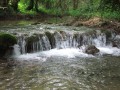
Abandoned sites and dwellings at Pasques

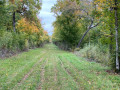
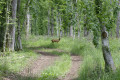
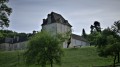
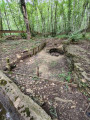
A walk that takes you off the beaten track to natural and unusual sites, as well as to ten abandoned dwellings. These are places sometimes steeped in history, dating from the Early Middle Ages or the 11th to the 14th centuries.

This walk would never have come about without the kind permission and involvement of the local councillors and members of the archaeological section of the Foyer Rural de Pasques, who have worked for eight years to showcase the sites described.

Details

12271732
Creation:
Last update:
Last review:
  • Walking
    Activity: Walking
  • ↔
    Distance: 12.20 mi
  • ◔
    Average duration: 6h 30 
  • ▲
    Difficulty: Moderate

  • ⚐
    Back to start: Yes
  • ↗
    Ascent: + 1,066 ft
  • ↘
    Descent: - 1,070 ft

  • ▲
    Highest point: 1,972 ft
  • ▼
    Lowest point: 1,234 ft
  • ⚐ Country: France
  • ⚐ City: Pasques (21370)
  • ⚑
    Start/End: N 47.363752° / E 4.85764°
  • ❏
    IGN map(s): Ref. 3022ET
  • Hour-by-hour weather

Photos

Description of the walk

Head to Pasques via the D104. Drive straight through the village and continue on the D10 towards Panges. Park in the Levêque car park, which is next to the cemetery on the left as you leave the built-up area.

(S/E) From the cemetery car park, head back towards Pasques, following the Route de Dijon on the right along the kerb. Shortly afterwards, turn left, carefully crossing the road to head down towards the wash house. Continue along Rue de l’Abreuvoir, then along Chemin du Val Courbe, until you reach the crossroads on the outskirts of the village.

(1) Keep to the right to take the stony track towards the Gouffre du Creux Percé. After following it all the way, you’ll come to a road sign prohibiting cars and motorbikes.

(2) Turn right towards the Gouffre du Creux Percé. After passing through a gate, head for the site by veering to the right.

(3) Walk around the site following the fence (shelter, information board, views down into the abyss). Retrace your steps to the junction just before the site, then continue straight ahead along a path. At the next junction of tracks, turn right towards Prenois, and carry on to the next one.

(4) Turn left – despite the Yellow Cross and Blue Cross – onto a path that climbs slightly. When you reach a Fork in the road, keep to the right. The path is marked but barely visible due to tall grass. Further on, just before veering to the right, head down the first path on the far right, through the woods. After about a hundred metres, you’ll find a rock on the left, by a large tree, which is big enough to catch your eye.

(5) Walk round it to read what is engraved on the back. This is the ‘Poste du Président’. An unusual accident occurred here in 1892. From this rock, walk back two metres and then turn right. Follow a visible path – where you may occasionally need to duck your head – along the cliff (on your right) from the ridge line. Take another path a little over a hundred metres further on. After a stretch in the open, you’ll arrive in front of the ruins of Château Hurpot.

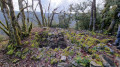
(6) An abandoned settlement with exposed foundations and the outlines of walls. Cross the ruins straight ahead to reach, a little further on, what was once a bread oven (outlines visible) and then, shortly afterwards, descend a few metres down a promontory overlooking the Combe de Vaux de Roche. Retrace your steps back up to the level of the oven and take the path on the right. Follow it along the ridge until you reach the end of the valley. Then turn right and climb slightly. Immediately, atthe first junction of tracks, keep to the right onto a grassy path. When you reach the end at the next junction, turn left and, some 40 metres further on, you’ll come to another junction.

(7) Turn right onto a track suitable for vehicles. Follow it gently downhill until you reach theGR®2below (at the end of the track). Turn left and head towards the ruins of the Moulin de Val Courbe.

(8) At the mill, you can continue along theGR®2for a few metres to reach a ford across the Suzon. From the ruins of the mill, walk back ten metres along theGR®2and leave it to climb to the right up a winding path along the hillside. Once back on the plateau, follow it continuously for a long way until you reach a very open five-way crossroads of tracks.

(9) Take the second grassy track on the right (suitable for vehicles). Turn onto the first track on the right, just before a clearing (line 31/28). Pass at the foot of the remains of an old enclosure wall. Arrival at the hamlet of Les Issarts Barodet.

(10) To the right of the track lie the ruins of an abandoned farm, with sections of wall visible here and there (possibly the former village of Pasques). Explore the area amongst the piles of stones. The outline of an old bread oven is visible.
Retrace your steps to the previous crossroads, the start of line 31/28. Turn right and, further on, take thethird path on the left (line 6/8).

(11) Walk for about two hundred and sixty metres before spotting, on the left, a path through the undergrowth leading to the abandoned settlement of Les Cermandets.

(12) Ruins of an old livestock farm overgrown with vegetation. Head back to the junction with route 6/8.

(11) Turn left, then take thethird path on the right (line 13/11). Continue along this path to discover, on both the right and left, the vast expanse of the abandoned farmsteads of Les Grands Charmeaux.

(13) Explore the stone piles of the Grands Charmeaux. Further on, to the right of the track, there is an old well, partly filled in (structure visible). Retrace your steps to the junction where line 13/11 begins. Turn right, then take thesecond track on the left (line 14/16). Head down the track. Just before a Fork in the road, leave the track and turn left onto a wide old path. Shortly afterwards, you’ll reach a hillock at a place known as Le Bas du Fourneau.

(14) An abandoned settlement, of which only piles of stones and the base of what appears to be a tower remain. Head back to the Fork in the road. Keep to the right on the most clearly marked track, which leads to the edge of the woodland opposite a field. Head right-hand side to re-enter the woodland. Pass three track junctions, continuing straight ahead all the time; there are yellow markings after thefirst and a Yellow Cross atthe third. Atthe fourth, turn onto thefirst path on the left. Walk one hundred and fifty metres and head down to the right through the woods. You’ll emerge at a small abandoned settlement at a place called Petit Citeau.

(15) A small pile of stones. Return to the original path and head right until you reach the D10 further on, below you. Cross it carefully and continue on the other side along a narrow track that joins a cross-path. Turn left to follow the edge of the woods (signposted left). This will take you to a tarmac road leading to the Puiset farm.

(16) Cross this road and head straight ahead, after a very slight detour to the right. Follow the route of the gas pipeline along a very wide track. Cross the D10 carefully at a bend. Continue along the gas pipeline whilst descending. Once you reach the lowest point, before heading back up, turn left to follow an old boundary wall on the right. You will arrive at a place known as La Mare des Bordes.

(17) A large-scale abandoned settlement with numerous depressions in the ground and walls that are largely still standing, now forming enclosures. The site is well preserved. Head back until you cross the D10 again and join the path to the Puiset farm.

(16) Turn left onto this track before leaving it almost immediately, keeping to the left to enter the woods via a dirt track. Continue along this well-marked track until you reach a crossroads of tracks in the middle of a clear-cut area.

(18) Turn sharply right and head up the forest track which zigzags through the clear-cut area. Just before moving from one clear-cut area to another, at a line of trees, head left off the track across the clear-cut for about twenty metres. You’ll come out onto a cross-track; follow it to the right until you reach some visible ruins.

(19) Abandoned settlement of Bas de la Vigne near the Puiset farm. Walls still standing and piles of stones visible. Retrace your steps to the crossroads of tracks, in the middle of the clear-cut area.

(18) Continue straight ahead along the track, which then veers to the right to join the D10.

(20) Cross this road carefully and continue straight ahead towards the fields. Follow this path to control point 502. Keep to the right at the crossroads to skirt the Pasques multi-sports area on the right and return via the original crossroads.

(1) Follow the path back in the opposite direction for its entire length to return to the starting point at the Levêque car park (S/E).

Waypoints

  1. S/E : mi 0 - alt. 1,693 ft - Levêque car park – Pasques cemetery
  2. 1 : mi 0.34 - alt. 1,650 ft - At the crossroads on leaving the built-up area, turn right
  3. 2 : mi 1.27 - alt. 1,617 ft - Fork in the path
  4. 3 : mi 1.65 - alt. 1,572 ft - The Creux Percé chasm
  5. 4 : mi 2.03 - alt. 1,529 ft - Fork in the path; turn left uphill
  6. 5 : mi 2.44 - alt. 1,552 ft - Rock, the President’s post
  7. 6 : mi 2.62 - alt. 1,575 ft - Abandoned dwelling at Château Hurpot
  8. 7 : mi 2.86 - alt. 1,594 ft - Crossroads of trails
  9. 8 : mi 3.79 - alt. 1,250 ft - Abandoned dwelling: the Val Courbe mill, near the - Suzon (rivière)
  10. 9 : mi 5 - alt. 1,627 ft - Five-way crossroads, in the open
  11. 10 : mi 5.48 - alt. 1,709 ft - Abandoned dwellings: ‘Les Issarts Barodet’
  12. 11 : mi 5.91 - alt. 1,759 ft - Junction (out and back)
  13. 12 : mi 6.08 - alt. 1,693 ft - Abandoned dwelling “Les Cermandets”
  14. 13 : mi 6.8 - alt. 1,880 ft - Abandoned dwelling ‘Les Grands Charmeaux’
  15. 14 : mi 7.68 - alt. 1,785 ft - Abandoned dwelling “Le Bas du Fourneau”
  16. 15 : mi 8.64 - alt. 1,942 ft - Abandoned dwelling ‘La Lisière de Citeau’
  17. 16 : mi 9.29 - alt. 1,883 ft - Chemin de la Ferme du Puiset
  18. 17 : mi 9.57 - alt. 1,841 ft - Abandoned dwelling ‘La mare des Bordes’
  19. 18 : mi 10.24 - alt. 1,870 ft - Junction (out and back)
  20. 19 : mi 10.57 - alt. 1,854 ft - Abandoned dwelling ‘Bas de la Vigne’ near Le Puiset
  21. 20 : mi 11 - alt. 1,821 ft - Crossing the D10
  22. S/E : mi 12.2 - alt. 1,693 ft - Levêque car park – Pasques cemetery

Notes

Alternative route 1: Bois Baillot:
Between (7) and (9): at the junction with the track (7), instead of turning right to descend towards the Suzon valley and the Val Courbe mill, you can keep left to stay on the plateau and, after turning left once more onto the path to the mill, reach the five-way junction (9).

Alternative route 2: La Combe du Fourneau:
Between (14) and (1), where the woodland opens out onto the field, instead of turning right to head back up into the woodland, turn left onto the path across the fields until you reach the crossroads at the entrance to Pasques (1). Then return to the Levêque car park by the same route in reverse.

Picnic table by the Pasques drinking trough (Rue de l’Abreuvoir).

(3) Wooden shelter at the Abîme du Creux Percé.

Tall, damp grass in wet weather and at springtime, so gaiters are recommended (ticks may be present).
Rocks protruding from the ground, which are slippery in wet weather.
The abandoned dwellings are now piles of stones – walking is more difficult in these areas.
Walking sticks are useful in wet weather, particularly on ascents and descents.

Worth a visit

Partial resumption, following agreement, of research into the abandoned dwellings and traditional uses of the Pasques Forest – 8 years of research, 2012–2019. Document available at Pasques Town Hall, published by the Foyer Rural and the municipality of Pasques – February 2021.

Our heartfelt thanks to Mr Jean-Yves Dupont, the trail’s creator, Ms Céline Vialet, the current mayor, and Mr Alain Duthu, the former mayor, who authorised and brought this unique walk to life.

(3) The Abîme du Creux Percé: a chasm that was once used as an ice house. The first known explorer was Mr Quantin de Pasques in 1882 (who was decorated for rescuing two people who had fallen into it). The karstic cave was then visited in 1892, before the current network was mapped out in 1910 by Messrs Malard and Piot. Explorations carried out in 1942–1943 led to the discovery of the Guillemin network, the lowest point of the karstic cave. The entrance measures 35 x 25 m and the sinkhole is 63 m deep.

(5) The President’s Post and the engraved rock behind it.
It was here that President Regnier, whilst hunting wild boar, fell from this treacherous rock. But Saint Hubert, by coming to the aid of his friends, spared his life. May he be eternally thanked. The members of the Easter hunt: Édouard Blondel, Adrien Clerc, Paul Court, Paul Dodoz, Raoul Fabvier, Léon Ibled, Augustin Japiot, Henri Roussin, Alexandre Roux, Antoine Troubat. Gadeski, gamekeeper – 21 January 1892.

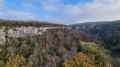
(6) Château Hurpot: a fortified site dating fromthe 11th–12th centuries. The complex occupies a promontory of the cliff overlooking the Combe de Vaux de Roche to the west. A moat separates the tip of the plateau, hewn into the rock, 4 metres wide and at least 2 metres deep. The embankment of the fortification above the moat (the escarpment) was topped by a thick wall running the full width and, in the centre, by a rectangular building most likely comprising one or two storeys above a windowless ground floor. Behind it, wall levels indicate enclosures, buildings and a bread oven. For a long time, the site was thought to date from prehistoric or protohistoric times, but excavations carried out in 2015 showed that it was founded, occupied and abandoned during the feudal period, in the 11th–12th centuries. It is not known to which lord it was answerable, nor even what its functions were.
There is a beautiful view from the promontory of Hurpot Castle over the Vaux de Roche valley and its surroundings.

(8) The Val Courbe Mill. It belonged to Saint-Seine Abbey. It is first mentioned as early as the late 12th century, comprising a mill, a threshing floor and a pond. It is situated on the southern bank of the River Val-Suzon and belongs to Pasques. It is linked to the village by a wide, very old carriage road which crosses the plateau in a straight line and winds its way down the steep hillside via carefully constructed hairpin bends. Still in operation in the 20th century, it received the wheat from the plateaus. An important hub for social life and the local economy.

(10) The abandoned settlements of the Issarts Barodet: During excavations in 2015, a roughly quadrangular stone pile, several metres across, was found, strewn with fragments of Roman roof tiles. Artefacts were discovered on the surface, brought to the surface by badgers. Estimated to date fromthe 2nd and3rd centuries AD.
Subsequently, the site served as a sheepfold, which was established, occupied and abandoned during the14th century; this is confirmed by the pottery, coins, clothing ornaments and carbon dating of the charcoal found within the structures.

(12) Abandoned settlement of Les Cermandets.14th-century sheepfold. Cowbells were found at this site.

(13) The abandoned settlement of Les Grands Charmeaux: a 14th-century sheepfold, just like the previous site. Coins were discovered there, some dating from 1295–1303 (Philip VI) and between 1342 and 1353 (a type of gold florin from Buda in Hungary), as well as a door key, a glazed tableware piece and a gilded bronze wall sconce.

(14) The abandoned settlements at Bas du Fourneau: Dating based on carbon-14 analyses suggests occupation around the 8th–9th centuries; however, the construction techniques and pottery date them to the 11th–12th centuries. Immediately to the south of a small settlement dating from the 14th century, the corner of a building constructed from large, roughly hewn stones bound with clay was discovered beneath a substantial quadrangular mound of rubble. There may have been a multi-storey building.
The site served as a sheepfold during the same period as Les Issarts and Les Grands Charmeaux. The same conclusions apply.

(15) Abandoned settlement at La Lisière de Citeau. Ancient site. A small farm comprising two buildings within an enclosure situated at the centre of four quadrangular plots. Built on a stone foundation, the walls of the buildings were plastered with lime. The ceramic finds date the occupation to between the 1st and 3rd centuries AD.
(17) Abandoned settlement at La Mare des Bordes. 14th-century sheepfold. A glazed ceramic calling horn was found there.

(19) Abandoned settlement at Bas de la Vigne. 14th-century sheepfold.
In the 14th century, there was a remarkable intensification of the use of wooded areas in the Dijon mountains. Whilst the sheepfolds certainly have distinctive features, particularly in their layouts, they also share many similarities. All are linked to Pasques and consist of no more than one or two farmsteads. All consist of large farm complexes comprising a dwelling and farm buildings, systematically surrounded by livestock enclosures. Many have a water source outside and are extended by paths lined with low walls (to facilitate the herding of livestock). None are accompanied by surrounding fields. These are the dwellings of livestock farmers, not arable farmers.
The structures are built to last and are, all things considered, comfortable by the standards of the time. The walls are stone, the roofs made of lava rock or thatch; the floors often blend seamlessly with the flattened bedrock. Bread ovens, domestic hearths, wall niches and thresholds are carefully finished.
Although living deep in the woods, the inhabitants of these ‘bordes’ were by no means destitute: the dressers they used, like the finery of their clothing, were every bit as fine as those of the inhabitants of the villages and even the castles and towns of the time.
Their speciality was sheep farming. This activity was driven not only by the urban demand for meat, milk, cheese and parchment skins, but also by the extensive international trade in wool.

Always be cautious and plan ahead when you're outdoors. Visorando and the author of this route cannot be held responsible for any accidents occurring on this route.

The GR® and PR® markings are the intellectual property of the Fédération Française de Randonnée Pédestre.

Reviews and comments

4.3 / 5
Based on 4 reviews

Reliability of the description
4.5 / 5
Ease of following the route
4.3 / 5
Route interest
4 / 5
Florimond27
Florimond27

Overall rating : 4 / 5

Date of your route : Jan 20, 2024
Reliability of the description : ★★★★★ Very good
Ease of following the route : ★★★★☆ Good
Route interest : ★★★☆☆ Average
Very busy route : No

If you love walking, this 20km hike is absolutely perfect for you; however, if you’re hoping to see anything of interest, don’t bother. There are a few ruins at the marked spots – you can indeed find bits of wall buried under the vegetation – but nothing particularly interesting to see.
That said, it’s still a brilliant walk, almost entirely flat with just one uphill and downhill section at one point. There are two or three slightly odd stretches in the forest, with no clear path, where you have to watch your step amongst the trees (such as stage 15, where I’m still trying to work out the point of going that way).

As for the time it takes, if you’re keeping up a good pace, you can complete it in about 5 hours’ walking.
A lovely walk to take your mind off things through the forest.

Machine-translated

pon39
pon39

Overall rating : 3.7 / 5

Date of your route : May 05, 2022
Reliability of the description : ★★★★☆ Good
Ease of following the route : ★★★☆☆ Average
Route interest : ★★★★☆ Good
Very busy route : No

It’s interesting because there’s very little tarmac; on the other hand, there are lots of paths with grass that isn’t too tall yet for this time of year, but what state will they be in a month’s time? The abandoned settlements have really been reduced to unremarkable piles of stones. The ‘Creux Percé’ site is impressive for its depth. The route, marked 5 to 7 on the map but obscured by the numbers, is illegible – isn’t there another way to locate it? Still, it’s a breath of fresh air in the forest, which would suit archaeology enthusiasts.

Machine-translated

DROUILLOT
DROUILLOT

Overall rating : 4.3 / 5

Date of your route : Apr 20, 2022
Reliability of the description : ★★★★☆ Good
Ease of following the route : ★★★★★ Very good
Route interest : ★★★★☆ Good
Very busy route : No

The description was very good up to point (14). We did indeed turn left at the fourth junction of tracks, yet we were not on the right route and never saw the abandoned settlement at a place called Petit Citeau. Despite this, we did manage to reach the D10, though we weren’t sure exactly where we crossed it, and we did get back onto the tarmac road at (16). Similarly, at (18) in the woodland clearing, we couldn’t find the entrance to the abandoned settlement of Bas de la Vigne. We’re hiking without a GPS, so it’s not always straightforward! Nor did we see the abandoned settlement of Les Cermandets at (11) as we couldn’t find the path, and the thick undergrowth put us off venturing in.
Nevertheless, many thanks to Mr Passé for this ‘historical discovery’ walk and for all the information provided.

Machine-translated

Laurent J1.
Laurent J1.

Overall rating : 5 / 5

Date of your route : Dec 17, 2021
Reliability of the description : ★★★★★ Very good
Ease of following the route : ★★★★★ Very good
Route interest : ★★★★★ Very good
Very busy route : No

A superb walk.
For those who love exploring, you’re in for a treat. The signposts take us back in time to visit these old, remote hamlets.
Hurpot Castle was a real discovery for me, even though I’ve been passing by the Saut de la Carpe for over 10 years.

Machine-translated

Other walks in the area

For more walks, use our search engine .

The GPS track and description are the property of this route's author. Please do not copy them without permission.