


Refine your search for walks in Saint-Pierre-de-Plesguen
Saint-Pierre-de-Plesguen walks


 Route de Tertre Guy in Mesnil-Roc'h and Saint-Pierre-de-Plesguen
 Association / Club / Walk leader
 8.37 mi
 +138 ft
 -144 ft
 4h 00
4h 00
 Moderate
 Departure from Saint-Pierre-de-Plesguen (Ille-et-Vilaine)
Saint-Pierre-de-Plesguen borders the Mesnil forest to the south-east. The route is very wooded and lined with a few picturesque hamlets where you can see some old stone houses weathered by time, in varying states of repair.
A magnificent bread oven can be seen just off the route at a place called La Planche, at the first house on the right.
Circular route between Tressé and Mesnil-Roch through the two forests.
 13.57 mi
+315 ft
-308 ft
6h 30
13.57 mi
+315 ft
-308 ft
6h 30
 Difficult
Departure from Tressé (Ille-et-Vilaine)
Difficult
Departure from Tressé (Ille-et-Vilaine)
This route will take you through wooded and hedgerow landscapes. Mostly in the undergrowth, it will take you through the Mesnil State Forest (600 ha), formerly owned by the privateer Surcouf, as well as a very small part of the Coëtquen Forest (557 ha). Due to land consolidation policies, many hedgerows have disappeared over the last 50 years. However, hedges and embankments play an important role in the diversity of fauna and flora. They shelter livestock from the wind, limit water runoff and slow down the wind. Birds, insects and small mammals find shelter and food in these areas. Hedgerows are also a source of renewable energy and carbon sinks. For the past twenty years or so, local authorities have been encouraging the restoration of hedgerows and copses.
Coëtquen Castle and its forest
 Visorando Member
 5.42 mi
+164 ft
-197 ft
2h 40
5.42 mi
+164 ft
-197 ft
2h 40
 Easy
Departure from Saint-Hélen (Côtes-d'Armor)
Easy
Departure from Saint-Hélen (Côtes-d'Armor)
The highlight of this walk is exploring the remains of the feudal motte and Coëtquen Castle, built in the 15th century (private property). The route takes in small roads and beautiful forest paths.
The name Coëtquen can be translated as ‘white forest’. The Coëtquens were lords who became part of a branch of the Dinan family.
Le Val Hervelin, the valley and the Manor of Saint-Meleuc
 5.39 mi
+272 ft
-272 ft
2h 45
Easy
Departure from Pleudihen-sur-Rance (Côtes-d'Armor)
5.39 mi
+272 ft
-272 ft
2h 45
Easy
Departure from Pleudihen-sur-Rance (Côtes-d'Armor)
A pleasant walk that takes you through the charming valley of the Ruisseau de Coëtquen, also known as the Val Hervelin – which is also the name of the village – on a return trip. The route is generally very pleasant and the path runs largely through woodland. It also offers the chance to discover a few old houses, particularly in St-Méleuc and La Forge. It takes you to a megalithic site in the Tougeais forest, north of the hamlet known as ‘Les Rouchiviers’. There are no significant difficulties, but the valley floor may be very wet during wet weather and the stream may even burst its banks.
Jardin d'Amour and the covered walkway at La Roche aux Fées in the Mesnil Forest
 4.95 mi
+66 ft
-66 ft
2h 20
Easy
Departure from Tressé (Ille-et-Vilaine)
4.95 mi
+66 ft
-66 ft
2h 20
Easy
Departure from Tressé (Ille-et-Vilaine)
This route takes you through wooded and hedgerow landscapes. Running exclusively through the undergrowth, it takes you through the Mesnil State Forest (600 ha), formerly owned by the privateer Surcouf. The paths are well-maintained but numerous, particularly in the southern section; follow the route carefully, ideally using a smartphone, as it is easy to take a wrong turn. The covered walkway, known as ‘La Roche aux Fées’, should not be confused with another walkway of the same name, which is more monumental and located in Janzé.
The Prat and Livet paths in La Vicomté-sur-Rance
 8.01 mi
+367 ft
-364 ft
4h 00
Moderate
Departure from La Vicomté-sur-Rance (Côtes-d'Armor)
8.01 mi
+367 ft
-364 ft
4h 00
Moderate
Departure from La Vicomté-sur-Rance (Côtes-d'Armor)
Throughout this route, there are no fewer than five viewpoints from which you can admire this small coastal river, famous for its mouth between Saint-Malo and Dinard thanks to the tidal power plant dam. After following it first through fresh water and then salt water, you will end your route by taking sunken paths that will lead you to a monument dating back five thousand years.
From Château du Haut Mesnil to Notre-Dame de Tronchet Abbey
 5.46 mi
+46 ft
-46 ft
2h 35
Easy
Departure from Le Tronchet (Ille-et-Vilaine)
5.46 mi
+46 ft
-46 ft
2h 35
Easy
Departure from Le Tronchet (Ille-et-Vilaine)
A pleasant walk to discover the Abbey of Notre-Dame du Tronchet. The route takes you through a heavily wooded landscape, including the Mesnil State Forest, the Château du Haut Mesnil with its chapel, and then Lake Mireloup. It is a route rich in both natural and cultural interest.
Circular route starting from Miniac-Morvan via Gué Briand and Saint-Gré.
 7.51 mi
+148 ft
-167 ft
3h 35
Moderate
Departure from Miniac-Morvan (Ille-et-Vilaine)
7.51 mi
+148 ft
-167 ft
3h 35
Moderate
Departure from Miniac-Morvan (Ille-et-Vilaine)
This route, in the hills above Miniac-Morvan, will take you to the "little" Mesnil State Forest via the village of Vieux-Bourg and the old Rennes-Saint-Malo tramway line.From Saint-Gré, on a clear day, you can enjoy a beautiful view of the Cancale coast.This route takes you along numerous paths on land and in the undergrowth. Very pleasant in good weather, but sometimes very wet otherwise.
Les Hauts de Miniac-Morvan
 8.35 mi
+246 ft
-269 ft
4h 05
Moderate
Departure from Miniac-Morvan (Ille-et-Vilaine)
8.35 mi
+246 ft
-269 ft
4h 05
Moderate
Departure from Miniac-Morvan (Ille-et-Vilaine)
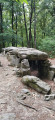
This route, in the hills above Miniac-Morvan, will take you to the Mesnil National Forest, passing through the hamlet of Vieux-Bourg and the old Rennes-Saint-Malo tram line.This route takes you along numerous paths on land and in the undergrowth. Very pleasant in fine weather, but sometimes very wet otherwise.
From the Mordreuc tide mill to the Prat tide mill
 3.63 mi
+220 ft
-200 ft
1h 50
Easy
Departure from Pleudihen-sur-Rance (Côtes-d'Armor)
3.63 mi
+220 ft
-200 ft
1h 50
Easy
Departure from Pleudihen-sur-Rance (Côtes-d'Armor)
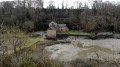
From the Mordreuc tide mill, follow the shaded cliffs along the banks of the Rance, which will take you to the Prat tide mill. You will pass an old lime kiln and see the village of La Moinerie in Plouër-sur-Rance through the trees. On the mudflats, you will see common shelducks.
At the end of the Moulin du Prat pond, you will see Quincourbe Castle and its dovecote. You will pass by the ferruginous fountain.
The Chapelle and Moulin du Prat circular in Mordreuc
 5.00 mi
+240 ft
-226 ft
2h 30
Easy
Departure from Pleudihen-sur-Rance (Côtes-d'Armor)
5.00 mi
+240 ft
-226 ft
2h 30
Easy
Departure from Pleudihen-sur-Rance (Côtes-d'Armor)
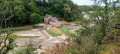
A circular route starting from the Mordreuc slipway via La Chapelle and Le Moulin du Prat. This route is not difficult and follows the banks of the Rance to begin and end its loop via country paths. Along the route, you will discover two tide mills as well as some beautiful houses and manor houses.
Tressaint on the banks of the Rance
 6.59 mi
+558 ft
-564 ft
3h 30
Moderate
Departure from Lanvallay (Côtes-d'Armor)
6.59 mi
+558 ft
-564 ft
3h 30
Moderate
Departure from Lanvallay (Côtes-d'Armor)
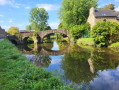
First, enjoy a breathtaking view of the Dinan viaduct with two passages under the arches, then stroll along the canalised Rance to reach the village of Tressaint and its woods. This route offers peace and serenity, even though it is very close to a popular tourist destination.
Tour of Saint-Judoce
 8.03 mi
+62 ft
-72 ft
3h 45
Moderate
Departure from Trévérien (Ille-et-Vilaine)
8.03 mi
+62 ft
-72 ft
3h 45
Moderate
Departure from Trévérien (Ille-et-Vilaine)
Discover romantic Brittany, between the two departments of Ille-et-Vilaine and Côtes d’Armor, as you travel along part of the Ille and Rance Canal!
The banks of the Rance at Mordreuc
 6.81 mi
+217 ft
-207 ft
3h 20
Moderate
Departure from Pleudihen-sur-Rance (Côtes-d'Armor)
6.81 mi
+217 ft
-207 ft
3h 20
Moderate
Departure from Pleudihen-sur-Rance (Côtes-d'Armor)
This route has two circular sections, allowing it to be completed in two stages. Both sections highlight the banks of the Rance and allow you to discover the hinterland, the former lands of the gabarriers and Cap-Horniers.
Mordreuc - La Vicomté-sur-Rance circular loop
6.24 mi
+479 ft
-453 ft
3h 15
Moderate
Departure from Pleudihen-sur-Rance (Côtes-d'Armor)
A beautiful circular walk along the banks of the Rance, from the slipway at Mordreuc to La Vicomté-sur-Rance, passing by the charming Moulin du Prat, and returning through the countryside to explore the banks of the Rance.
Tour of the Évran Locks
 4.41 mi
+135 ft
-125 ft
2h 10
Easy
Departure from Évran (Côtes-d'Armor)
4.41 mi
+135 ft
-125 ft
2h 10
Easy
Departure from Évran (Côtes-d'Armor)
A lovely walk starting and ending in Évran (22), taking in the landscapes of romantic Brittany with its valleys, winding canal and locks.
La Bouhourdais in Saint-Domineuc
9.37 mi
+69 ft
-66 ft
4h 20
Moderate
Departure from Saint-Domineuc (Ille-et-Vilaine)
The route first follows the towpath along the Ille-et-Rance Canal – the very backbone of the region – which was built during the Napoleonic era (late 19th century) to link the English Channel to the Atlantic Ocean for merchant shipping, and continues through the countryside around Saint-Domineuc.
The Beauséjour walk
4.11 mi
+171 ft
-171 ft
2h 00
Moderate
Departure from Saint-Samson-sur-Rance (Côtes-d'Armor)
From the village of Saint-Samson-sur-Rance, set off to explore the Menhir de la Pierre Longue (car park at 48.49315 N, 2.01793 W) for a varied route through the countryside and along the banks of the Rance – first the river and then the sea. Walk through the Saint-Samson countryside and its granite hamlets, then follow the River Rance to admire the old fishing huts, the Lessard Bridge, a riverside forest and an oak plantation. A route rich in scenery and heritage, ideal for a nature walk in Brittany.
In the footsteps of the Rance bargemen
 6.68 mi
+220 ft
-223 ft
3h 15
Moderate
Departure from Pleudihen-sur-Rance (Côtes-d'Armor)
6.68 mi
+220 ft
-223 ft
3h 15
Moderate
Departure from Pleudihen-sur-Rance (Côtes-d'Armor)
For centuries, right up until the 1920s, the Rance bargemen supplied the bread ovens of Saint-Malo with bundles of firewood. They built stone-paved crossings across the Rance so that they could load their barges.
These little paths leading out into the Rance will allow you to discover the village of Les Bas Champs from a unique perspective.
The banks of the Rance from Ville Ger to Mordreuc
 4.08 mi
+79 ft
-79 ft
1h 55
Easy
Departure from Pleudihen-sur-Rance (Côtes-d'Armor)
4.08 mi
+79 ft
-79 ft
1h 55
Easy
Departure from Pleudihen-sur-Rance (Côtes-d'Armor)
This hike will allow you to discover the flora and fauna of the Rance estuary.
The Rance is a wintering ground for migratory birds.
Mordreuc's mascot, seal L 214, will let you take photos with him if the water level allows him to lounge on the slipway. Otherwise, look in the water to see if a whiskered snout is peeking out.
In Mordreuc, if you continue 100 metres along the shore, you will discover the old lime kiln.
Tour of the banks of the Rance via the Saint-Hubert and Pont du Châtelier bridges
 16.48 mi
+1,047 ft
-1,063 ft
8h 30
Difficult
Departure from Pleudihen-sur-Rance (Côtes-d'Armor)
16.48 mi
+1,047 ft
-1,063 ft
8h 30
Difficult
Departure from Pleudihen-sur-Rance (Côtes-d'Armor)
A lovely day’s hike, taking you around the Rance Maritime as far as the Chatelier lock, the boundary between the Rance Fluviale and the Rance Maritime. On the itinerary: exploring the flora and fauna along the banks of the Rance, magnificent views, small coves and anchorages, and lush valley floors. Depending on the tide, you’ll alternate between shallow waters and mudflats. Please note: some sections along the banks of the Rance are only accessible at low tide and can be quite slippery.
Exploring the Calorguen countryside
9.15 mi
+328 ft
-302 ft
4h 30
Moderate
Departure from Calorguen (Côtes-d'Armor)
This walk allows you to explore the typical villages of the Pays des Faluns along stony paths. The towpath of the Ille and Rance Canal will take you past its lock-keeper’s houses and lead you to the old watermills on the River Rance.
Circular route to the Étang de Beaufort via Mireloup and Le Tronchet
 8.39 mi
+361 ft
-361 ft
4h 10
Moderate
Departure from Plerguer (Ille-et-Vilaine)
8.39 mi
+361 ft
-361 ft
4h 10
Moderate
Departure from Plerguer (Ille-et-Vilaine)
The route links two of the reservoirs in the Plerguer region. It alternates between small country roads and sections in the undergrowth, particularly in the Mesnil Forest, along the Mireloup Reservoir.The route does not present any particular difficulties despite the significant cumulative elevation gain (for the region).
Circular routes via Pont Allain and Le Perray from Étang de Beaufort
 7.18 mi
+266 ft
-266 ft
3h 30
Moderate
Departure from Plerguer (Ille-et-Vilaine)
7.18 mi
+266 ft
-266 ft
3h 30
Moderate
Departure from Plerguer (Ille-et-Vilaine)
The route links two of the water retention ponds in the Plerguer area. It alternates between sections on small country roads and stretches through the undergrowth. The route is mainly on hard ground, small roads or stony paths; it is particularly uninteresting during the wet months from autumn to March but can be enjoyed in the other months of the year.The route presents no particular difficulties.
The Ruisseau de Coutances via the Bois de la Tiemblais
3.11 mi
+125 ft
-125 ft
1h 30
Easy
Departure from Saint-Samson-sur-Rance (Côtes-d'Armor)
Starting from the town hall in Saint-Samson-sur-Rance, set off to explore the Menhir de la Pierre Longue, a testament to the town’s rich history . Your route will then take you through the countryside and woodland, in a peaceful, unspoilt setting. As you walk, you’ll cross the Ruisseaude Coutances before reaching the Étangde Coutances, a true haven of tranquillity in the heart of nature. The route then continues round the village, offering a different perspective on Saint-Samson-sur-Rance, before returning to the starting point. This walk allows you to discover the area’s heritage, nature and rural landscapesas you make your way along the paths .
The banks of the Rance near Saint-Samson and the Menhir de la Pierre Longue
4.80 mi
+190 ft
-213 ft
2h 20
Easy
Departure from Saint-Samson-sur-Rance (Côtes-d'Armor)
From the village of Saint-Samson, make your way to the Rance at Le Petit Lyvet via the Voie Verte and the Gallo-Roman track. Take a short detour to the menhir known as ‘La Pierre Longue’: standing 8.5 metres tall, it has stood there since 2,500 to 3,000 years before our era.
Plouër-sur-Rance in shades of green and blue
 8.63 mi
+653 ft
-656 ft
4h 30
Easy
Departure from Plouër-sur-Rance (Côtes-d'Armor)
8.63 mi
+653 ft
-656 ft
4h 30
Easy
Departure from Plouër-sur-Rance (Côtes-d'Armor)
A lovely walk along the banks of the Rance and through the beautiful Bois de Rochel forest. This walk combines various routes suggested by Plouër-sur-Rance Town Hall.
It begins as a blue trail along the banks of the Rance, where the landscapes and views change with every tide. After passing through hamlets with traditional stone houses, it continues as a green trail through the forest, where beech and chestnut trees over 25 metres tall never fail to impress and where sunken paths await the walker.
Take care in winter, as some sections may be damp. But in summer, don’t hesitate – with its open, airy and shaded route, it offers a chance to enjoy a pleasant coolness in the heart of nature.
Loop between Rance and Terre, from Pont Saint-Jean to Pointe du Puits
 11.39 mi
+518 ft
-541 ft
5h 40
Easy
Departure from La Ville-ès-Nonais (Ille-et-Vilaine)
11.39 mi
+518 ft
-541 ft
5h 40
Easy
Departure from La Ville-ès-Nonais (Ille-et-Vilaine)
Walk in the Pays Malouin between the sea and the Rance around one of the most beautiful villages in France. To be done at low tide, check before you go.
The medieval walls from Ville-es-Nonais
 4.11 mi
+171 ft
-177 ft
2h 00
Easy
Departure from La Ville-ès-Nonais (Ille-et-Vilaine)
4.11 mi
+171 ft
-177 ft
2h 00
Easy
Departure from La Ville-ès-Nonais (Ille-et-Vilaine)
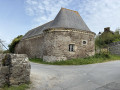
Did the Vikings settle in the Rance valley at the foot of Mont Garot? Nothing is less certain, but in any case, this is a theory put forward by the guides. From La Ville-es-Nonais, along the right bank of the Rance, make your way to the site of the supposed Viking camp. At low tide, you can see the site, covered in short vegetation.
Langrolay-sur-Rance route starting from the Souhaitier Chapel
 8.34 mi
+528 ft
-525 ft
4h 20
Moderate
Departure from Plouër-sur-Rance (Côtes-d'Armor)
8.34 mi
+528 ft
-525 ft
4h 20
Moderate
Departure from Plouër-sur-Rance (Côtes-d'Armor)
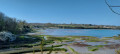
This hike follows the Rance river and the valleys around Langrolay-sur-Rance. It starts at the foot of the Souhaitier Chapel and follows a north-south route offering beautiful views of the Rance and the opposite bank, Saint-Suliac and Mont Gareau. The route is also dotted with some very pretty stone houses. The route follows a branch of the GR®34 to GR®37 trail.
The Faluns Route around Le Quiou
2.72 mi
+30 ft
-30 ft
1h 15
Easy
Departure from Le Quiou (Côtes-d'Armor)
This easy route takes you on a journey of discovery through the Pays des Faluns, combining the Greenway, local heritage and landscapes shaped by the ancient Faluns Sea. The route offers a pleasant and accessible walk, ideal for a family outing.