


Refine your search for walks in Saint-Ouen-en-Brie
Saint-Ouen-en-Brie walks
 Fortified farms of Brie - Le Fief des Epoisses
 Visorando Member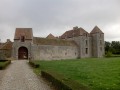
 4.36 mi
 +26 ft
 -26 ft
 2h 00
2h 00
 Easy
Easy
 Departure from Mormant (Seine-et-Marne)
Mostly dating from the late Middle Ages, fortified farms are a typical architectural feature of the Brie region. This hike connects several of them, including one of the most famous, the Fief des Epoisses. You will follow paths between fields and small roads with little traffic.
Route west of Bombon via Saint-Méry
Visorando Member 8.97 mi
+184 ft
-203 ft
4h 15
 Moderate
Departure from Bombon (Seine-et-Marne)
Moderate
Departure from Bombon (Seine-et-Marne)
A moderate-difficulty walk, with little elevation gain, west of Bombon, passing through Saint-Méry, then across fields and two small woods. It then follows and crosses the Ru d’Ancœur, the Ru de la Prée and the Ru des Moines, passing by the Flagy Mill and the Voies Mill
Bombon was the birthplace of the 1918 Victory. Indeed, General Foch moved his command post to Bombon in 1918. His marshal’s baton ‘was presented to him in the castle’s main courtyard in the presence of all the chiefs of staff, Marshal Haig, Marshal Pershing, General Pétain and the highest political authorities, the President of the Republic, Raymond Poincaré, Clemenceau […], Painlevé, former Minister of War and former President of the Council. General Weygand […] was by his side.”
Bombon and its surrounding countryside
Visorando Member  5.17 mi
+167 ft
-174 ft
2h 30
Easy
Departure from Bombon (Seine-et-Marne)
5.17 mi
+167 ft
-174 ft
2h 30
Easy
Departure from Bombon (Seine-et-Marne)
A picturesque walk starting from Bombon, a small, typical Briard village. The route goes round two châteaux, follows the Ru d’Ancœur (a peaceful little stream) and crosses woods and cultivated fields.
This walk is easy, but the section along the river can be muddy in winter. Please also be aware of hunting seasons.
Villefermoy Forest - Northern Circular Loop
Visorando Member  8.24 mi
+102 ft
-112 ft
3h 55
Moderate
Departure from La Chapelle-Rablais (Seine-et-Marne)
8.24 mi
+102 ft
-112 ft
3h 55
Moderate
Departure from La Chapelle-Rablais (Seine-et-Marne)
One of the few forest trails that can be followed in the heart of Brie. A route that is mainly in cool shade, with a brief stretch through the fields around the Ferme d'Heurtebise.
Villefermoy Forest - Southern Circular Loop
Visorando Member  8.74 mi
+33 ft
-33 ft
4h 05
Moderate
Departure from La Chapelle-Rablais (Seine-et-Marne)
8.74 mi
+33 ft
-33 ft
4h 05
Moderate
Departure from La Chapelle-Rablais (Seine-et-Marne)
A hike mainly through forest, which also includes passages between fields and offers some interesting heritage features.
This hike is reserved for those who are not put off by trudging through dense vegetation.
Medieval churches of Brie: the Templar church of Rampillon
Visorando Member 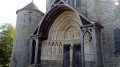 11.51 mi
+72 ft
-72 ft
5h 20
Moderate
Departure from Nangis (Seine-et-Marne)
11.51 mi
+72 ft
-72 ft
5h 20
Moderate
Departure from Nangis (Seine-et-Marne)
Across the Brie plain, discover a beautiful 13th-century church with fortification elements inherited from its Templar past.
The fortified farms of Brie and the Bois-Poussin stronghold
Visorando Member 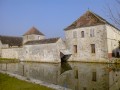 9.97 mi
+79 ft
-66 ft
4h 40
Moderate
Departure from Nangis (Seine-et-Marne)
9.97 mi
+79 ft
-66 ft
4h 40
Moderate
Departure from Nangis (Seine-et-Marne)
Mostly dating from the late Middle Ages, fortified farms are a typical part of the architectural heritage of the Brie region. This walk takes you past several such farms, including the Fief de Bois-Poussin stronghold, and gives you the chance to discover the rich heritage of Nangis with its ancient fortified castle, church and market halls. The walk takes you along paths between fields and small roads with little traffic, and along the banks of the brooks that wind through this farming plain.
Medieval churches of Brie - The Collegiate Church of Saint-Martin in Champeaux
Visorando Member 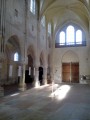 11.55 mi
+256 ft
-269 ft
5h 30
Moderate
Departure from Blandy (Seine-et-Marne)
11.55 mi
+256 ft
-269 ft
5h 30
Moderate
Departure from Blandy (Seine-et-Marne)
A hike rich in heritage in the south of Brie. It starts at the old fortified castle of Blandy-les-Tours, which is in excellent condition, and ends with a visit to one of the most beautiful Gothic churches in the Île-de-France region. Two other churches, a chapel, another more recent castle and an old mill complete the picture. A route on a cultivated plateau, through woods and alongside the Ru d'Ancoeur.
La Fayette and the wash houses at the start of Courpalay
Visorando Member 9.17 mi
+269 ft
-269 ft
4h 25
Moderate
Departure from Courpalay (Seine-et-Marne)
An easy, mainly rural walk, which passes by four interesting wash houses, several small typical churches, and the former Priory of Segrès. The highlight of this circular walk is the superb Château de la Grange Bléneau, whose origins date back to the 14th century and which, among other illustrious figures, hosted General de La Fayette from 1802 to 1834. Another mark of La Fayette's passage is the poplar tree known as the "Tree of Liberty", which he is said to have planted in 1831 in front of the church in Bernay.
Around La Chapelle-Iger and the Château de Champ Gueffier
Visorando Member  6.36 mi
+197 ft
-197 ft
3h 05
Easy
Departure from La Chapelle-Iger (Seine-et-Marne)
6.36 mi
+197 ft
-197 ft
3h 05
Easy
Departure from La Chapelle-Iger (Seine-et-Marne)
A beautiful walk in the Brie region, through fields and valleys, with stunning views. Not recommended in summer when it is very hot as there are very few trees to provide shade from the sun.
The Yerres and Bréon fords between Verneuil and Ozouer
Visorando Member  11.48 mi
+387 ft
-371 ft
5h 35
Moderate
Departure from Verneuil-l'Étang (Seine-et-Marne)
11.48 mi
+387 ft
-371 ft
5h 35
Moderate
Departure from Verneuil-l'Étang (Seine-et-Marne)
A walking tour that starts at the Verneuil-l'Étang train station. It passes through three villages: Ozouer-le-Voulgis, Chaumes-en-Brie and Verneuil-l'Étang. Woods, fields, narrow streets, meadows and gardens, following the course of the Yerres river.
Circuit of the old railway line in Verneuil-l'Étang
Visorando Member 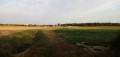 7.85 mi
+220 ft
-197 ft
3h 50
Moderate
Departure from Verneuil-l'Étang (Seine-et-Marne)
7.85 mi
+220 ft
-197 ft
3h 50
Moderate
Departure from Verneuil-l'Étang (Seine-et-Marne)
This hike takes you through the fields and woods of the Brie region, following the old railway line that once connected the Gare de la Bastille in Paris to Marles-en-Brie, north of this route.
Circular loop around Chaumes-en-Brie starting from Verneuil-l'Étang
Visorando Member 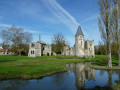 14.95 mi
+430 ft
-436 ft
7h 15
14.95 mi
+430 ft
-436 ft
7h 15
 Difficult
Departure from Verneuil-l'Étang (Seine-et-Marne)
Difficult
Departure from Verneuil-l'Étang (Seine-et-Marne)
A long but easy walk, which can be shortened by 5 km and/or 4 km, bringing the total distance down to 15 or 20 km depending on preference. With a great variety of landscapes and trail types, it offers the chance to discover numerous architectural curiosities in different styles.
In the footsteps of Couperin from Verneuil
Visorando Member 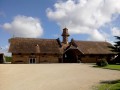 9.02 mi
+390 ft
-394 ft
4h 30
Moderate
Departure from Verneuil-l'Étang (Seine-et-Marne)
9.02 mi
+390 ft
-394 ft
4h 30
Moderate
Departure from Verneuil-l'Étang (Seine-et-Marne)
A bucolic hike through woods, fields, meadows and gardens, playing leapfrog with the Yerres and Ru de Bréon rivers. Two village crossings and, in Chaumes-en-Brie, a tribute to the musicians of the Couperin family and a farm with surprising architecture in the heart of the Brie region.
From Verneuil-l'Étang to Fontaine-le-Port via Champeaux and Blandy-les-Tours
Visorando Member 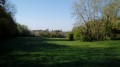 16.48 mi
+72 ft
-220 ft
6 hrs
16.48 mi
+72 ft
-220 ft
6 hrs
 Very difficult
Departure from Verneuil-l'Étang (Seine-et-Marne)
Very difficult
Departure from Verneuil-l'Étang (Seine-et-Marne)
A long walk from station to station, across the Brie plain with its sweeping horizons. Along the way, two superb monuments: the Collegiate Church of Saint-Martin in Champeaux and the fortified castle at Blandy-les-Tours.
The Javot Valley starting from Machault
Visorando Member  8.40 mi
+381 ft
-377 ft
4h 10
Moderate
Departure from Machault (Seine-et-Marne) (Seine-et-Marne)
8.40 mi
+381 ft
-377 ft
4h 10
Moderate
Departure from Machault (Seine-et-Marne) (Seine-et-Marne)
Variation of the "From vineyards to orchards in the Javot valley" hike available on the FFRP Seine-et-Marne hiking website.
Double circular route starting from Chaumes-en-Brie
Visorando Member  13.42 mi
+436 ft
-459 ft
6h 35
Difficult
Departure from Chaumes-en-Brie (Seine-et-Marne)
13.42 mi
+436 ft
-459 ft
6h 35
Difficult
Departure from Chaumes-en-Brie (Seine-et-Marne)
Around Chaumes-en-Brie through the villages of Maurevert, Forest, Arcy and Argentières, with the Yerres, Bréon and Vivier and Arcy castles.
Note: in the description below, the (*) refers to the section: During the hike or nearby.
Circular route starting from Chaumes-en-Brie
Visorando Member 9.42 mi
+282 ft
-276 ft
4h 35
Moderate
Departure from Chaumes-en-Brie (Seine-et-Marne)
Around Chaumes-en-Brie through the villages of Arcy and Argentières, with the Yerres, the Bréon and the castles of Vivier and Arcy.
Along the Yerres around Bernay-Vilbert
Visorando Member  4.69 mi
+66 ft
-69 ft
2h 15
Easy
Departure from Bernay-Vilbert (Seine-et-Marne)
4.69 mi
+66 ft
-69 ft
2h 15
Easy
Departure from Bernay-Vilbert (Seine-et-Marne)
This walk offers views of the Yerres, a priory, two wash houses and cows, alternating between woods and fields.
Along the Seine between Fontaine-le-Port and Chartrettes
Visorando Member 6.01 mi
+167 ft
-164 ft
2h 55
Easy
Departure from Fontaine-le-Port (Seine-et-Marne)
A walk along the Seine, with the village of Fontaine-le-Port, a section ofthe GR®2 trailoverlooking the Seine towards Chartrettes, then the Bois-le-Roi leisure centre on the other side of the river.
From Fontaine-le-Port to Champagne-sur-Seine via the hillsides on the right bank
Visorando Member  11.07 mi
+538 ft
-495 ft
5h 35
Moderate
Departure from Fontaine-le-Port (Seine-et-Marne)
11.07 mi
+538 ft
-495 ft
5h 35
Moderate
Departure from Fontaine-le-Port (Seine-et-Marne)
A hike from station to station high up on the right bank of the Seine, offering beautiful views of the river and the nearby Forest of Fontainebleau. The first and last thirds of the hike follow paths that wind through the forest. In between, the route alternates between fields, woods and residential areas, with some interesting heritage sites.
Countryside and châteaux of the Brie region
Visorando Member  4.85 mi
+43 ft
-43 ft
2h 15
Easy
Departure from Fontenay-Trésigny (Seine-et-Marne)
4.85 mi
+43 ft
-43 ft
2h 15
Easy
Departure from Fontenay-Trésigny (Seine-et-Marne)
A varied walk through fields, woods and the old town, where many eras coexist.
Courquetaine - Ozouer le Voulgis via Retal
Visorando Member 10.56 mi
+312 ft
-315 ft
5h 10
Moderate
Departure from Courquetaine (Seine-et-Marne)
A countryside walk that takes you from the Marsange valley to the Yerres valley, taking in Retal Manor, Ozouer-le-Voulgis and Courquetaine Castle.Not recommended during wet weather.
Around La Marsange, starting from Liverdy-en-Brie
Visorando Member  9.04 mi
+164 ft
-171 ft
4h 20
Moderate
Departure from Liverdy-en-Brie (Seine-et-Marne)
9.04 mi
+164 ft
-171 ft
4h 20
Moderate
Departure from Liverdy-en-Brie (Seine-et-Marne)
Hike from Liverdy-en-Brie via Retal, Courquetaine and La Marsange, alternating between wooded areas, farmland and urban passages, with two churches, two castles, a farm and a wash house.
Rocher de Samoreau, Fours du Roy and banks of the Seine
Visorando Member  7.75 mi
+541 ft
-551 ft
4h 00
Moderate
Departure from Samoreau (Seine-et-Marne)
7.75 mi
+541 ft
-551 ft
4h 00
Moderate
Departure from Samoreau (Seine-et-Marne)
A rural hike that alternates between old villages, former quarries, forest and the banks of the Seine. The road that was previously used for the return journey has changed from a private road to a public road and is no longer suitable for walking, hence a significant change to the route.
 Discover the islands of Samois-sur-Seine by canoe
Visorando Member 5.39 mi
+3 ft
-0 ft
4 hrs
Easy
Departure from Samoreau (Seine-et-Marne)
This route offers a circular trip on the Seine by canoe or kayak in the south of Seine-et-Marne. It is an easy route and allows you to discover the grand bourgeois mansions typical of the Val de Seine in the Norman style, the two islands of Samois-sur-Seine with their heritage steeped in history (an ancient Gallo-Roman bridge, an old station standing alone on Île aux Barbiers, etc.) and then the romantic and peaceful banks of the Seine at Samois, with their old houses built from local stone.