Amédée River and Île du Colon

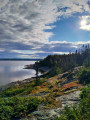
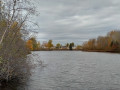
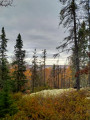
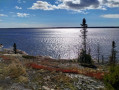
Set off to explore the confluence of the Amédée River and the St. Lawrence River. The Amédée River ends with some interesting rapids and joins the St. Lawrence River in an impressive curved descent. The trail will then take you to Île du Colon. A porcupine was encountered on the trail: don't worry, this somewhat clumsy animal is not dangerous and will run away from you.
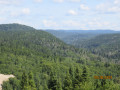
For the less adventurous, turn back and take the trail in the opposite direction. For the more adventurous, take the path on the right that leads into the forest. This is the route we recommend. Keep your eyes peeled, as the trail is not well-trodden and you will need to follow the small markers on the trees.

Details

66255677
Creation:
Last update:
Last review:
  • Walking
    Activity: Walking
  • ↔
    Distance: 5.59 km
  • ◔
    Average duration: 1h 45 
  • ▲
    Difficulty: Difficult

  • ⚐
    Back to start: Yes
  • ↗
    Ascent: + 52 m
  • ↘
    Descent: - 51 m

  • ▲
    Highest point: 54 m
  • ▼
    Lowest point: 4 m

Photos

Description of the walk

The trail starts from the car park located at the intersection of Bossé and Amédée streets in Baie-Comeau. This car park is free of charge.

(S/E) Take the path that leads to the footbridge over the Amédée River waterfall. Cross the footbridge and continue for a few dozen metres.

(1) Follow the path on the right, called Sentier des Embruns. It runs along the river and offers several views of its rapids.

(2) After admiring the river's descent towards the St. Lawrence River, continue along this path, which now runs alongside the St. Lawrence River to Île du Colon.

(3) Leave the trail on your left, which you will take on the way back, and continue straight ahead to Île du Colon.

(4) Turn around and retrace your steps until you reach the fork you passed on the way there.

(3) At the crossroads, turn right and head into the forest. A GPS is essential for finding this crossroads, as there are no landmarks to indicate it, especially as the path to take is not particularly well marked. Follow the markers on the trees and walk for about 250 metres.

(5) The path then turns left and descends slightly. Follow the markers for about 200 m. The trail turns slightly to the right.

(6) On the way up, head towards the marker on the left. The ground becomes flatter and rockier.

(7) At a small clearing, turn left, then right: once again, a GPS is essential to find the right place to turn off. You will reach a mudflat that stretches out to the right.

(8) Go around it on the left a few metres before it. Once you are back on the path after about 20 metres, go around the water again (if it is there) by walking along the left-hand side. Back on the path, continue until you reach a sandy lane, then turn left to return to the footbridge at the start.

(1) After crossing it, turn right and walk along the floating dock that juts out over the river. This spot at the water's edge is also a fishing spot.

(9) Exit and walk back up to the car park (S/E).

Waypoints

  1. S/E : km 0 - alt. 48 m - Amédée River footbridge car park - Rivière Amédée (rivière) - Québec - Affluent du Saint-Laurent
  2. 1 : km 0.14 - alt. 46 m - Footbridge, waterfall
  3. 2 : km 1.41 - alt. 7 m - Confluence of the Amédée River and the Saint Lawrence River - Le Fleuve Saint-Laurent
  4. 3 : km 2.21 - alt. 10 m - Fork in the path. Return trip to the island
  5. 4 : km 2.82 - alt. 6 m - Île du Colon viewpoint
  6. 5 : km 3.69 - alt. 36 m - Turn left
  7. 6 : km 3.93 - alt. 35 m - Hollow
  8. 7 : km 4.58 - alt. 46 m - Small clearing
  9. 8 : km 4.94 - alt. 51 m - Mudflat
  10. 9 : km 5.53 - alt. 45 m - Viewpoint: Amédée River upstream.
  11. S/E : km 5.59 - alt. 47 m - Amédée River footbridge car park

Notes

Set off with the app; GPS assistance is essential as there are few landmarks among the trees, especially for the return journey.

Be well equipped from head to toe as the path you will take on the way back is not very well used and is not a beaten track. Look carefully for the markers (small plastic ribbons) attached to the trees. In summer, the vegetation is dense, so GPS is essential. A similar hike is available that avoids this complicated section by taking a proper trail further along, going up the river and bringing you back to the clearing (7).

You will encounter mudflats (water points) that you will need to walk around: walk at the foot of the trees so that you can use their roots for support and avoid sinking into the water. Mudflats are often deeper than they appear.

Other walks in the area

For more walks, use our search engine .

The GPS track and description are the property of this route's author. Please do not copy them without permission.