


Refine your search for walks in Porte Saint-Martin (Paris)
Porte Saint-Martin (Paris) walks


 The covered passages of the Montmartre and Saint-Martin suburbs
 Visorando Member
 3.94 mi
 +66 ft
 -33 ft
 1h 50
1h 50
 Easy
Easy
 Departure from Paris
Between grand boulevards and covered passages, a walk through a lively neighbourhood of the capital.
A walk to avoid on Sundays and public holidays when the covered passages may be closed.

Walks near Porte Saint-Martin (Paris)
Walk in the Marais
 3.48 mi
+3 ft
-10 ft
1h 35
Easy
Departure from Paris
3.48 mi
+3 ft
-10 ft
1h 35
Easy
Departure from Paris
This is an immersion in a historic district of Paris that was largely untouched by Haussmann's urban renewal and has retained many narrow streets, with architecture still dominated by 17th-century mansions. The suggested itinerary winds its way through narrow streets and gardens, allowing you to discover a rich heritage, including the Carreau du Temple, the Hôtel du Grand Veneur, the gardens of the National Archives, the Place des Vosges and the Hôtel Sully.
République - Nation
 4.71 mi
+59 ft
-10 ft
2h 15
Easy
Departure from Paris
4.71 mi
+59 ft
-10 ft
2h 15
Easy
Departure from Paris
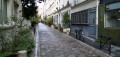
Although the title of this hike evokes a route commonly used by protest marches in Paris, the route itself avoids the main roads and favours the narrow streets and passageways where many workshops were once located.
Green spaces in the 10th arrondissement of Paris
 4.49 mi
+75 ft
-33 ft
2h 10
Easy
Departure from Paris
4.49 mi
+75 ft
-33 ft
2h 10
Easy
Departure from Paris
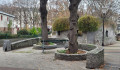
The 10th arrondissement of Paris is characterised by a working-class, cosmopolitan and very lively atmosphere, marked by the presence of the Gare du Nord and Gare de l’Est stations. A densely populated area, it mainly offers small local green spaces. The largest gardens have often been created on former historic, railway or industrial sites, such as the Jardin Villemin or the Square Alban-Satragne. The Canal Saint-Martin, for its part, plays a major role by providing a green promenade and a central hub for socialising. Finally, there are a dozen community gardens and examples of community greening: tree bases and micro-gardens.
The Bestiary of the Faubourgs of Saint-Martin, du Temple and Saint-Antoine
 5.05 mi
+23 ft
-52 ft
2h 20
Easy
Departure from Paris
5.05 mi
+23 ft
-52 ft
2h 20
Easy
Departure from Paris
A north-south walk through the 10th, 11th and 12th arrondissements of Paris, in search of depictions of animals. Throughout the first half of the route, these are mainly found in murals. The second half offers greater diversity in terms of animal subjects.
In the footsteps of Georges Brassens: La Goutte d'Or, Montmartre and Trinité
 4.72 mi
+272 ft
-305 ft
2h 25
Easy
Departure from Paris
4.72 mi
+272 ft
-305 ft
2h 25
Easy
Departure from Paris
This second section takes us to the old cabaret (Chez Patachou) where Georges Brassens performed in public for the first time. The walk through Montmartre, with its slopes, paths and stairways, is particularly pleasant (best done in the "low tourist season").
From Paris to Bry-sur-Marne via the Bois de Vincennes and along the Marne
 Association / Club / Walk leader
 15.57 mi
+177 ft
-154 ft
7h 20
15.57 mi
+177 ft
-154 ft
7h 20
 Difficult
Departure from Paris
Difficult
Departure from Paris
In the eastern suburbs of Paris, along the route taken by Saint Columbanus, we find all the signs of the Columbanian influence that shaped our countryside and landscapes.
The first part of our 26km route through the Île-de-France region is flat, allowing us to take the time to visit the jewels revealed by the churches of Paris, as well as the towns that witnessed the birth of the monasteries that punctuate the route.
In the footsteps of the French Revolution
 21.14 mi
+1,020 ft
-712 ft
4 days
21.14 mi
+1,020 ft
-712 ft
4 days
 Moderate
Departure from Paris
Moderate
Departure from Paris
Here are four hikes that take in iconic locations from the French Revolution. One of them takes place in Versailles, where it all began in May 1789. Another takes place in Paris, which was the scene of many events, including the storming of the Bastille on 14 July 1789. The other two connect Paris to Versailles, attempting to reproduce the women's march of 5 October 1789.
Women's march of 5 October 1789: from Paris City Hall to Sèvres
 8.88 mi
+89 ft
-82 ft
4h 10
Moderate
Departure from Paris
8.88 mi
+89 ft
-82 ft
4h 10
Moderate
Departure from Paris
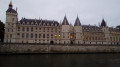
The first section of this women's march of 5 October 1789 follows fairly closely what we know today about the route taken at the time. Starting from the centre of Paris, we follow the course of the Seine and then cross the districts of Auteuil and Billancourt. We cross the Ile Seguin, where the Vieux Pont de Sèvres bridge used to be, and end up in Sèvres, where the 1789 procession made a stop. All along the way, there is a rich heritage to discover.
Green spaces in Paris’s 6th arrondissement
 5.04 mi
+171 ft
-200 ft
2h 30
Easy
Departure from Paris
5.04 mi
+171 ft
-200 ft
2h 30
Easy
Departure from Paris
The sixth arrondissement of Paris is emblematic of Parisian elegance. A chic neighbourhood with legendary cafés, it has historical links to writers, philosophers and artists. It is as renowned for its intellectual heritage as it is for its architectural heritage, with its museums, art galleries and prestigious cultural institutions.
It boasts a dozen public squares and municipal gardens, including the famous Jardin du Luxembourg, which is managed by the state and will not be discussed here.
From Châtelet to Austerlitz
 4.21 mi
+138 ft
-135 ft
2h 05
Easy
Departure from Paris
4.21 mi
+138 ft
-135 ft
2h 05
Easy
Departure from Paris
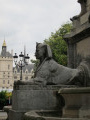
A walk between Châtelet and Austerlitz, along picturesque streets rich in Parisian history with many points of interest: gardens, monuments, building facades, etc. Depending on your pace and curiosity, the route can take between two and four hours.